





Lesson
GROUP 1: LESSON ‹t›
Teach the t sound with Jolly Phonics lesson guidance, including story and action ideas, revision prompts and practice support for teachers.
GROUP 1: LESSON ‹t›
Lesson ‹t›:
GET READY TO TEACH
REVISION
Step 1
Revision
Teacher guidance:
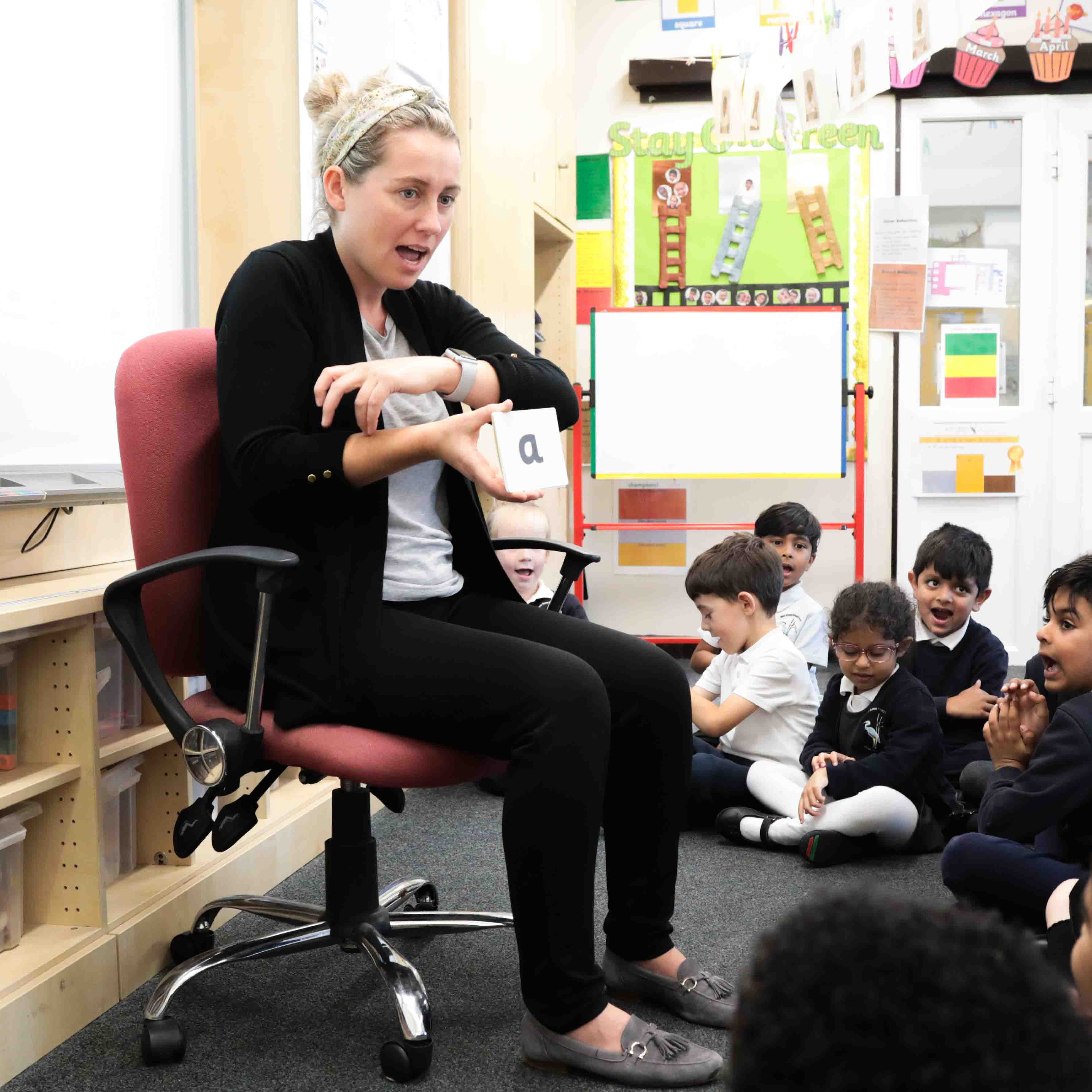
Quickly revise ‹s› and ‹a› with flashcards and actions.
What to do:
- “Who remembers the letter sounds we already know?”
- Show the flashcards for ‹s› and ‹a›. Ask pupils to say the sound and do the actions for /s/ and /a/.
- Write the letters on the board. While this is being done the children form the letters in the air.
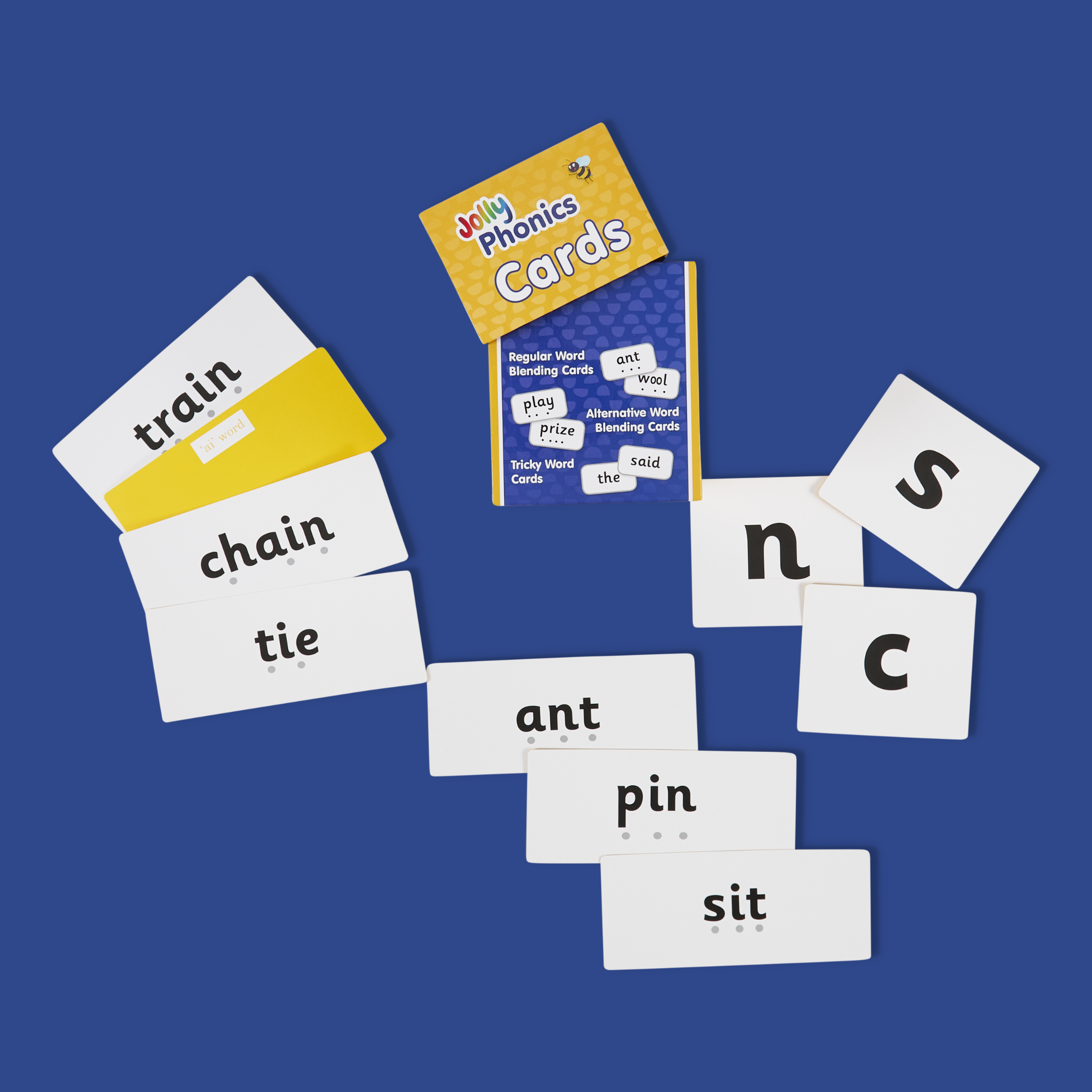
Key Revision Resource
Four flashcard sets for daily teaching, revision and games. Covering letter sounds, regular and alternative word blending (with sound dots for support) and tricky words in teaching order. A practical resource for reinforcing phonics skills at every stage.
LEARNING THE LETTER SOUND
Step 2
The /t/ story and action
Teacher guidance:
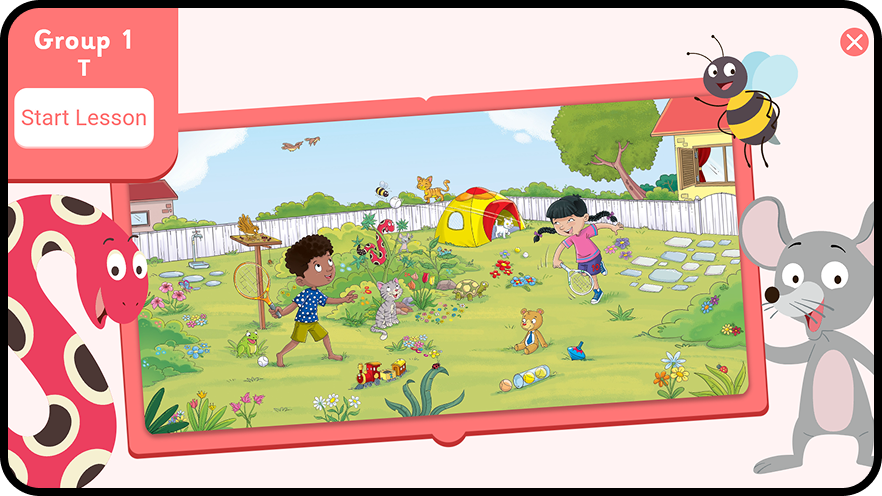
Tell the story of children watching tennis. Each time the racket hits the ball, it makes a /t/ noise. Show the picture from The Finger Phonics Book 1 ‹t› page. As the ball goes back and forth, their heads turn from side to side, saying “/t/, /t/, /t/.” Show the ‹t› flashcard and put the ‹t› piece of the wall frieze alongside the ‹s› and ‹a›.Model the action clearly and invite pupils to join in.
What to do:
- “The ball is going back and forth – /t/, /t/, /t/.”
- “Everyone say /t/ and do the action with me.”
- “What /t/ words did you hear in the story?”
- “Can you think of other words beginning with /t/?” (Tree, tent, ten, teddy.)
Step 3
Learning Letter Formation
Teacher guidance:
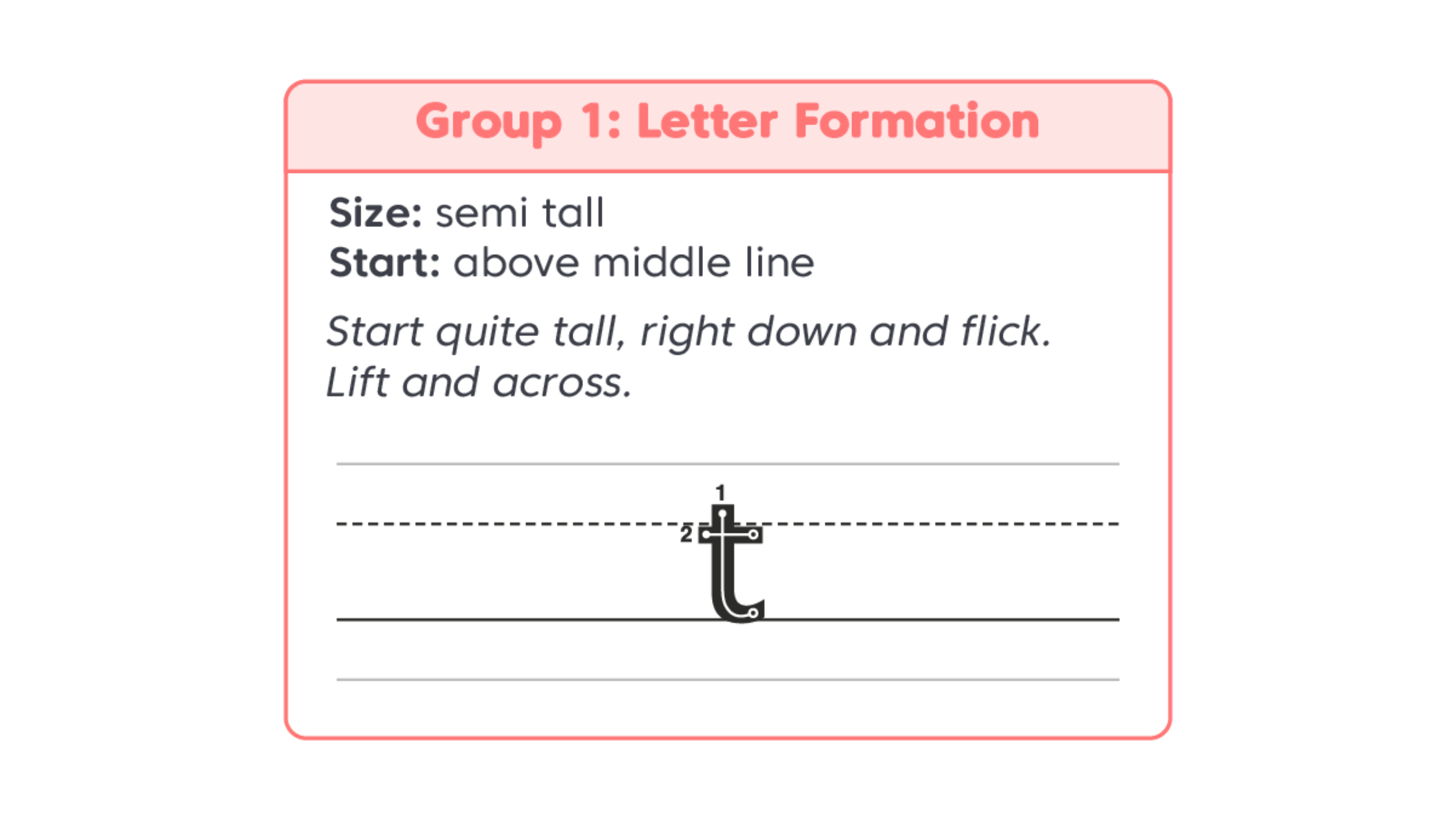
Demonstrate how to form the letter ‹t› on the board. Encourage the children to form it in the air.
What to do:
- “Let’s write a /t/ in the air together.” Remember to use mirror-writing if you are facing the children, so they see the letter formed the correct way round.
- Model by saying: “Down-down and flick. Across.”
- Encourage children to say /t/ as they write.
TEACH THE SOUND
Step 4
Auditory Blending
Teacher guidance:
Say the sounds in some short words. Use your arm to model – tap from shoulder to wrist, one tap for each sound – then run your hand down your arm to blend the word. Encourage the children to listen for the word.
What to do:
- Tap down the arm: /t-o-p/ … and slide down the arm and say “top.”
- Try: /t-i-n/, /t-a-p/, /t-e-n/, /t-u-b/.
Play 'Guess my Word':
- Tap down arm … /a-t/, now swipe – the children call out ‘at!’ ‘Let’s do some more words.’
- /s-a-t/ – sat; /h-a-t/ – hat; /m-a-t/ – mat; /t-e-n-t/ – tent; /t-r-ee/ – tree; /t-e-dd-y/ – teddy
Step 5
Identifying Sounds in Words
Teacher guidance:
Encourage pupils to listen for the /t/ sound at the beginning of words. Use simple choices where only one option contains the /t/ sound.
Spot the ‹t› sound:
Listen for which word has a /t/ sound at the beginning:
- “tap or sun”; “man or tin”; “dog or top”; “toy or can”
PRACTICE THE SOUND
Step 6
Independent Practice
Teacher guidance:
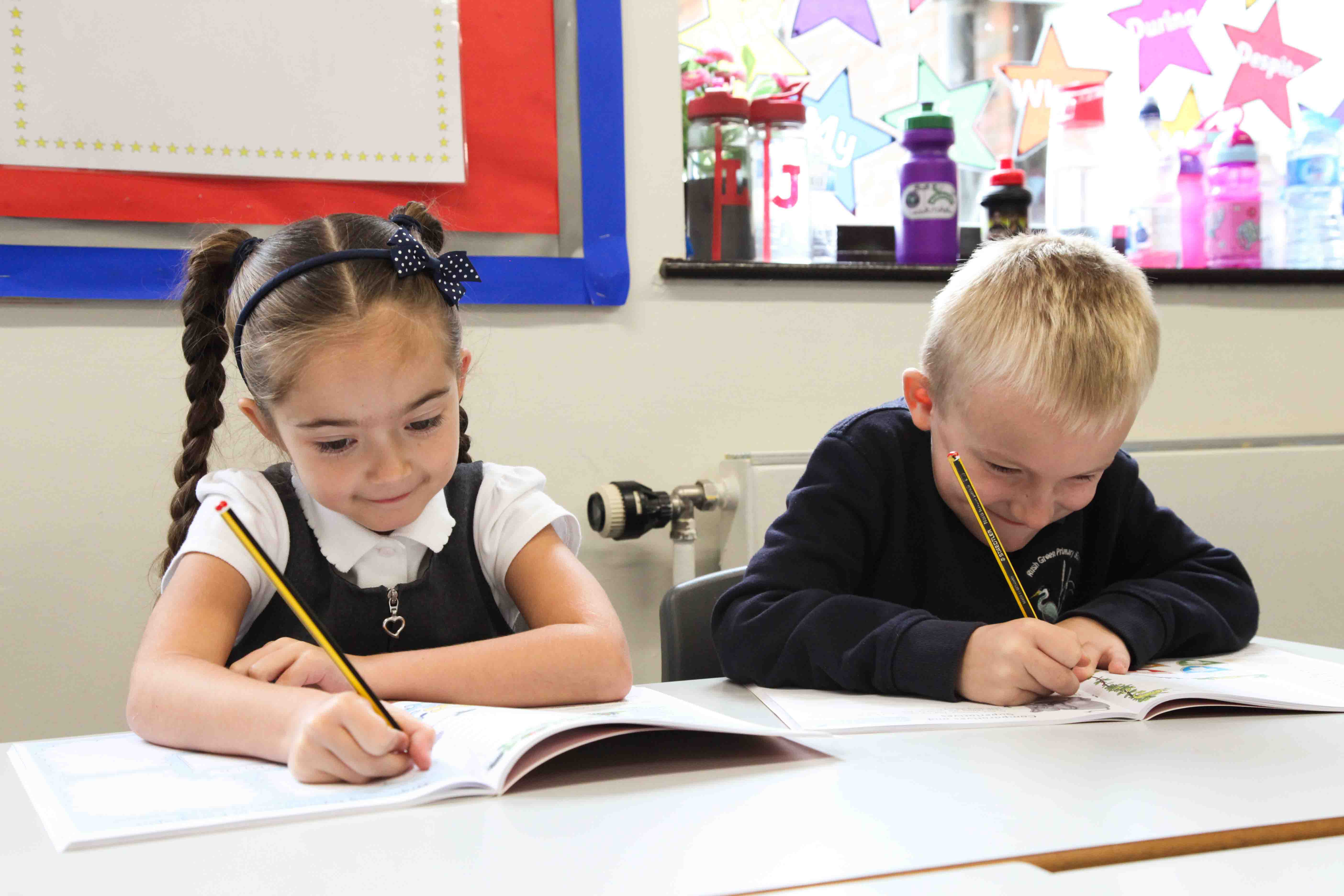
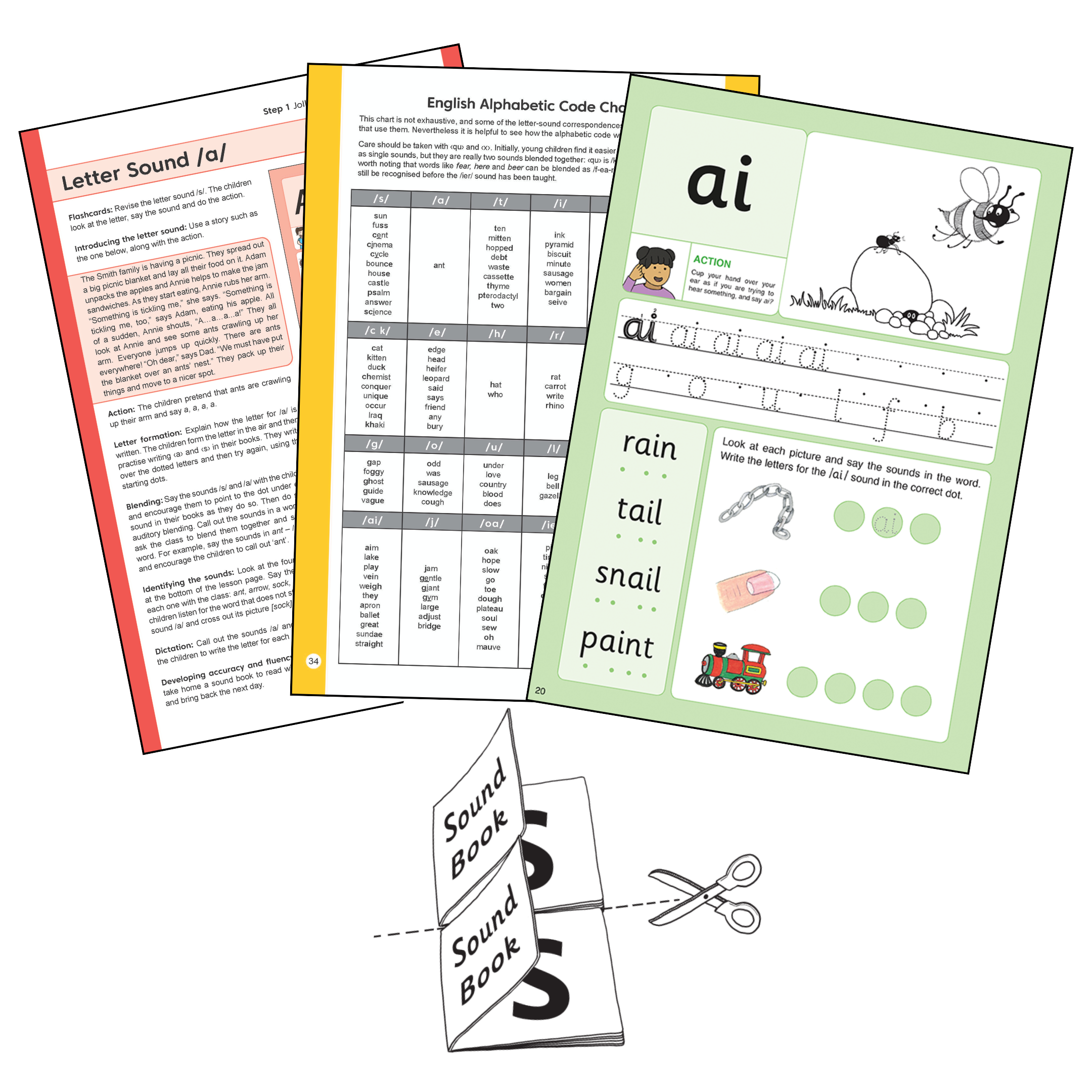
Have pupils complete the ‹t› worksheet from Pupil Book 1 or the free resources. Use this time to observe how they're doing. Support pupils as needed, or gather a small group who need extra help to work with you directly.
What to do:
- Write over the dotted letters to practise letter formation.
- Say four words (tent, squirrel, teddy, turtle). Pupils decide which start with /t/ and cross out the one that doesn’t. (squirrel)
- Encourage them to use the sound dots under each word on the side: tap each dot as they say the individual sounds, then swipe across to blend and read the full word.
Step 7
Dictation
Teacher guidance:
Call out the sounds /t/, /a/, /s/ and ask the children to write the letter for each one on a piece of paper. Each day, you can mix up the order to ensure pupils are listening closely to the sound and writing the correct letter.
FURTHER REINFORCEMENT
Step 8
Sing Song
What to do:
Sing the Jolly Phonics song for /t/, using the tennis head-turning action.
Step 9
Fun Activities
Ideas:
- Make model tortoises from clay.
- Teddy Bear Day – children bring in their teddies to school.
Step 10
Home Sound Book
Teacher guidance:
Send home the Home Sound Book with the new letter ‹t› in. Pupils read it with parents and practise saying the sounds, doing the actions and sometimes tracing the letters.
Value of this routine:
- Builds a strong home–school connection.
- Provides daily review and reinforcement.
- Helps parents see and support their child’s progress.
- Develops confidence and fluency through repeated practice.
Valuable Resource
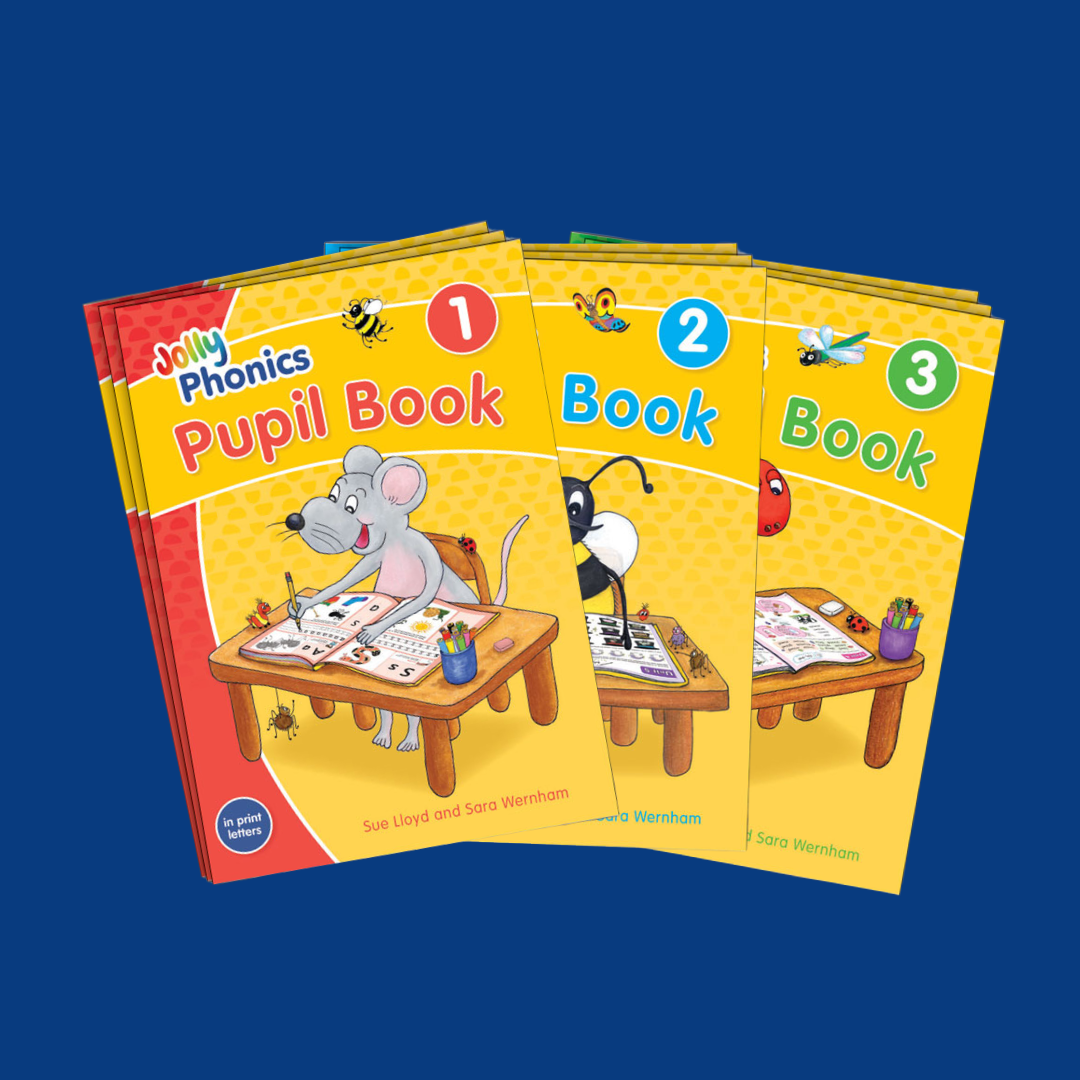
Write-in books with fun activities that grow in difficulty across three levels, giving pupils independent practice and consolidation. Follow the same structure as Jolly Classroom software and are supported by the Teacher’s Book for daily planning.
How to introduce the story & action
This video example shows how to introduce the letter ‹t› through the story and action. Notice how the pace is kept lively to hold pupils’ attention. Concepts can be reinforced later in the day through other fun activities.
Watch How to introduce the story & action on YouTube
Teach ‹t› with Jolly Classroom
Discover the ease of teaching with Jolly Classroom - fully planned, structured lessons that are fun and engaging!
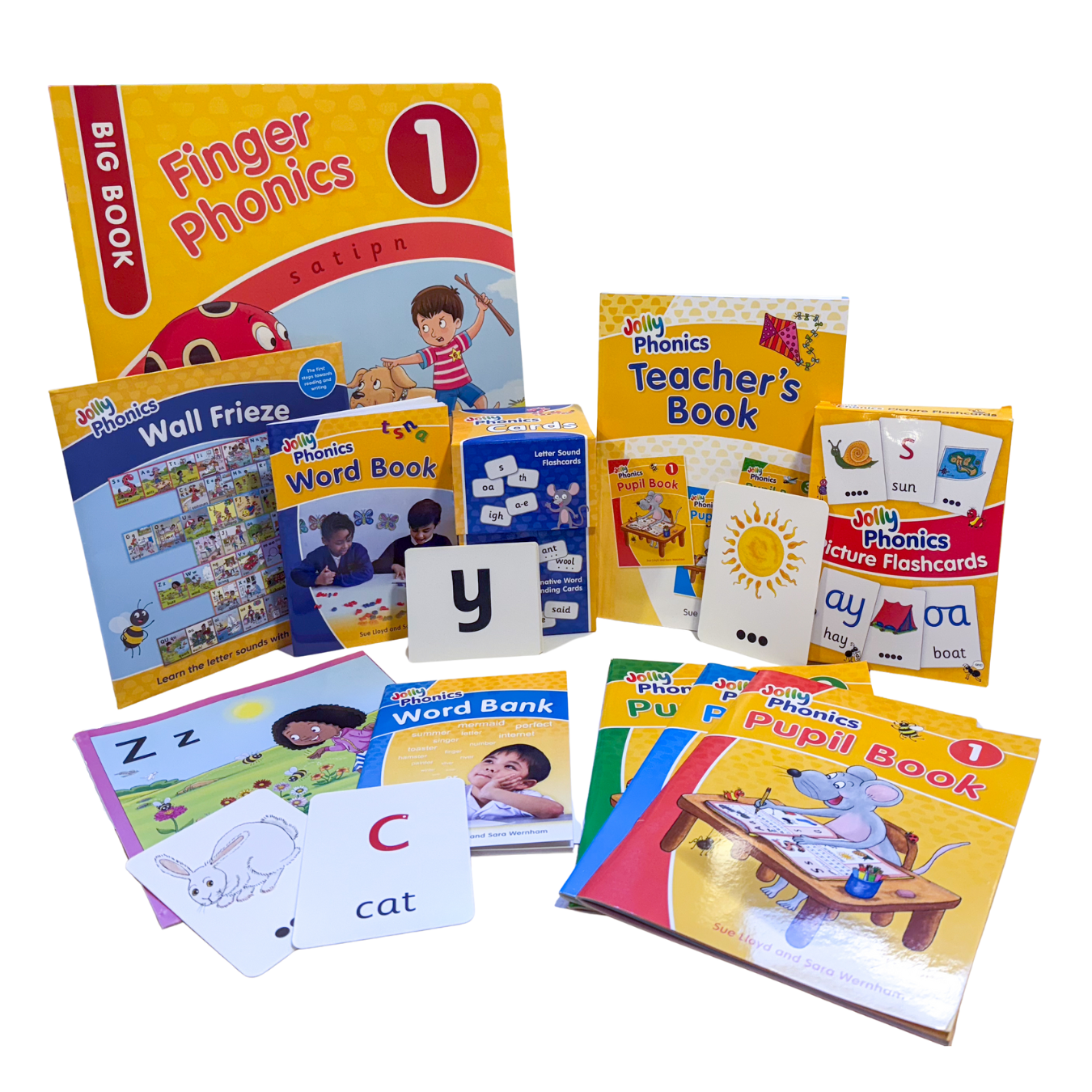
Do you have everything ready?
-
Finger Phonics Big Books 1 - 7
Finger Phonics Big Books 1 - 7 -
Jolly Phonics Cards
Jolly Phonics Cards -
Jolly Phonics Picture Flashcards
Jolly Phonics Picture Flashcards -
Wall Frieze
Wall Frieze -
Pupil & Teacher's Books
Pupil & Teacher's Books -
Jolly Phonics Word Bank Book
Jolly Phonics Word Bank Book -
Jolly Phonics Word Book
Jolly Phonics Word Book -
The Handbook
The Handbook