





Lesson
GROUP 1: LESSON ‹s›
Teach the s sound with Jolly Phonics lesson guidance, including story and action ideas, revision prompts and practice support for teachers.
GROUP 1: LESSON ‹s›
Lesson ‹s›:
GET READY TO TEACH
LEARNING THE LETTER SOUND
Step 1
The /s/ story and action
Teacher guidance:
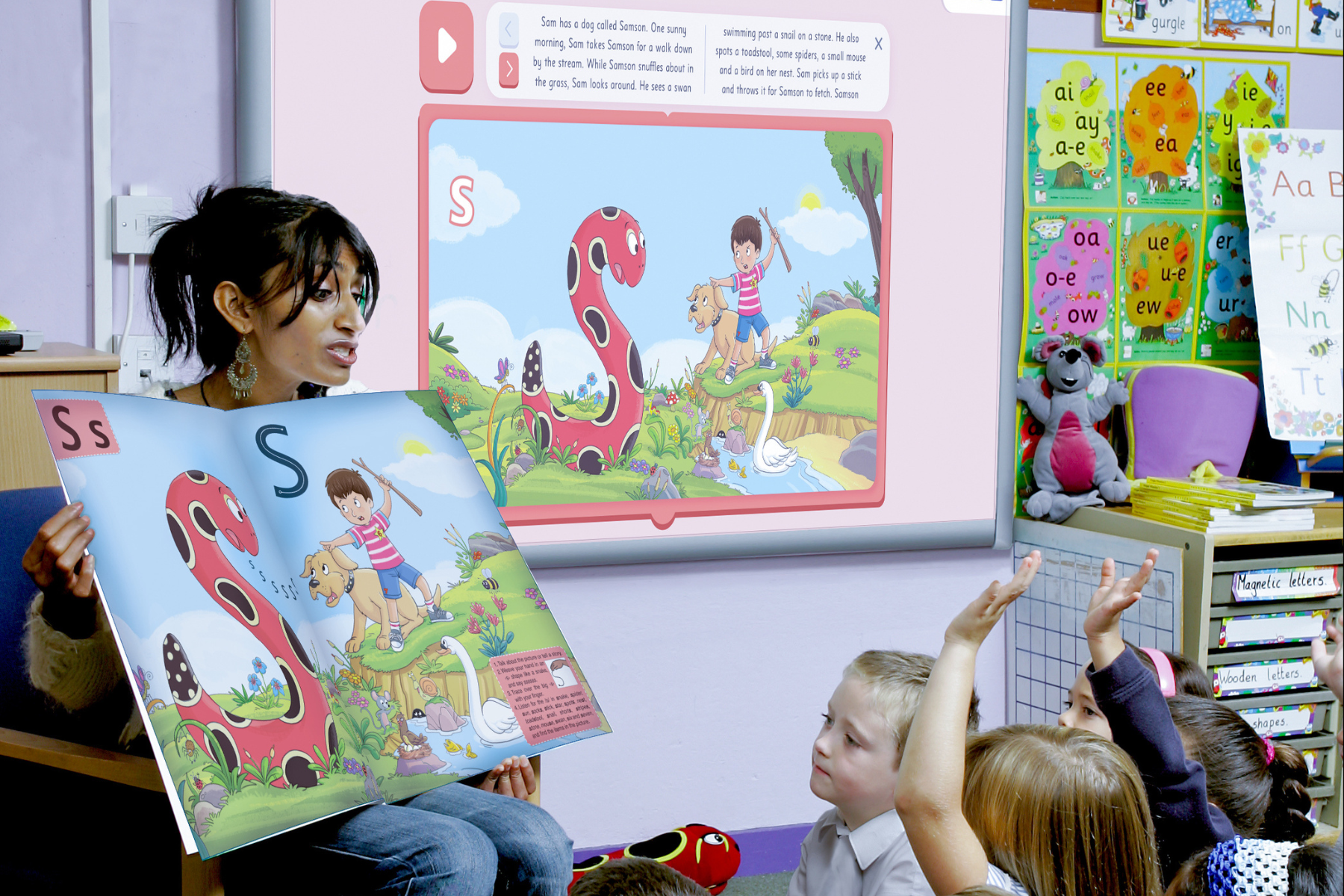
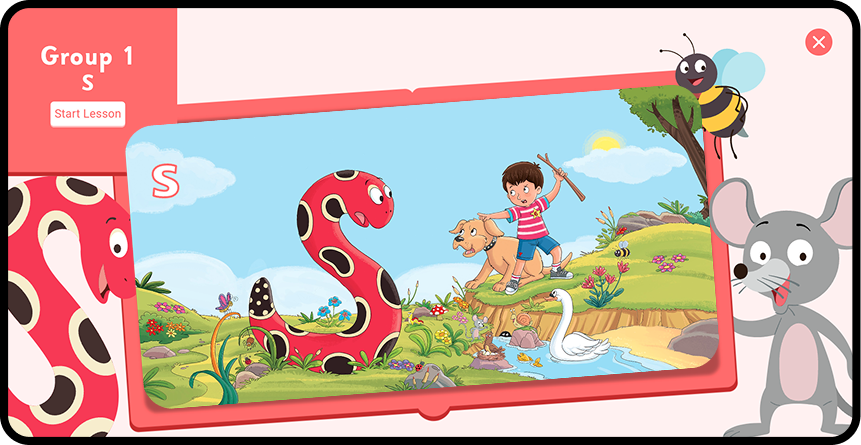
Read or tell the ‹s› story aloud to the class to introduce the letter sound /s/. Talk about the picture and the story. This helps to develop vocabulary and comprehension. Point to a few items in the picture and say the words, asking the children for their meaning. Show the letter ‹s› and hold up the flashcard with the letter ‹s› on and explain that it makes a /s/ sound just like the snake in the story.
Show the action and introduce the action for /s/ – weaving your hand like a snake. Say the /s/ sound as you model the movement and invite pupils to copy you. Then show the flashcard ‹s› again and repeat the sound and action.
What to do:
- 'Watch me do the action for /s/'.
- Do the action all together and then ask a few pupils to do it independently.
- Show the flashcard, then do the action and make the /s/ sound together.
- Encourage pupils to suggest other words they know that begin with an /s/ - star, sunflower, stripes, spots.
Step 2
Learning Letter Formation
Teacher guidance:
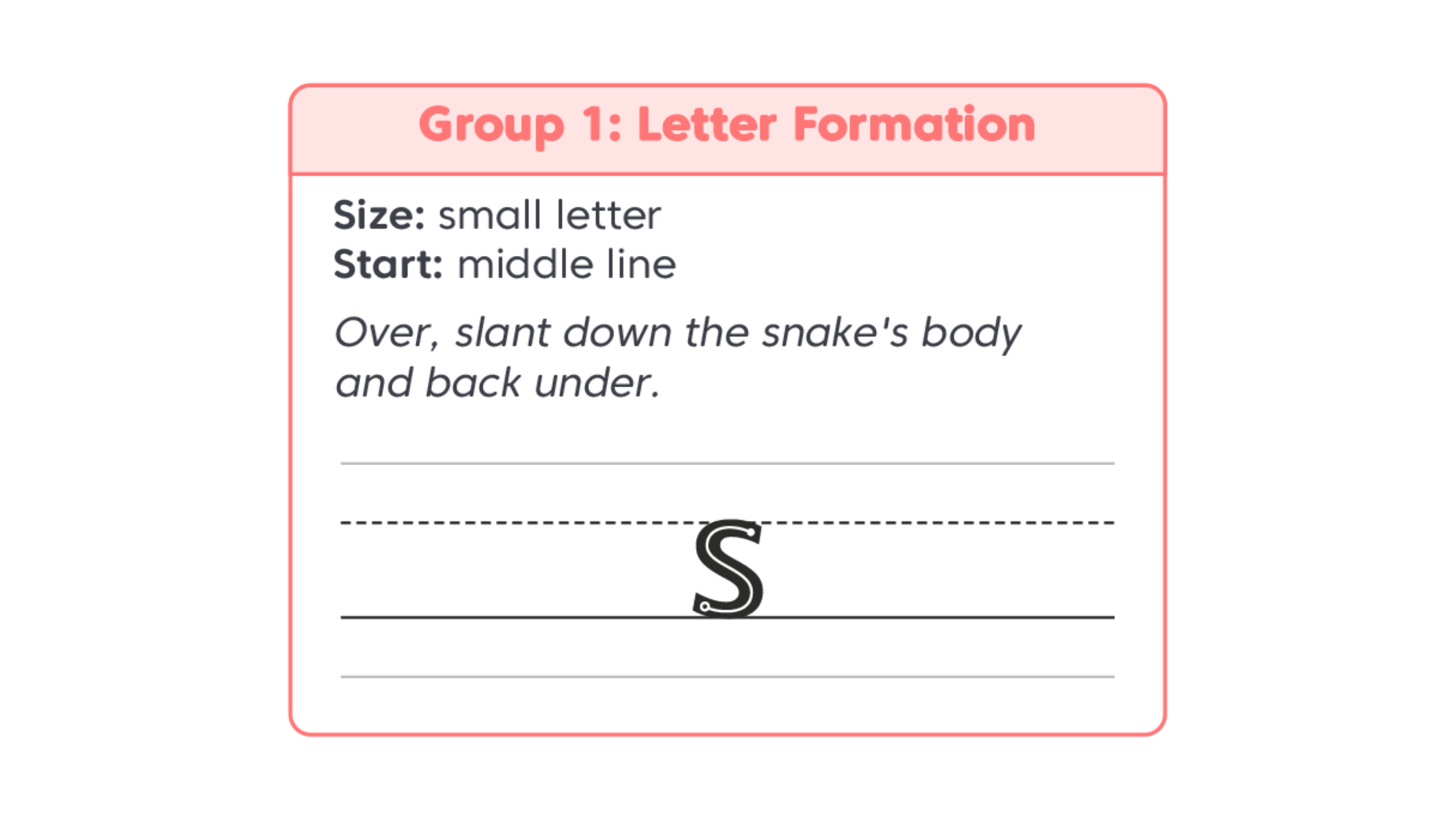
Write the letter on the board and/or demonstrate it with ‘air writing’. When writing letters in the air, remember that if the teacher faces the children, the letters should be written ‘backwards’ so they appear right to the children watching. The children follow the formation and write the letter in the air with their pointing finger.
What to do:
- Model correct formation and say 'around and back under.'
- Model /ssss/ as you write it in the air. Encourage pupils to copy your movement and sound.
- Now get pupils to practice writing it on their leg, on the floor, on the table...etc.
TEACH THE SOUND
Step 3
Auditory Blending
Teacher guidance:
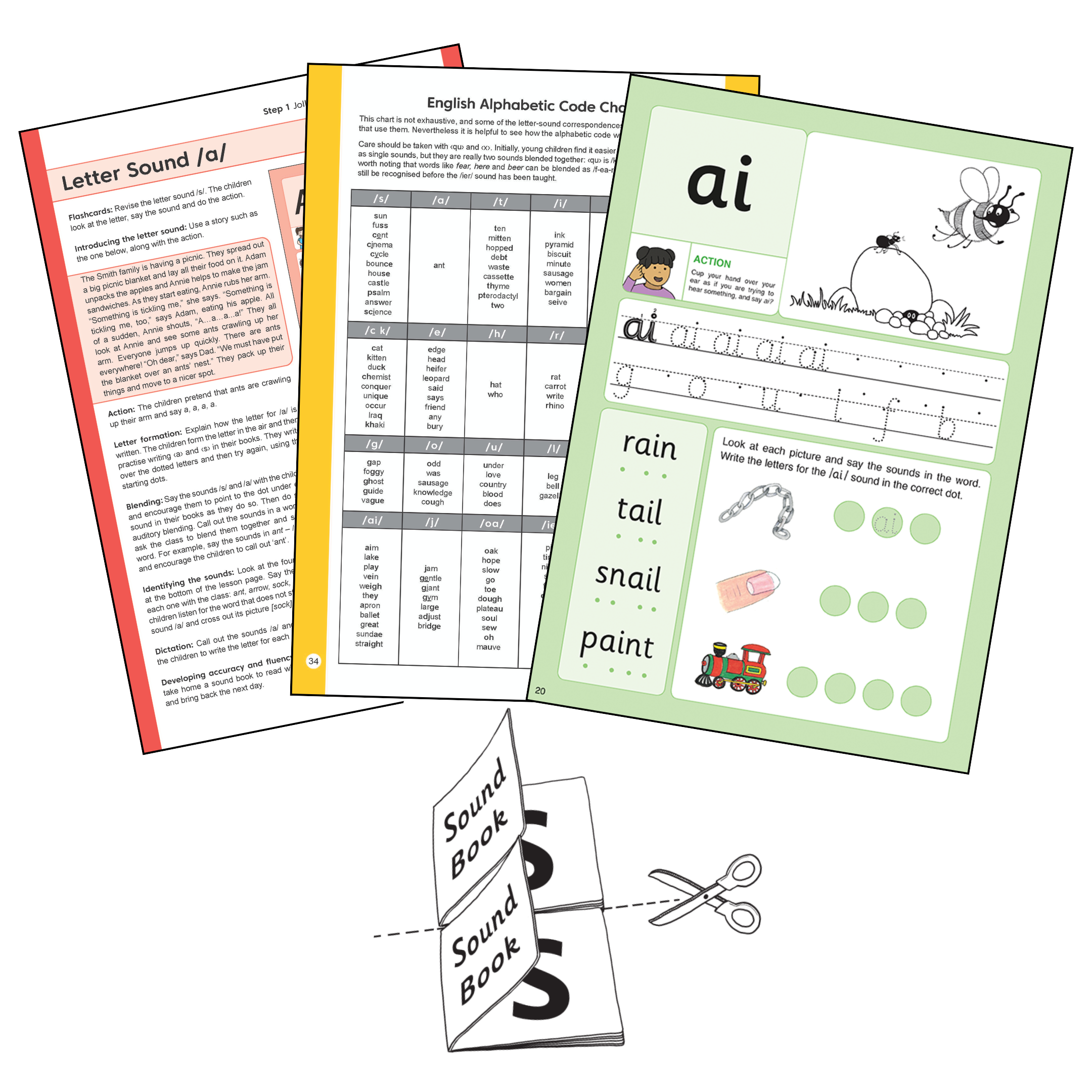
At this stage, auditory blending is recommended until enough letter sounds have been taught for reading words. The teacher gives the sounds in a short word and the children listen and identify the word. Use your arm to model the sounds – tap from shoulder to wrist, one tap for each sound – then run your hand down the arm to blend and produce the whole word. Encourage pupils to watch first, then join in with new words. For example, tap out /h-u-t/ and let them call out hut.
What to do:
- Look at the picture and say ‘Can you see the /s-u-n/ and usually one or two children will hear the word ‘sun’. Say the sounds for a few other words, for example /d-o-g/ ‘dog’, /m-ou-s/ ‘mouse’, /n-e-s-t/ ‘nest’, and a few more children will hear the words.
- This tunes the children into hearing the word when the sounds are spoken for them by the teacher/adult.
- This prepares the children for blending words independently.
- A few words every day gradually tunes all children into hearing the word.
Step 4
Identifying Sounds in Words
Teacher guidance:
Identifying sounds in words is essential for writing words. It is also necessary for understanding how the alphabetic code works, namely that letters represent the sounds of English.
What to do:
- Say the word ‘sun’ and explain that it is made up of sounds.
- Ask the children if they can hear a /s/ sound in the word ‘sun’?
- Then ask if there is a /s/ sound in ‘snake’?
- Then is there a /s/ sound in ‘dog’?
- The aim in this lesson is to ‘tune the children in’ to listen to the /s/ at the beginning of words and identify any words that do not start with the /s/ sound.
Spot the ‹s› Sound:
Listen. Which of these words begins with a /s/ sound?
- sun or dog
- rock or spider
- tree or stick or flower
- water or swan or hat
- bird or red or star
PRACTICE THE SOUND
Step 5
Independent Practice
Teacher guidance:
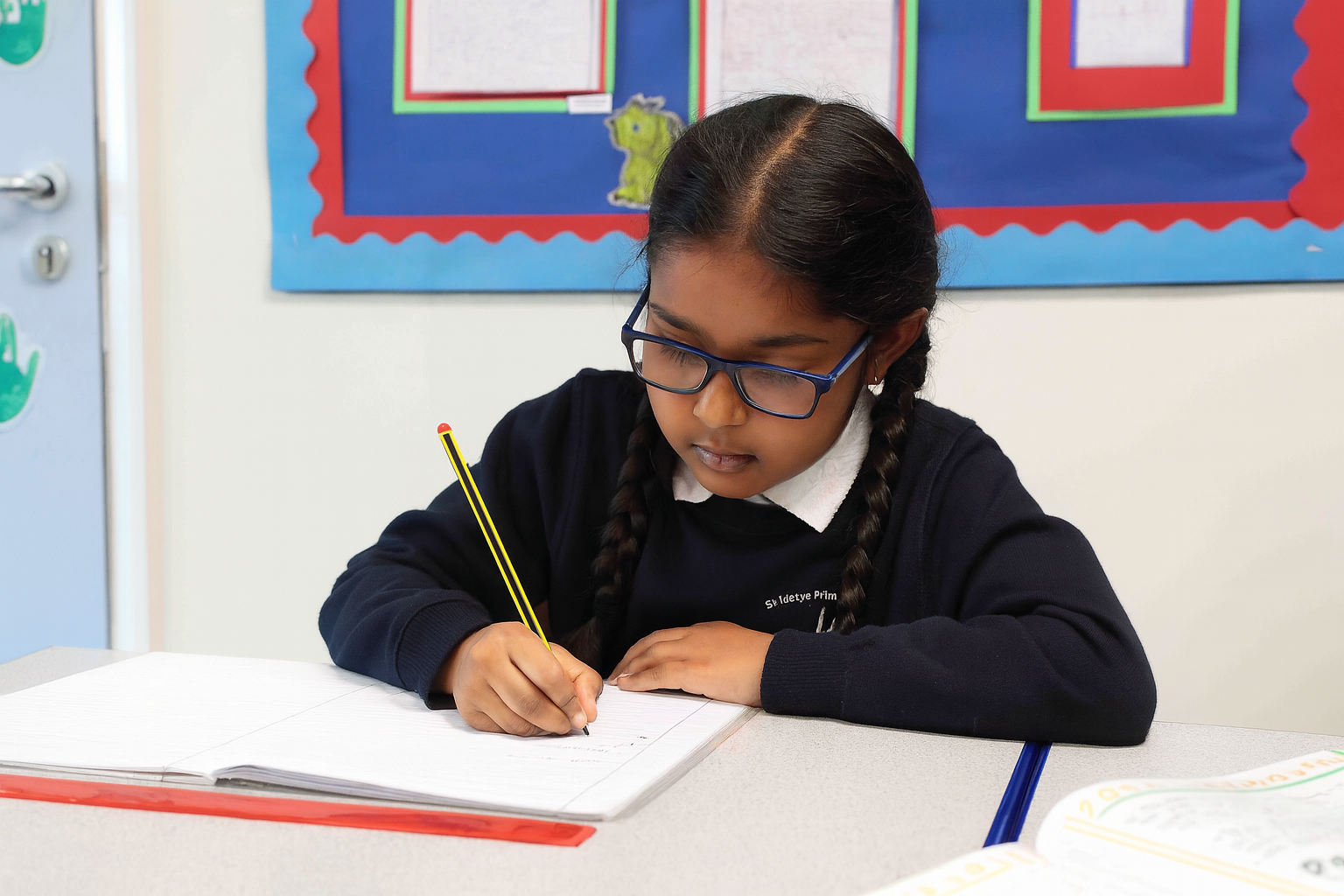
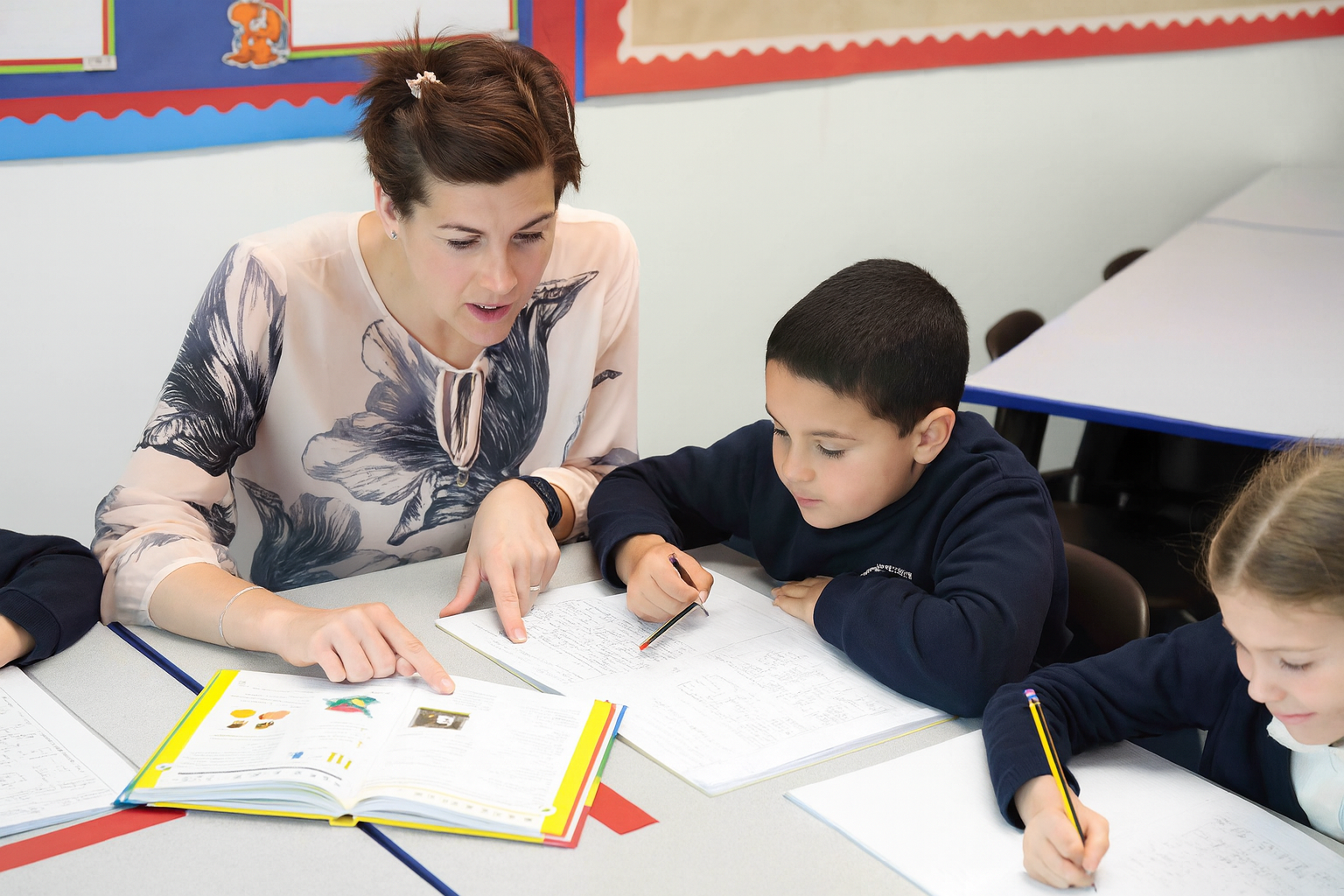
Pupils complete the ‹s› worksheet from the free resources or the matching activity in Pupil Book 1. Use this time to observe how they're doing. Support pupils as needed, or gather a small group who need extra help to work with you directly.
What to do:
- Write over the dotted ‹s› letters.
- Point to the letter ‹s› and saying the sound /s/.
- Talk about the four pictures at the bottom of the sheet, crossing out the picture which doesn’t start with the sound /s/.
Valuable Resource
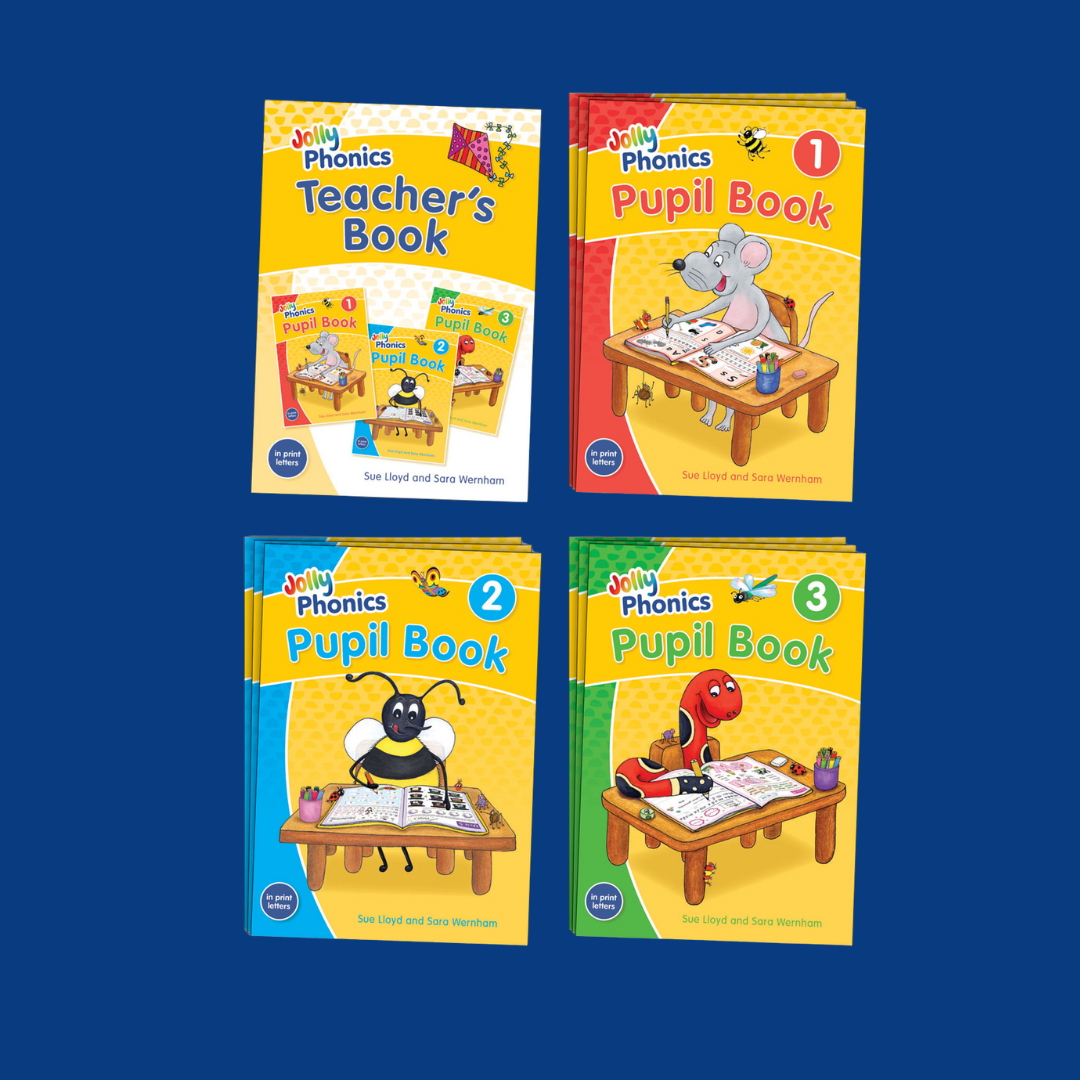
Write-in pupil activities reinforce phonics teaching through reading, spelling and writing practice. The Teacher’s Book (sold separately) provides step-by-step lessons and guidance, ensuring structured consistent teaching. Together they create a complete resource for daily classroom use.
Step 6
Dictation
Teacher guidance:
Dictation helps strengthen the link between sounds and letters, making it a valuable habit to establish from the very start.
What to do:
Say the sound /s/ and have pupils write the corresponding letter - either in the air or on paper.
FURTHER REINFORCEMENT
Step 7
Sing Song
What to do:
Sing the Jolly Phonics song for /s/ with actions.
Song games:
- Sing + Act: Have pupils sing the /s/ song while doing the action for 'snake' to reinforce sound-symbol-action links.
- Repeat Sing: You sing a line, they repeat it - this boosts listening, pronunciation, and recall.
- Silent Signal: Hum the tune or do the action silently to cue the sound - great for on-the-go practice! This is especially good to review multiple sounds.
Step 8
Fun activities
Ideas:
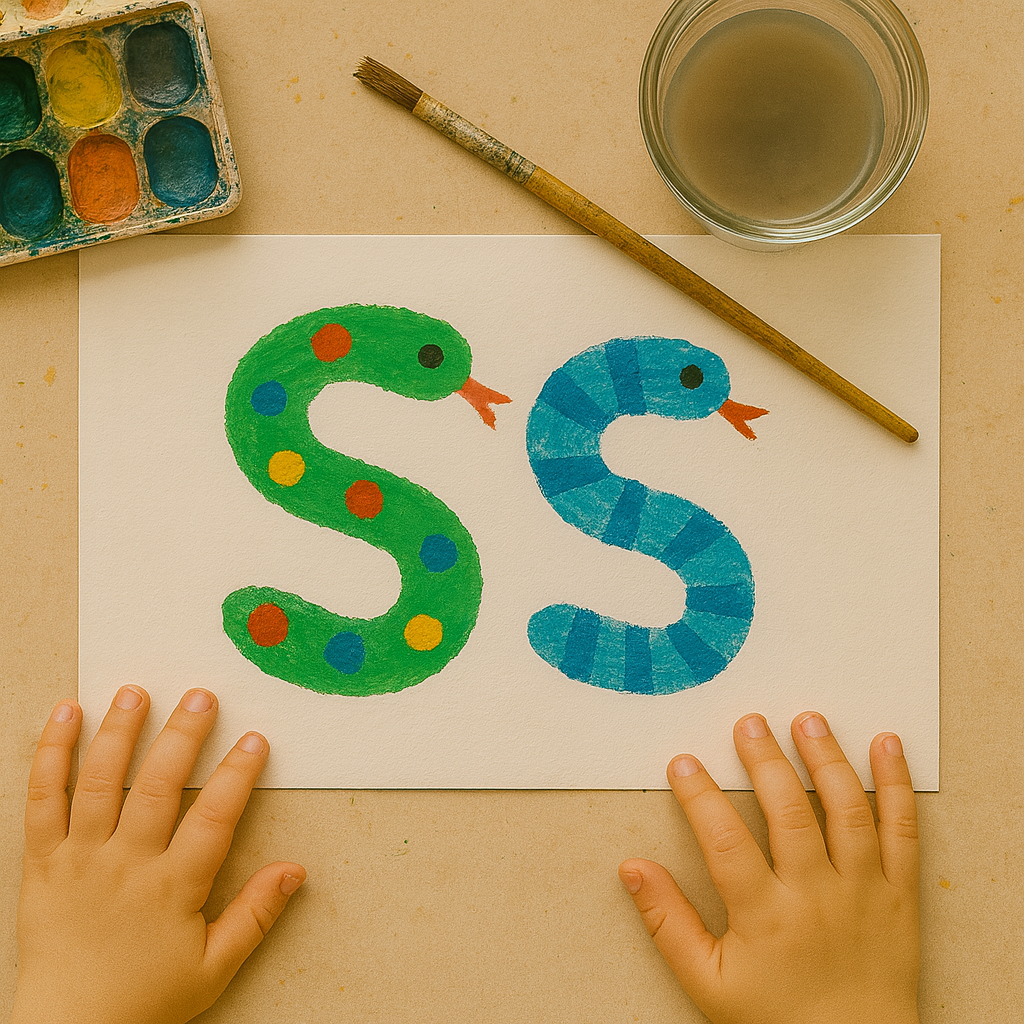
- paint spotted or striped ‹s› shaped snakes
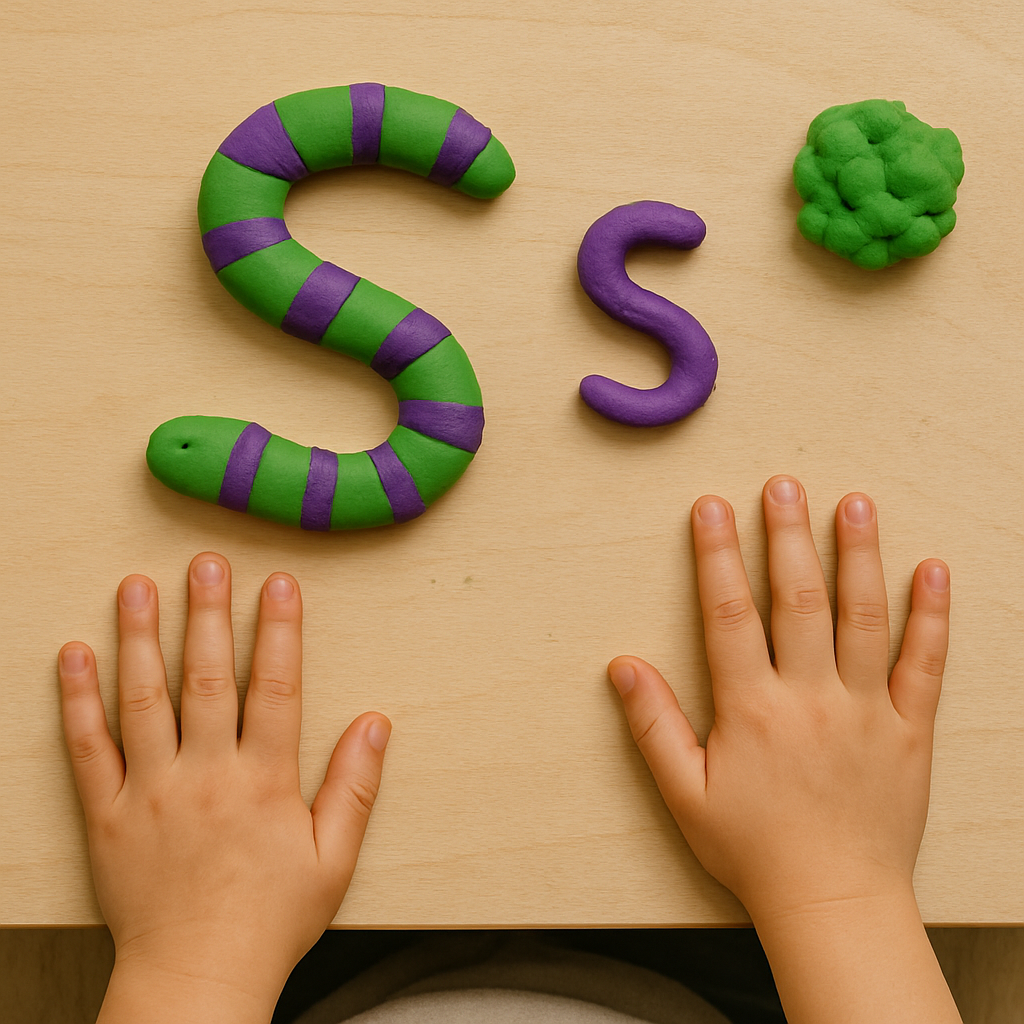
- use playdough to make into ‹s› shaped snakes
Step 9
Home Sound Book
Teacher guidance:
Send home a small sound book with the new letter ‹s› for pupils to share with parents. This encourages daily review, builds a strong school–home link and gives children a chance to ‘teach back’ what they’ve learned. The book should contain all the letter sounds taught so far and travel between home and school every day.
Value of this routine:
- Reinforces sound–action–letter connections outside the classroom.
- Creates positive home engagement with phonics.
- Establishes early reading habits and a daily practice routine.
- Supports long-term retention through regular review.
How to introduce the story & action
This video example shows how to introduce the letter ‹s› through the story and action. Notice how the pace is kept lively to hold pupils’ attention. Concepts can be reinforced later in the day through other fun activities.
Watch How to introduce the story & action on YouTube
Teach ‹s› with Jolly Classroom
Discover the ease of teaching with Jolly Classroom - fully planned, structured lessons that are fun and engaging!
Bumper Book Fun
-
Snake ‹s› Painting
Snake ‹s› PaintingPupils paint stripy or spotty snakes in the shape of the letter ‹s›.
-

Sound Hunt
Sound HuntAllow pupils to search the classroom and find objects that start with the /s/ sound.
-
Build Letters with Playdough
Build Letters with PlaydoughUse playdough to shape into the letter ‹s›.
One resource. Countless ways to boost learning.
Do you have everything ready?
-
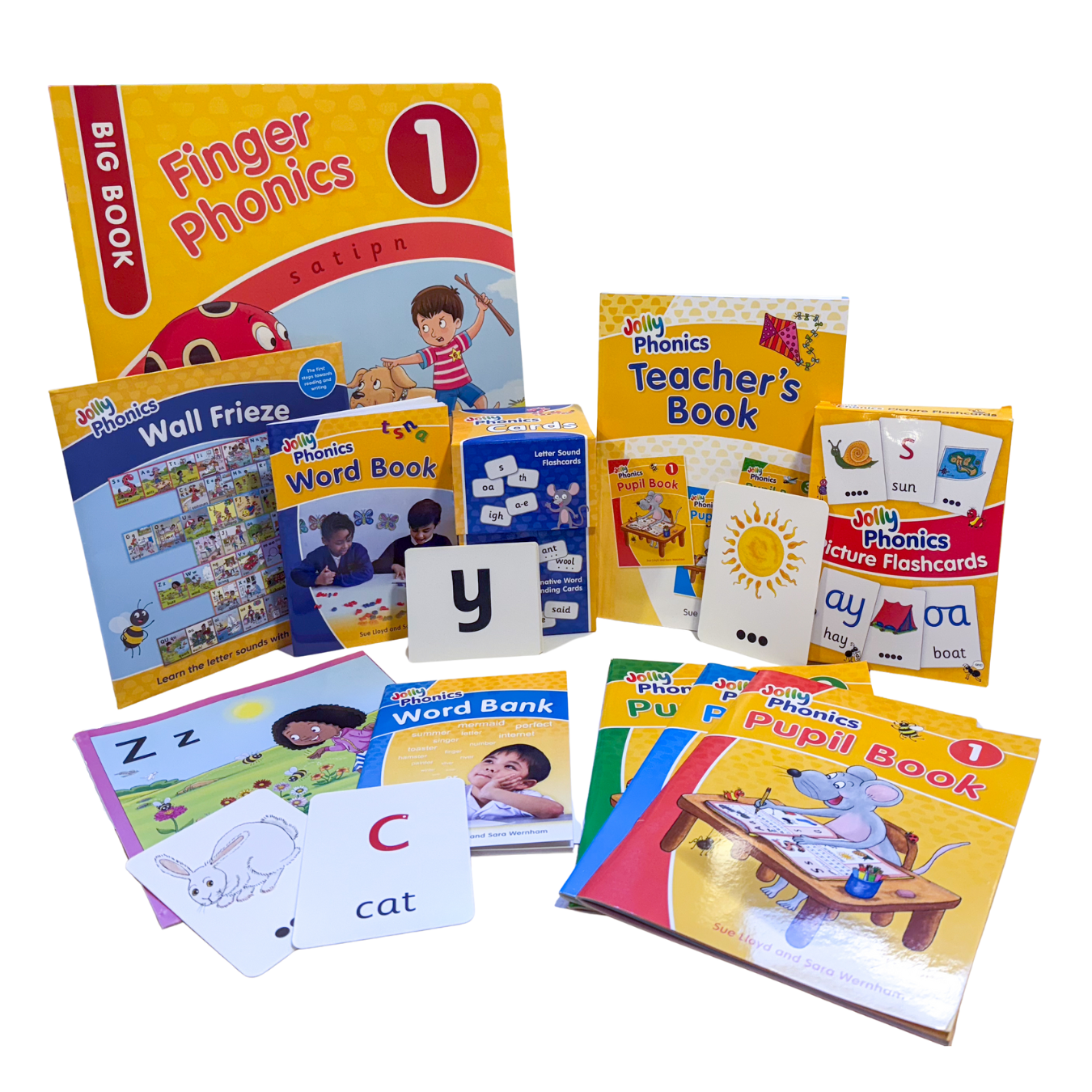
Finger Phonics Big Books 1-7
Finger Phonics Big Books 1-7 -
Jolly Phonics Cards
Jolly Phonics Cards -
Jolly Phonics Picture Flashcards
Jolly Phonics Picture Flashcards -
Wall Frieze
Wall Frieze -
Pupil & Teacher's Books
Pupil & Teacher's Books -
Jolly Phonics Word Bank Book
Jolly Phonics Word Bank Book -
Jolly Phonics Word Book
Jolly Phonics Word Book -
The Handbook
The Handbook