




Lesson
GROUP 1: LESSON ‹n›
Teach the n sound with Jolly Phonics lesson guidance, including story and action ideas, revision prompts and practice support for teachers.
GROUP 1: LESSON ‹n›
Lesson ‹n›:
GET READY TO TEACH
REVISION
Step 1
Revision
Teacher guidance:
Quickly revise previously taught letter sounds with flashcards. Pupils say the sound and do the action at the same time.
What to do:
- Hold up the flashcards and ask pupils to say the letter sounds and do the actions.
- Air-write each letter together.
- Invite a few pupils to demonstrate individually.
LEARNING THE LETTER SOUND
Step 2
The /n/ story and action
Teacher guidance:
Tell the story of a plane flying through the sky. It goes “nnnnn”, making a nasty noise, as it flies. Show the ‹n› flashcard and place the piece of wall frieze alongside the other letters.
What to do:
- Introduce the action for /n/: pupils stretch out both arms like aeroplane wings and say “nnnnn”. Encourage a long, clear “nnnnn”.
- Do the action together, then invite a few pupils to try it independently.
- Show the flashcard, then do the action and make the /n/ sound together.
Step 3
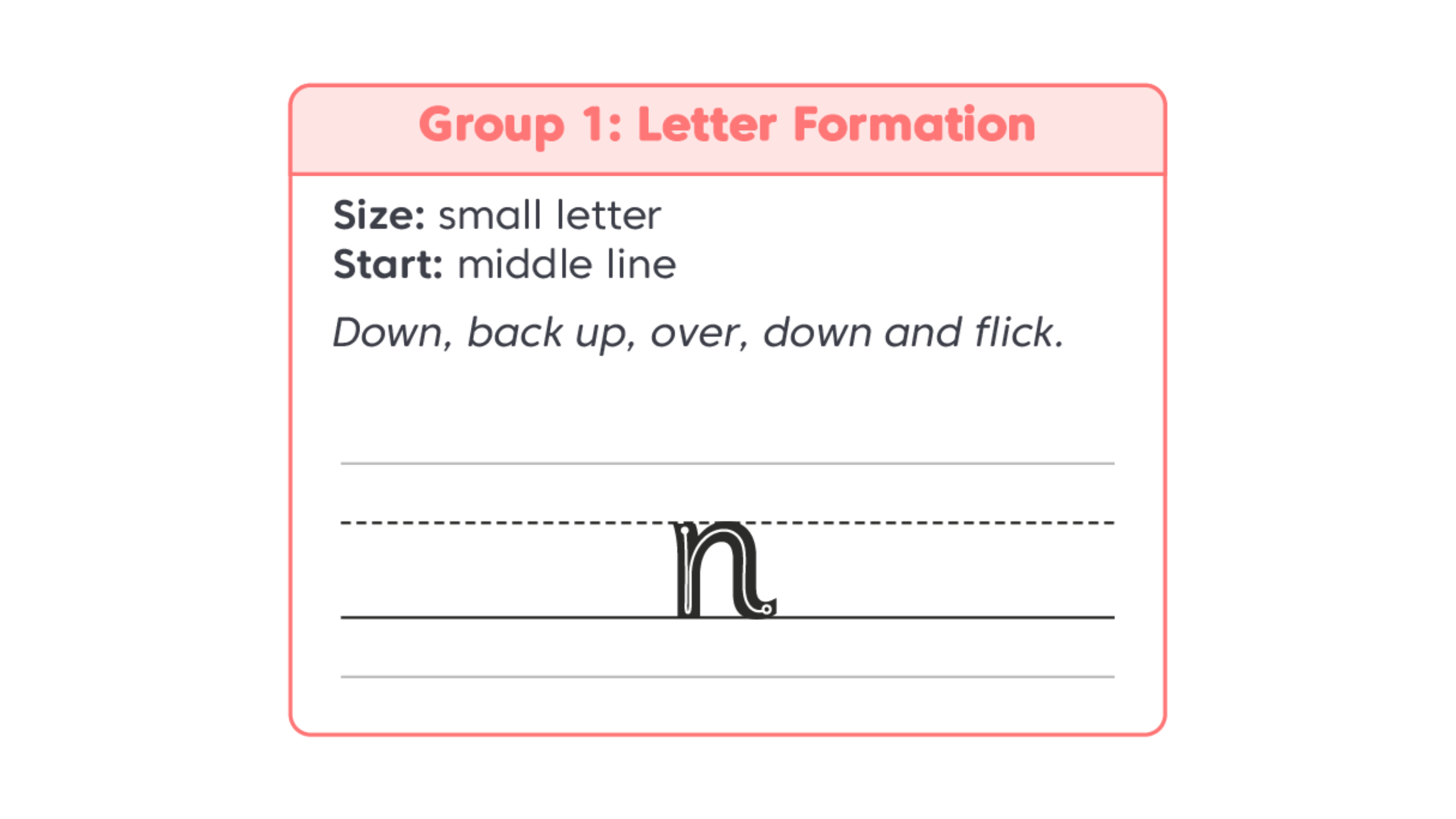
Learning Letter Formation
Teacher guidance:
Begin with auditory blending. Say the sounds in short words and blend them together. Model with your arm as before. Move to blending with print. Write words on the board, such as 'nip' and 'nap' with sound dots beneath. Pupils tap the dots underneath each letter as they say the sounds, then blend to read.
What to do:
- Blend /n-i-p/ → “nip”.
- Blend /p-a-n/ → “pan”.
- Blend /a-n-t/ → “ant”.
TEACH THE SOUND
Step 4
Blending
Teacher guidance:
Begin with auditory blending. Say the sounds in short words and blend them together. Model with your arm as before. Move to blending with print. Write words on the board, such as nip and nap with sound dots beneath. Pupils tap their hands as they say the sounds, then blend the sounds to read.
What to do:
- Blend /n-i-p/ → “nip”.
- Blend /p-a-n/ → “pan”.
- Blend /a-n-t/ → “ant”.
Step 5
Identifying Sounds in Words
Teacher guidance:
Encourage pupils to listen for the /n/ sound at the beginning of words.
Spot the ‹n› Sound:
Say each word from the list below. Pupils listen quietly at first then ask individuals to say aloud the word that starts with the ‹n› sound.
- net or cat
- hot or nose
- nap or dog
- nut or mat
PRACTICE THE SOUND
Step 6
Independent Practice
Teacher guidance:
Have pupils complete the ‹n› worksheet from Pupil Book 1 or the free resources.
What to do:
- Trace and write over dotted letters to practise formation.
- Say four words (box, net, nest, neck). Pupils decide which one does not start with /n/ (box).
- Tap sound dots under words to blend and read: tin, ant, nip, pan.
Step 7
Dictation
Teacher guidance:
Dictate the sounds /s/, /a/, /t/, /i/, /p/, /n/ in mixed order. Pupils write the letter for each one.

Digital Assessment Tool
-
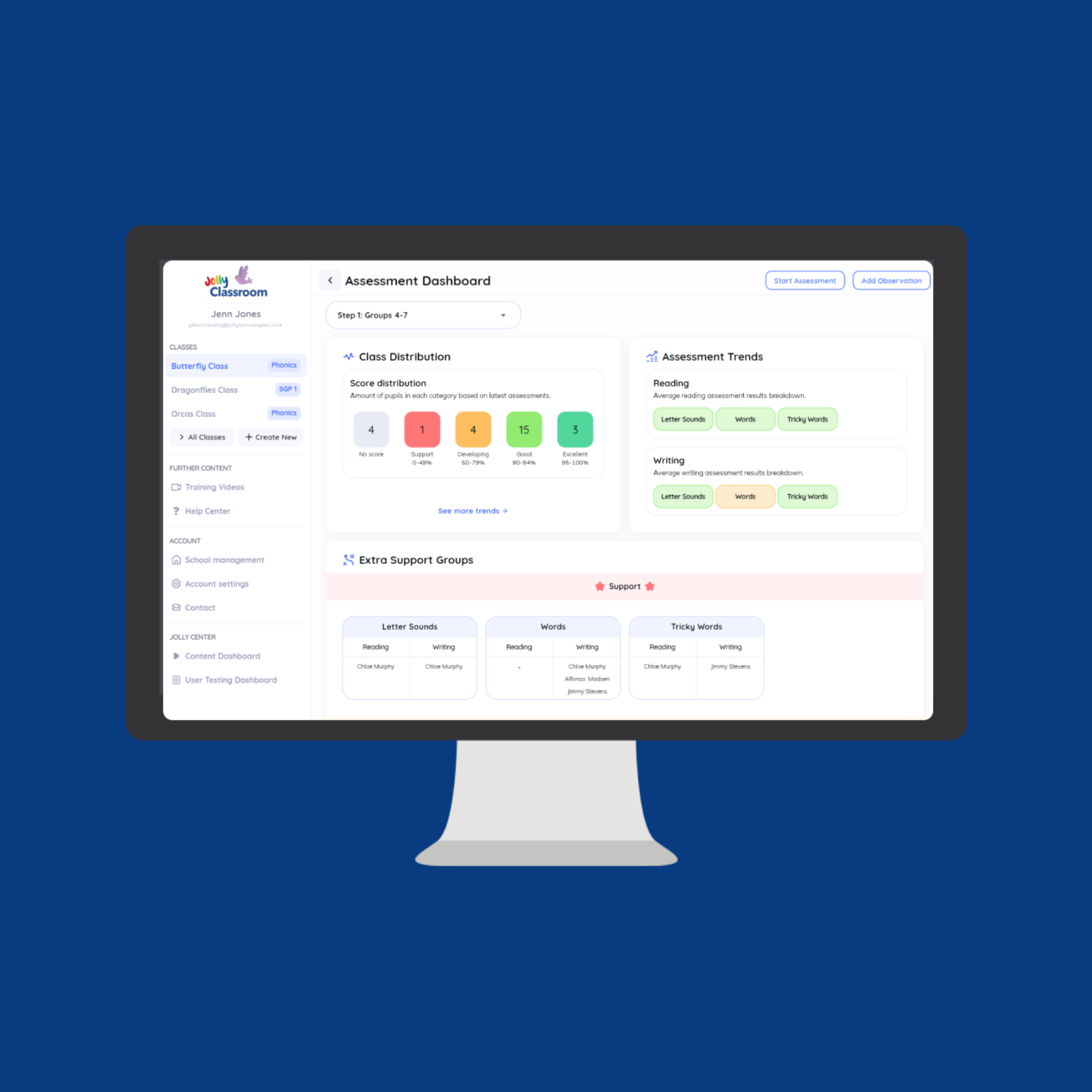
See Class Gaps to Inform Teaching
See Class Gaps to Inform TeachingQuickly identify which sounds, tricky words, or skills your class needs more support with. The tool highlights learning gaps so you can plan targeted lessons and group activities that make the biggest impact.
-
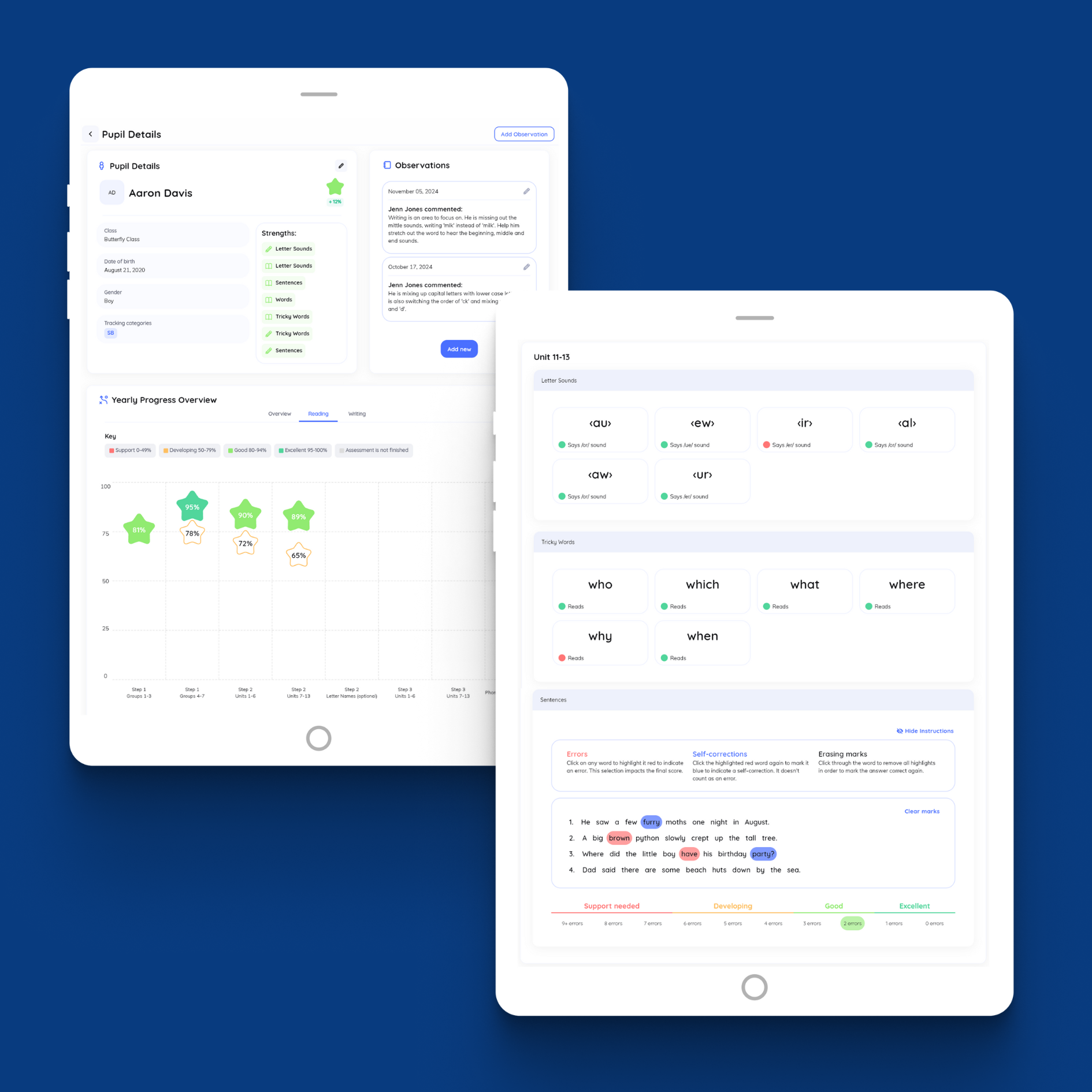
See Pupil Achievements
See Pupil AchievementsCelebrate progress with clear visual results that show each pupil’s phonics strengths and growth over time. It’s easy to reassess and monitor improvement, helping you keep learning on track.
-
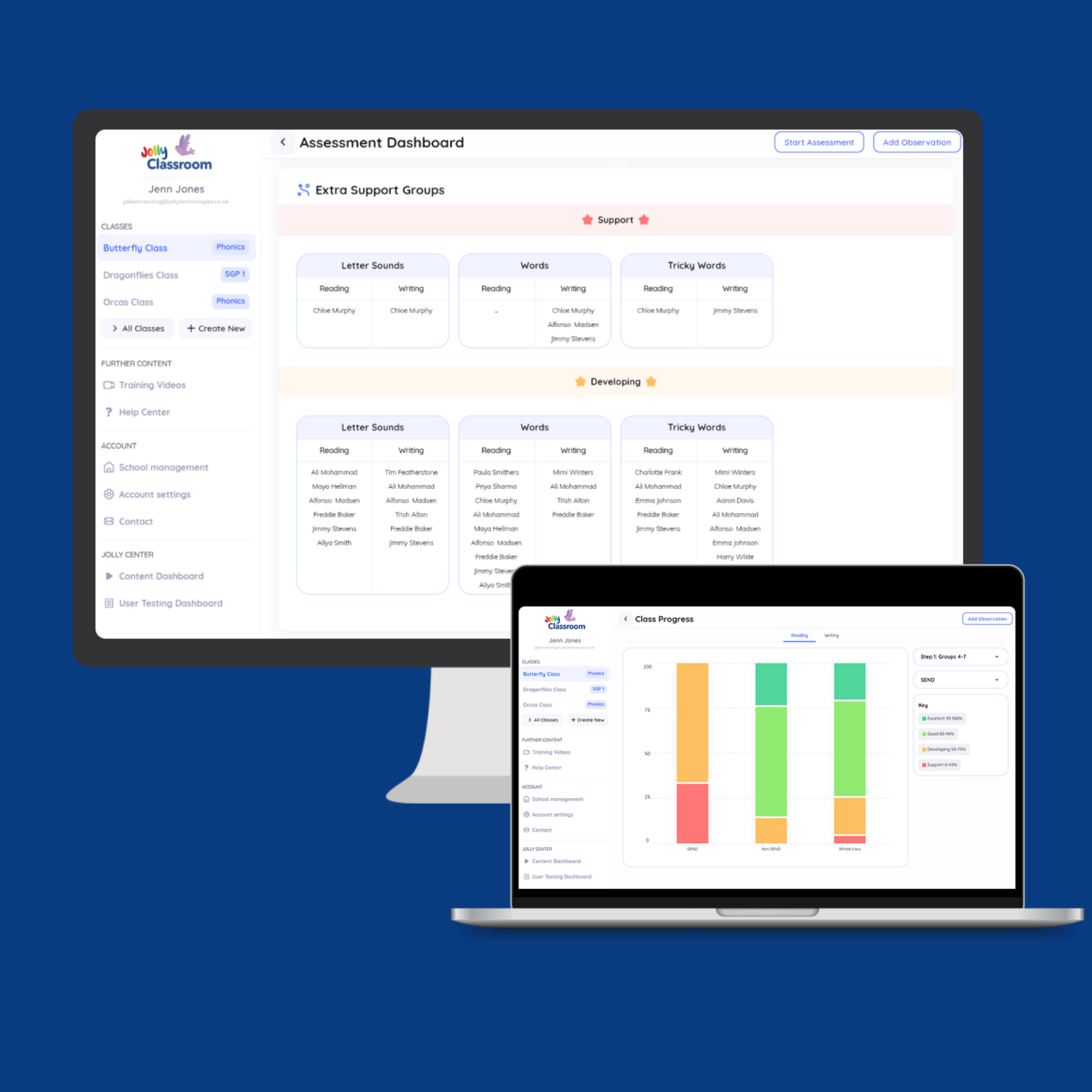
Create Intervention Groups
Create Intervention GroupsThe tool automatically groups pupils who need similar interventions, saving you time and ensuring targeted support. This makes it simple to deliver focused teaching and track improvements across the class.
Try the Jolly Phonics Assessment Tool for free!
FURTHER REINFORCEMENT
Step 7
Sing Song
What to do:
Sing the Jolly Phonics song for /n/, with arms out like an aeroplane’s wings.
Step 8
Home Sound Book
Teacher guidance:
Send home the Home Sound Book with the new letter ‹n›. Pupils read it with parents and practise saying the sound, doing the action and sometimes tracing the letter.
Value of this routine:
- Builds a strong home–school connection.
- Provides daily review and reinforcement.
- Helps parents see and support their child’s progress.
- Develops confidence and fluency through repeated practice.
Step 9
Fun Activities
Ideas:
- Play “Name it!” – say two or three words, pupils call out the one that starts with /n/.
- Aeroplane game – pupils fly around the room making the /n/ sound when they hear a word starting with /n/.
- Pupils draw or find a picture of something beginning with /n/.

Extra Practice for Letter Formation
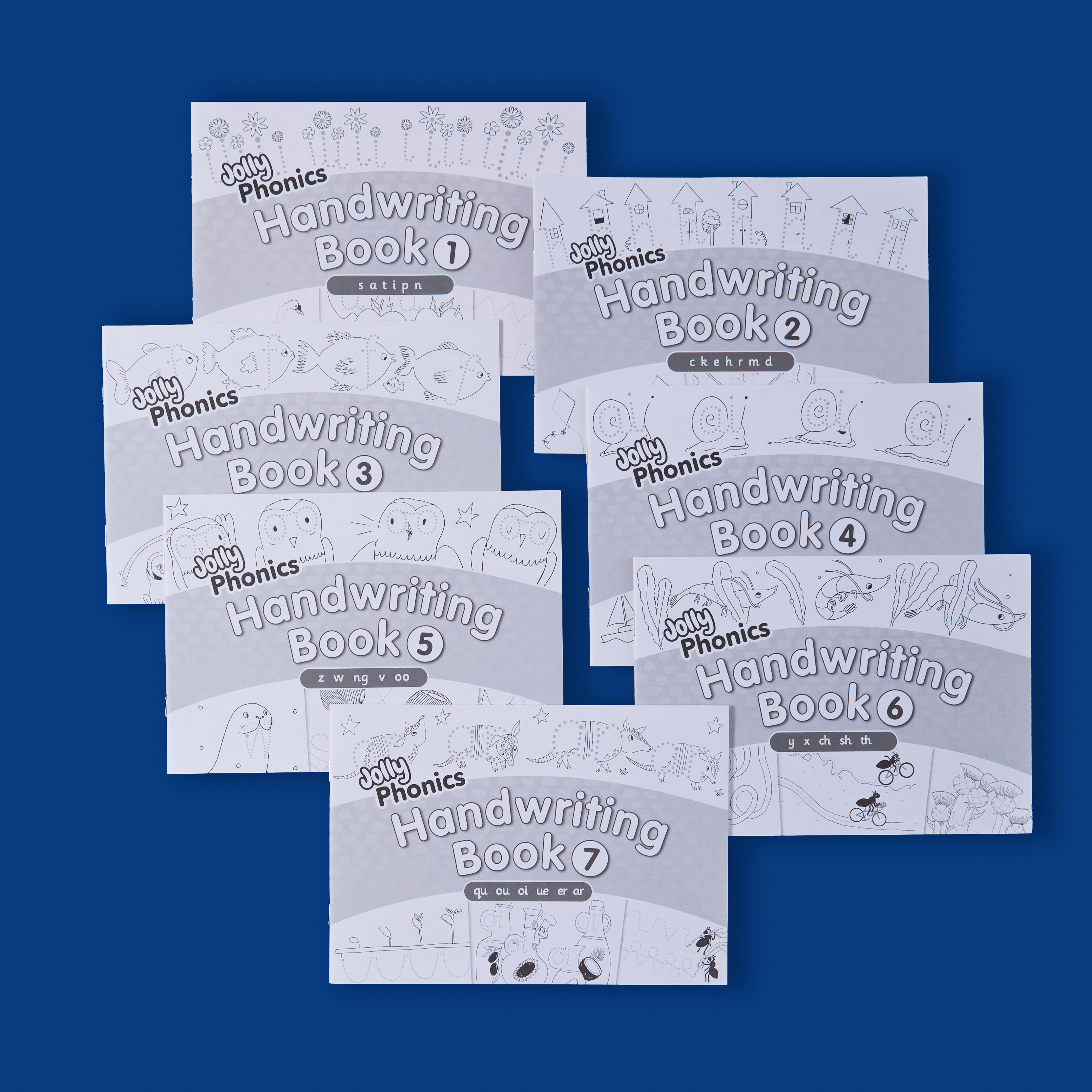
Seven books guiding children through letter formation in Jolly Phonics sound groups. With dotted letters, word writing and teacher or parent notes, they build fine motor skills, reinforce phonics knowledge and connect sounds to print in writing practice.
How to introduce the story & action
This video example shows how to introduce the letter ‹s› through the story and action. Notice how the pace is kept lively to hold pupils’ attention. Concepts can be reinforced later in the day through other fun activities.
Watch How to introduce the story & action on YouTube
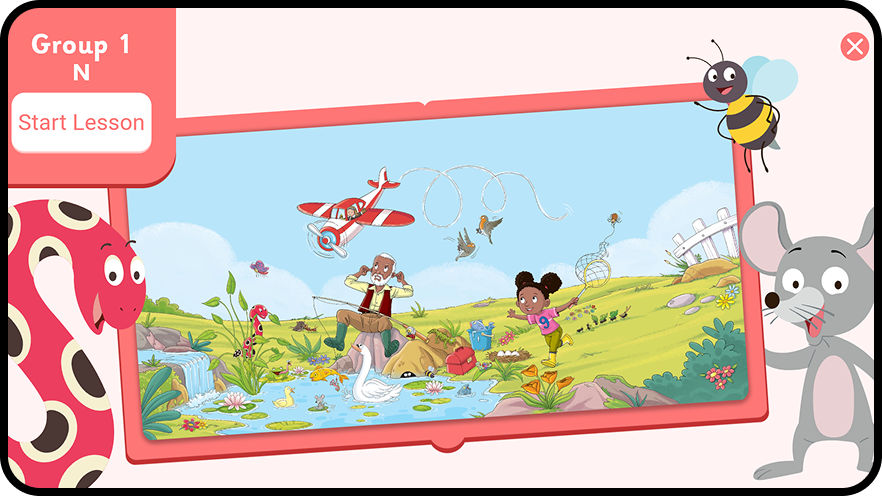
Teach ‹n› with Jolly Classroom
Discover the ease of teaching with Jolly Classroom - fully planned, structured lessons that are fun and engaging!
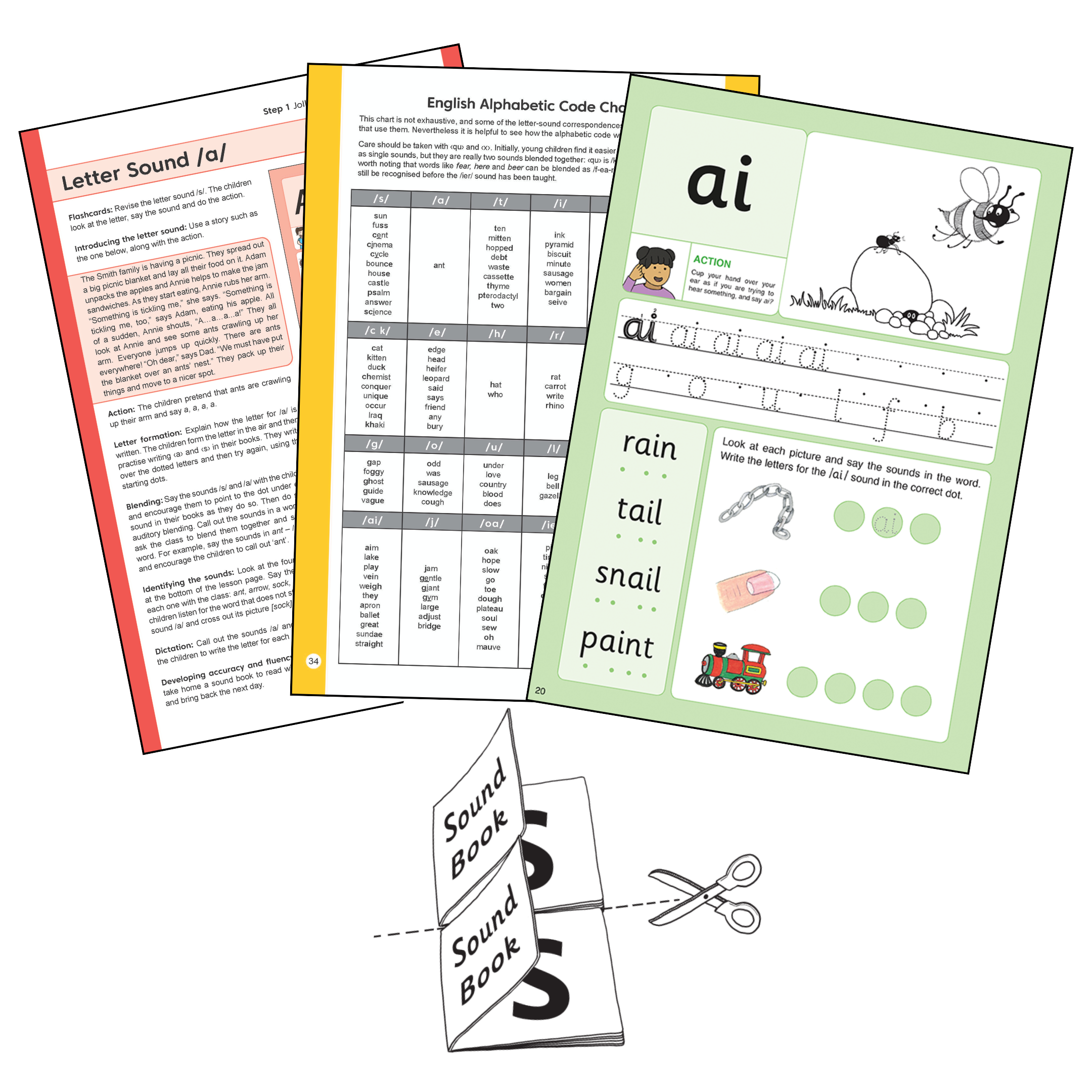
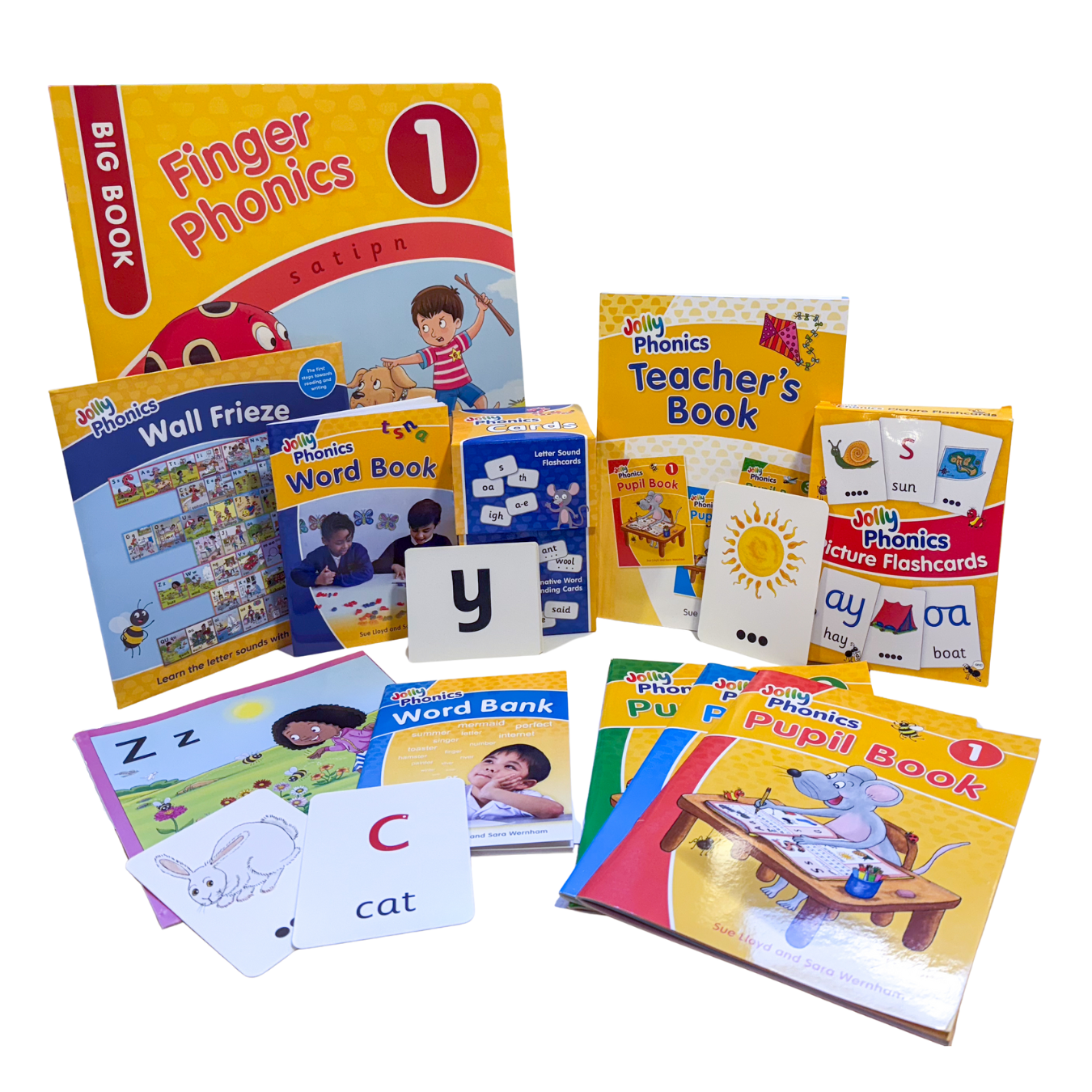
Do you have everything ready?
-
Finger Phonics Big Books 1 - 7
Finger Phonics Big Books 1 - 7 -
Jolly Phonics Cards
Jolly Phonics Cards -
Jolly Phonics Picture Flashcards
Jolly Phonics Picture Flashcards -
Wall Frieze
Wall Frieze -
Pupil & Teacher's Books
Pupil & Teacher's Books -
Jolly Phonics Word Bank Book
Jolly Phonics Word Bank Book -
Jolly Phonics Word Book
Jolly Phonics Word Book -
The Handbook
The Handbook