





Lesson
GROUP 2: LESSON ‹e›
Teach the e sound with Jolly Phonics lesson guidance, including story and action ideas, revision prompts and practice support for teachers.
GROUP 2: LESSON ‹e›
Lesson ‹e›:
GET READY TO TEACH
REVISION
Step 1
Revision
Teacher guidance:
Use flashcards to briefly revise the letter sounds already taught. Revise the formation of one or two letters.
What to do:
- Show flashcards of taught letter sounds. Pupils say each sound once and do the action.
- Choose 2 or 3 letters to write on the board. While this is being done the children form the letters in the air.

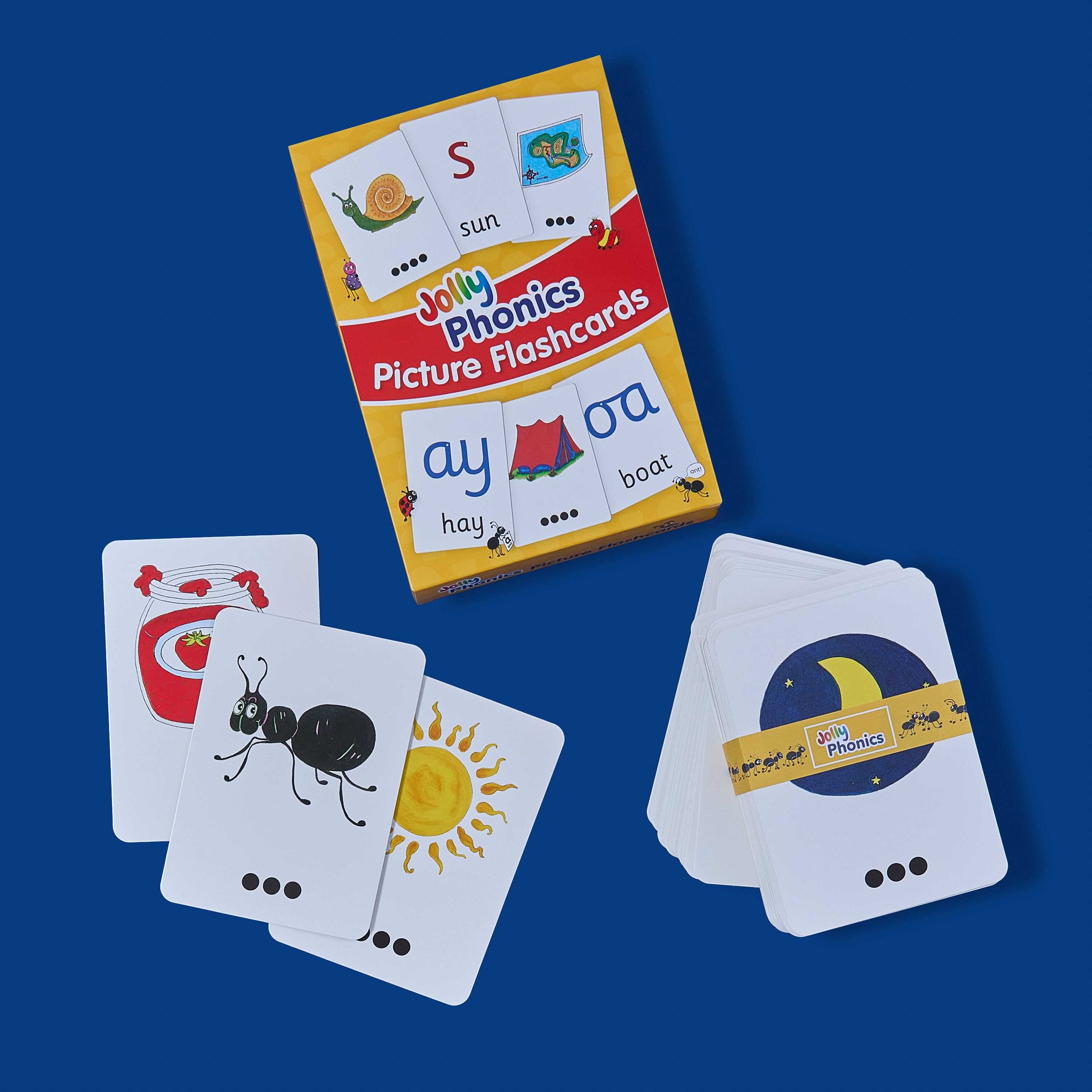
Great cards for blending and segmenting!
Sixty cards showing pictures with sound dots on one side and matching letters and words on the reverse. Great for introducing sounds, playing recognition games and extending vocabulary in a fun interactive way. A great resource for whole class, intervention or learning centre activities.
LEARNING THE LETTER SOUND
Step 2
The /e/ story and action
Teacher guidance:
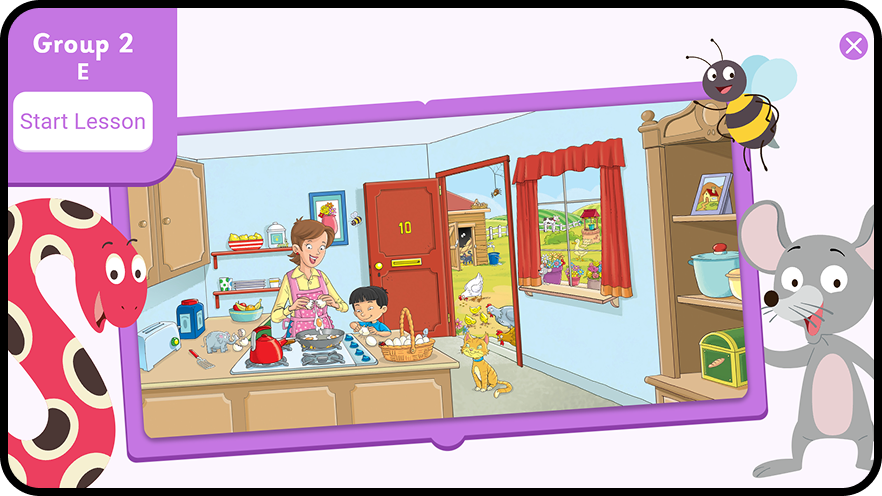
Tell a farm story where Ellie taps and cracks eggs: “e, e, e … e!” Demonstrate the action: mime tapping and cracking an egg into a pan while saying /e/. Display the ‹e› piece of the wall-frieze.
What to do:
- Demonstrate the action: and say /e-e-e/… /e/!”
- Children perform the action and say the letter sound together; then a few do it independently.
- Ask: “What /e/ words did you hear in the story? Can you think of other /e/ words - elbow, elephant, engine.”
Step 3
Learning Letter Formation
Teacher guidance:
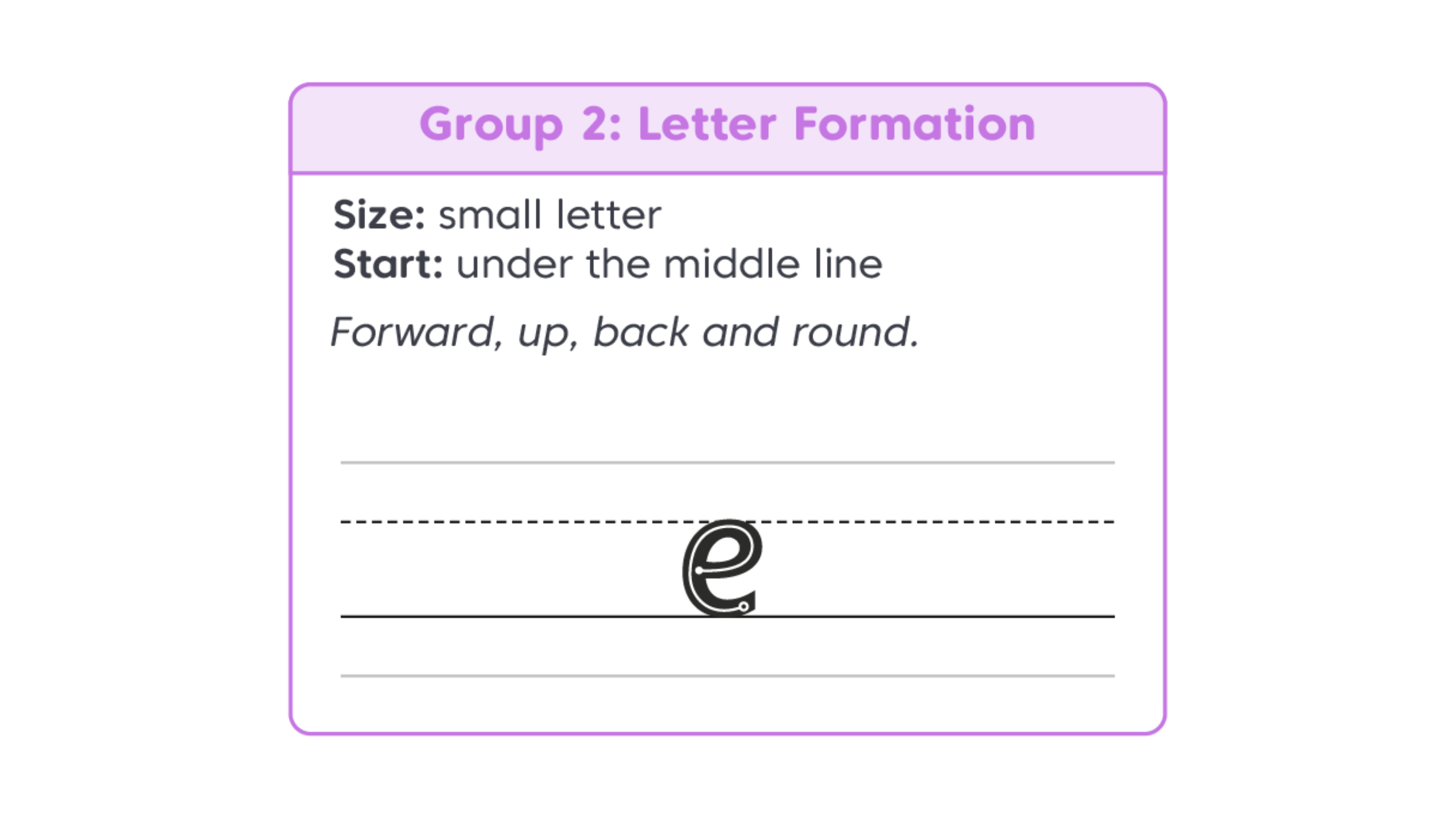
Demonstrate the letter on the board first, then use air writing before moving to paper or boards. Emphasise the starting point is in the middle.
What to do:
- “Write /e/ on the board or in the air. Say the phrase with me: ‘Across and around.’”
TEACH THE SOUND
Step 4
Blending
Teacher guidance:
Write some words to blend on the board. Include one with final ‹ck›.
What to do:
- Auditory blend: /t-e-n/ → ten; /p-e-n/ → pen; /n-e-ck/ → neck; /r-e-d/ → red.
- Write words on the board and blend them: ten, pen, neck, sent, test. Ensure pupils are saying one sound and not two for ‹ck›; example: /d-u-ck/ and not /d-u-c-k/.
- Word bank: net, pen, pet, set, ten, neck, peck, kept, nest, pest, sent, step, tent, test, speck, spent, tennis, insect, inspect; a pet cat
Step 5
Identifying Sounds in Words
Teacher guidance:
Say some words and ask which start with an /e/ sound.
What to do:
- “Which of these words have an /e/ sound at the beginning?”: dog or egg; elbow or cat; elephant or sun; frog or engine.
- “Does this word have an /e/ sound in it?”: ten, bed, sat, red, pit.
- “How many sounds in these words?” Say the word then sound it out with the children, holding up a finger for each sound, eg pen, neck, nest, tent.
PRACTICE THE SOUND
Step 6
Independent Practice
Teacher guidance:
Use the ‹e› page from Pupil Book 1 or free resources. Encourage a good pencil hold and ensure the children start at the correct point every time.
What to do:
- Write over the dotted ‹e› letters, and the other letters, on the lines.
- Say four words: egg, statue, elbow, elephant. Pupils listen and write the letter for the first sound in each word.
- Blend words: ten, pet, tent, neck.
Step 7
Dictation
Teacher guidance:
Keep it brisk: Call out some taught letter sounds and two simple CVC words.
What to do:
- Dictate the sounds: /e/, /n/, /t/ (children write ‹e›, ‹n›, ‹t›).
- Dictate the words: ten, pen (sound out as a class and blend to check).
FURTHER REINFORCEMENT
Step 8
Sing Song
What to do:
/e/ song with egg-cracking action.
Step 9
Fun Activities
Ideas
- Grow cress in eggshells
- Find out what animals hatch from eggs.
Step 9
Home Sound Book
Teacher guidance:
Add ‹e›; encourage daily re-reading and tracing over the letters.

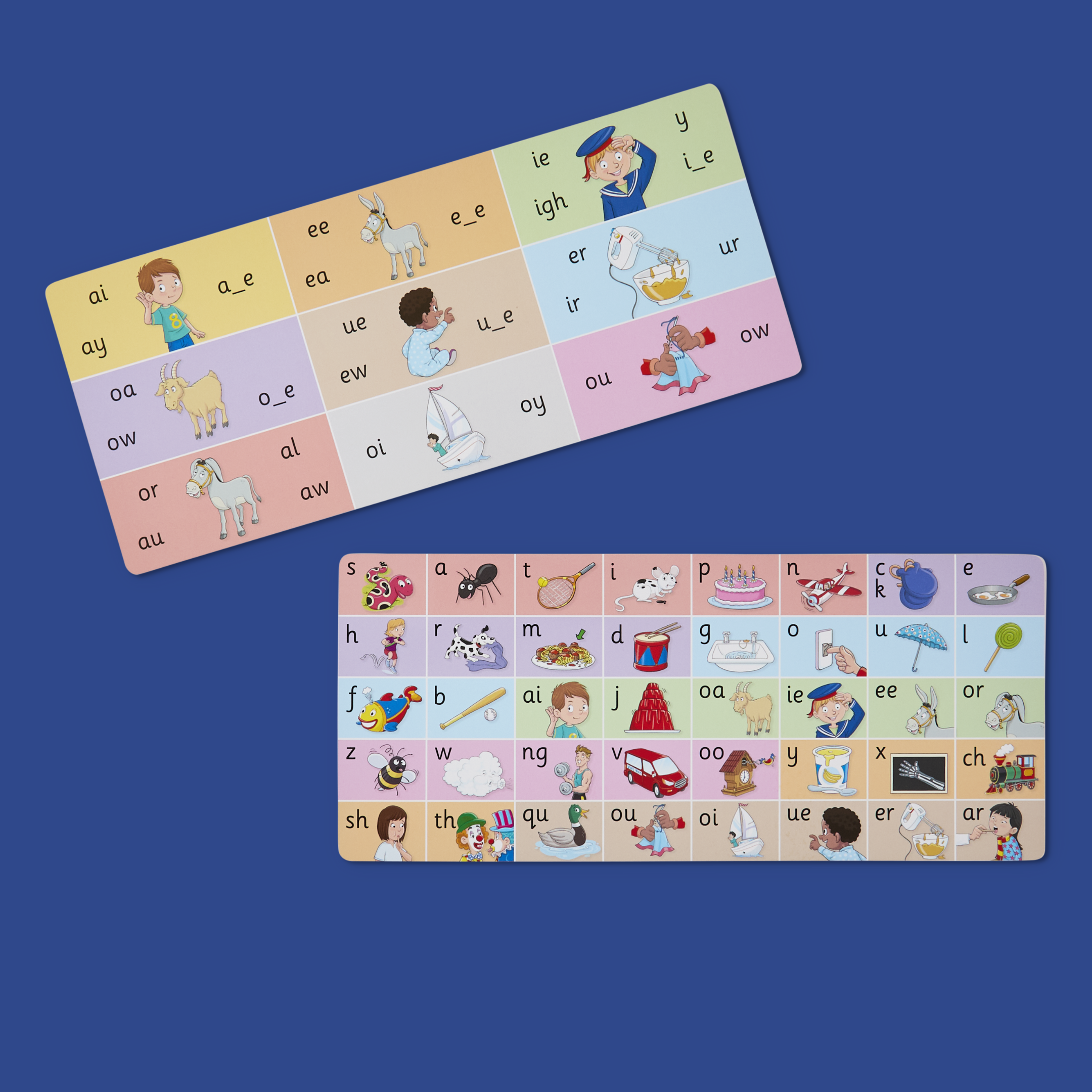
A valuable tool to support pupils!
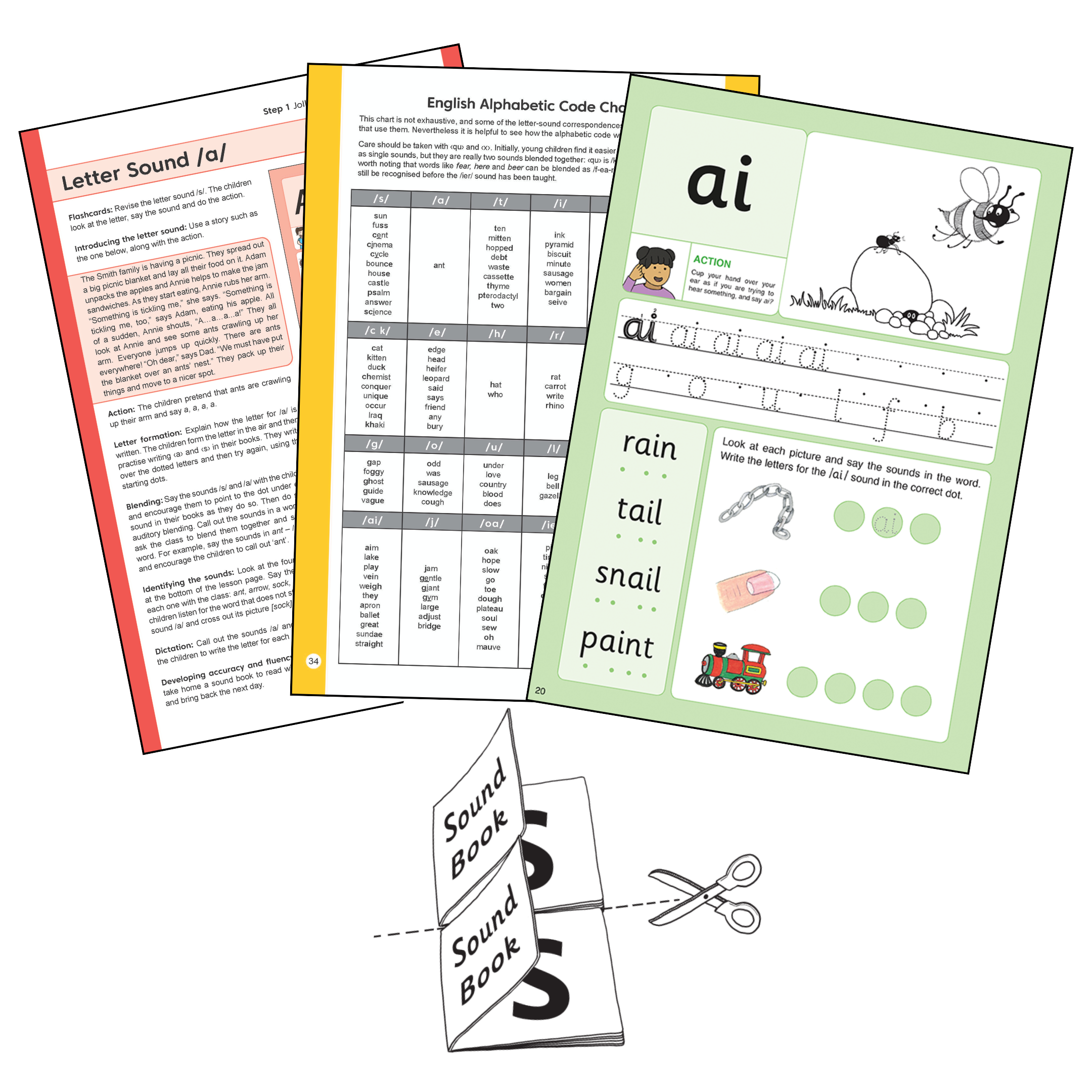
A pack of 30 pupil reference strips showing all 42 sounds with illustrations. Compact and durable, they sit on desks or in small-group work, reinforcing classroom learning and boosting children’s independence and confidence in reading and writing.
How to introduce the story & action
This video example shows how to introduce the letter ‹e› through the story and action. Notice how the pace is kept lively to hold pupils’ attention. Concepts can be reinforced later in the day through other fun activities.
Watch How to introduce the story & action on YouTube
Teach ‹e› with Jolly Classroom
Discover the ease of teaching with Jolly Classroom - fully planned, structured lessons that are fun and engaging!
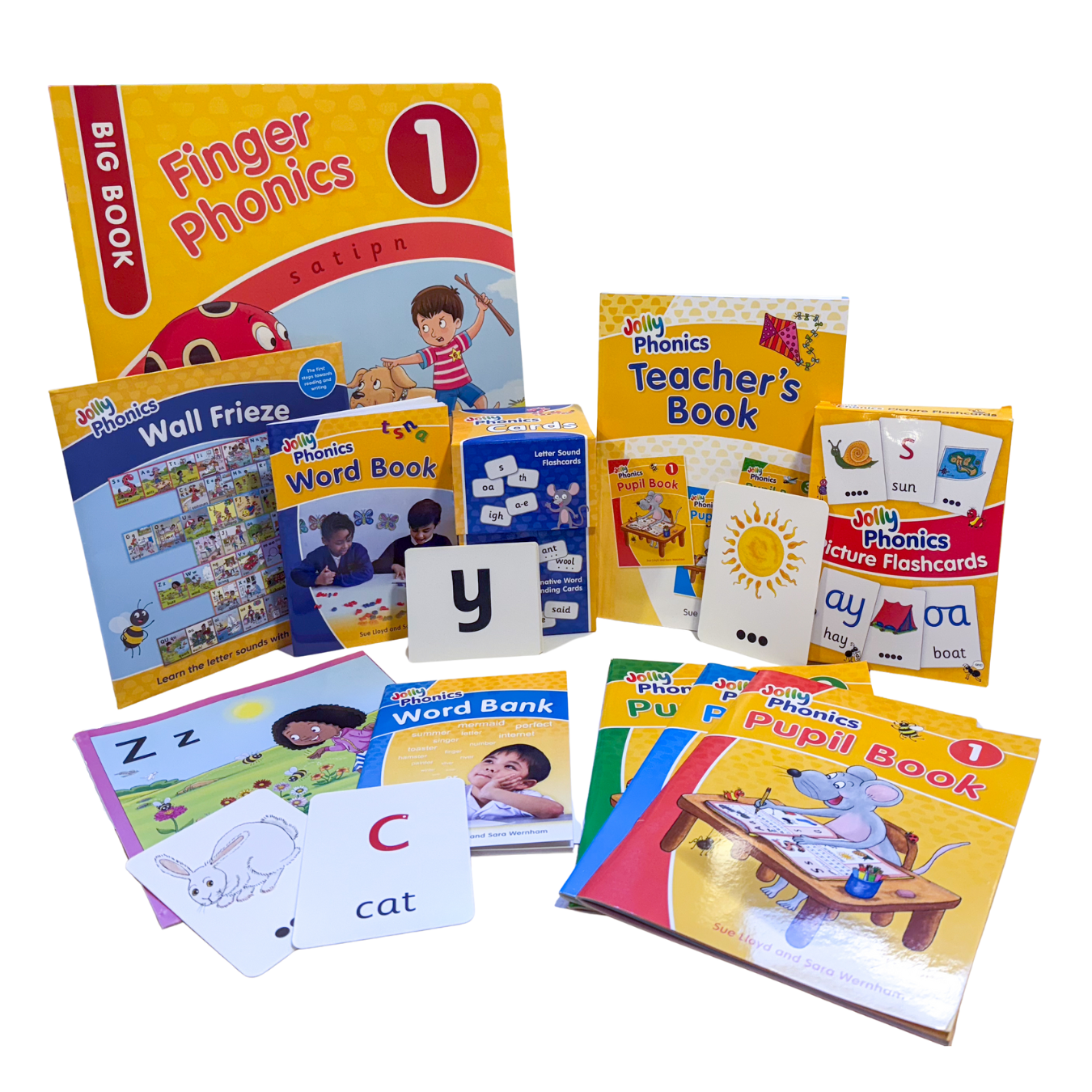
Do you have everything ready?
-
Finger Phonics Big Books 1 - 7
Finger Phonics Big Books 1 - 7 -
Jolly Phonics Cards
Jolly Phonics Cards -
Jolly Phonics Picture Flashcards
Jolly Phonics Picture Flashcards -
Wall Frieze
Wall Frieze -
Pupil & Teacher's Books
Pupil & Teacher's Books -
Jolly Phonics Word Bank Book
Jolly Phonics Word Bank Book -
Jolly Phonics Word Book
Jolly Phonics Word Book -
The Handbook
The Handbook