





Lesson
GROUP 2: LESSON ‹ck›
Teach the ck sound with Jolly Phonics lesson guidance, including story and action ideas, revision prompts and practice support for teachers.
GROUP 2: LESSON ‹ck›
Lesson ‹ck›:
GET READY TO TEACH
REVISION
Step 1
Revision
Teacher guidance:
Use flashcards to briefly revise the letter sounds already taught. Revise the formation of one or two letters.
What to do:
- Show flashcards of taught letter sounds. Pupils say each sound once and do the action.
- Choose 2 or 3 letters to write on the board. While this is being done the children form the letters in the air.

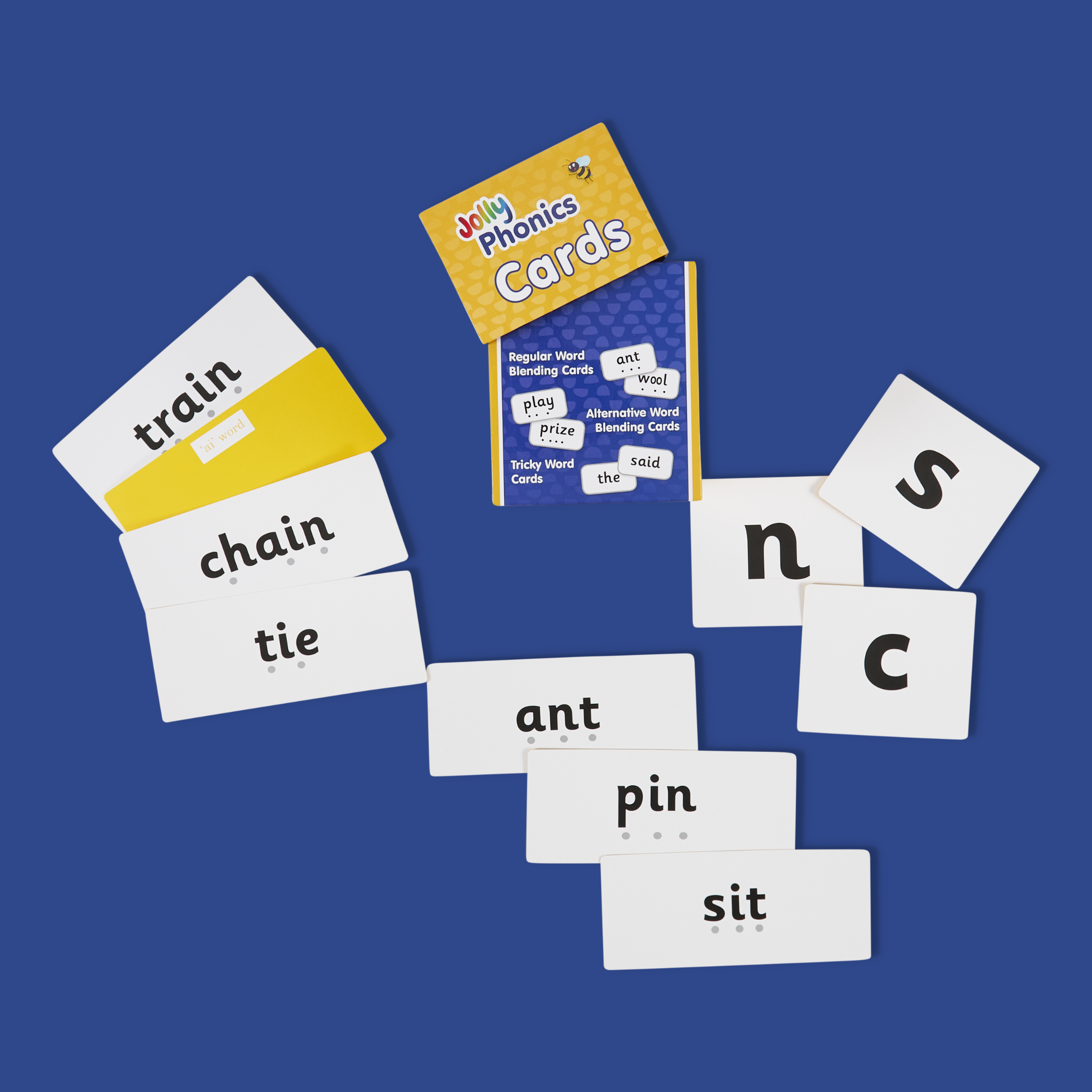
Valuable Resource
Four flashcard sets for daily teaching, revision and games. Covering letter sounds, regular and alternative word blending (with sound dots for support) and tricky words in teaching order. A practical resource for reinforcing phonics skills at every stage.
LEARNING THE LETTER SOUND
Step 2
The /ck/ story and action
Teacher guidance:
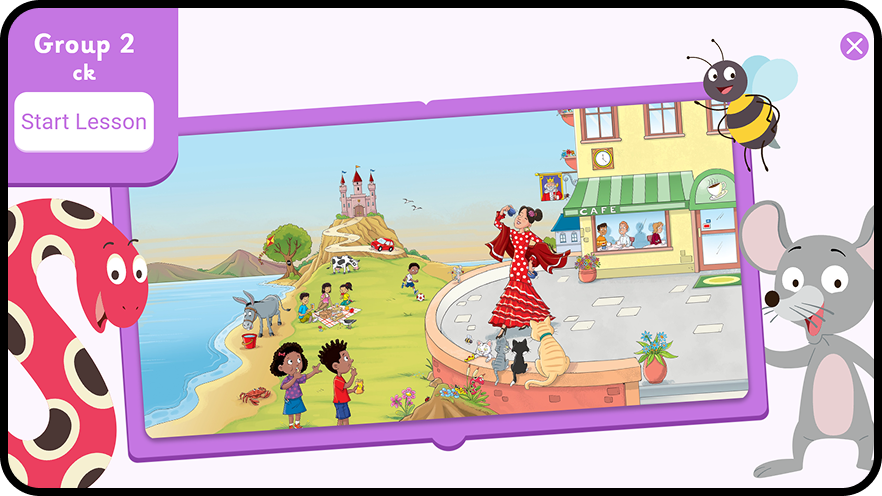
Tell a short story about Spanish dancers clicking castanets: “c, k, ck, ck.” Model the action by pretending to snap castanets with your thumb and fingers. Display the ‹ck› piece of the wall-frieze. Clearly name the two different letters to help pupils tell them apart: “caterpillar /c/” and “kicking /k/.” Explain that “caterpillar /c/” looks like a curled-over caterpillar and “kicking /k/” looks like a person kicking a ball.
What to do:
- Demonstrate the action by snap fingers like castanets as you say /c-k-ck-ck/.
- Pupils copy the action and sound; invite a few to perform it individually.
- Ask: “What /ck/ words did you hear in the story? Can you think of other /ck/ words? — cat, kitten, car, clock”.
- Ask for any other /ck/ words the children can think of (cat, can, cup, king, kite, kid).
Step 3
Learning Letter Formation
Teacher guidance:
Demonstrate each letter on the board first, then use air writing before moving to paper or boards. Emphasise starting points and that ‹k› is a tall letter.
What to do:
- “Let’s write them in the air together.”
- ‘Caterpillar /c/’: “Around.”
- ‘Kicking /k/’: “Down-down. Slant down, slant down and flick.”
- Say the letter sound as you write; remind pupils kicking ‹k› is tall.

TEACH THE SOUND
Step 4
Blending
Teacher guidance:
Model auditory blending first, then move to words with sound dots underneath. Remind pupils that when two letters represent one sound (e.g. ‹ck›), you only say the sound once.
What to do:
- Auditory blend: “What word do you hear? /k-i-t/ → kit; /s-a-ck/ → sack; /p-i-ck/ → pick; /b-a-ck/ → back.”
- Write the words kit, cap, pick, sack, pack, kick on the board.
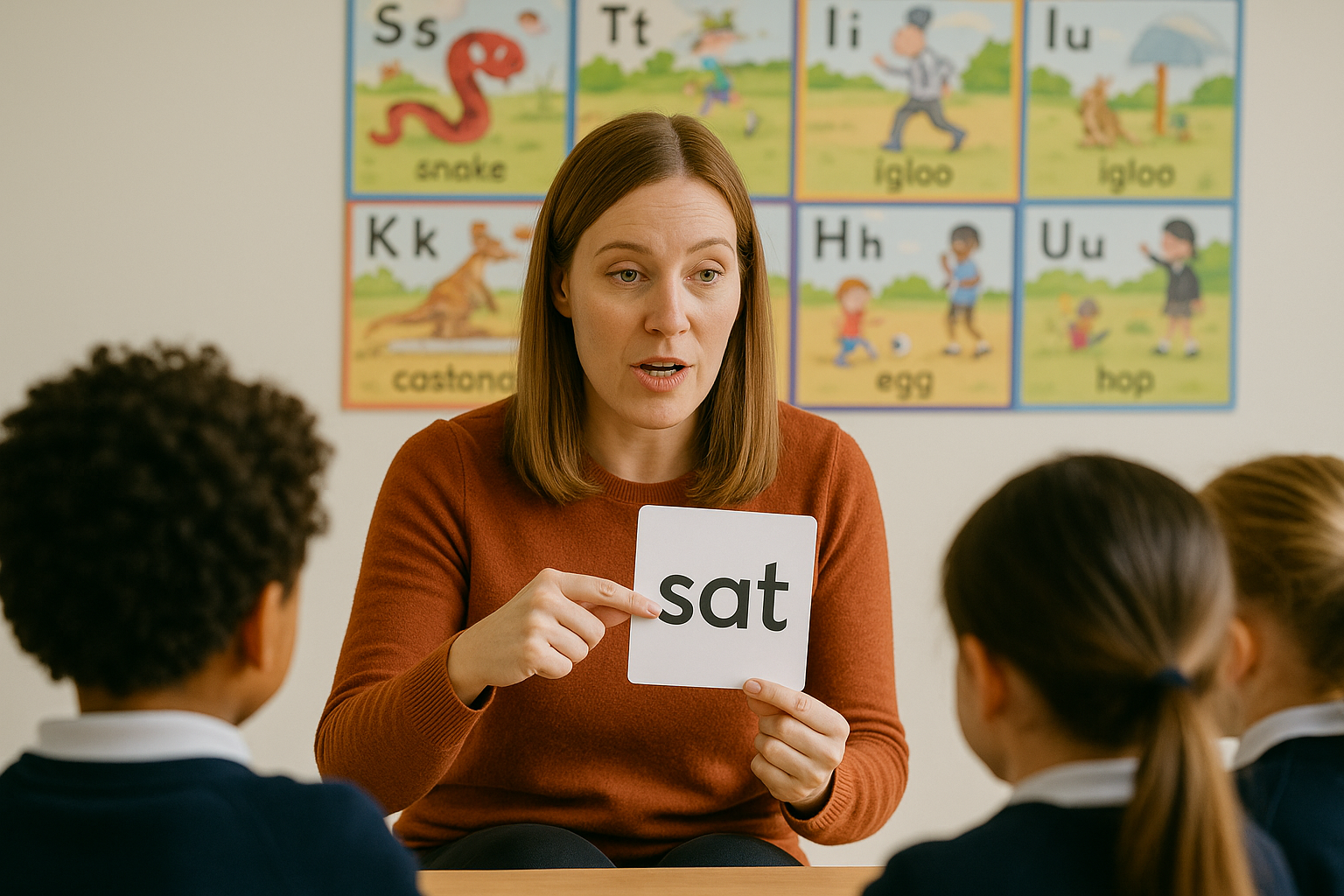
- Point under each letter as you say the individual sounds slowly — “/k/ … /i/ … /t/.” Then swipe your finger along under the whole word and say it quickly: “kit.”
- Quick-fire: point to a word, the class reads it; swap the first letter and read the new word (kit → sit, pit,)
- Word bank: act, can, cap, cat, kin, kit, kick, kiss, pack, pick, sack, sick, tack, tick, scan, skip, skin, tact, snack, stack, stick, attic, panic, napkin, picnic; a sick cat.
Step 5
Identifying Sounds in Words
Teacher guidance:
Focus on the first sound; add one example of a word ending ‹ck› and point out the /ck/ sound at the end.
What to do:
- Say these words and ask “Which word has a /ck/ sound at the beginning?” cat or dog; kite or sun; map or king; cup or pen.
- “Which word has a /ck/ sound at the end?” sack or sea; tree or duck.
- “How many sounds in this word?” Say the word then sound it out with the children, holding up a finger for each sound, eg sit, pan, tick.

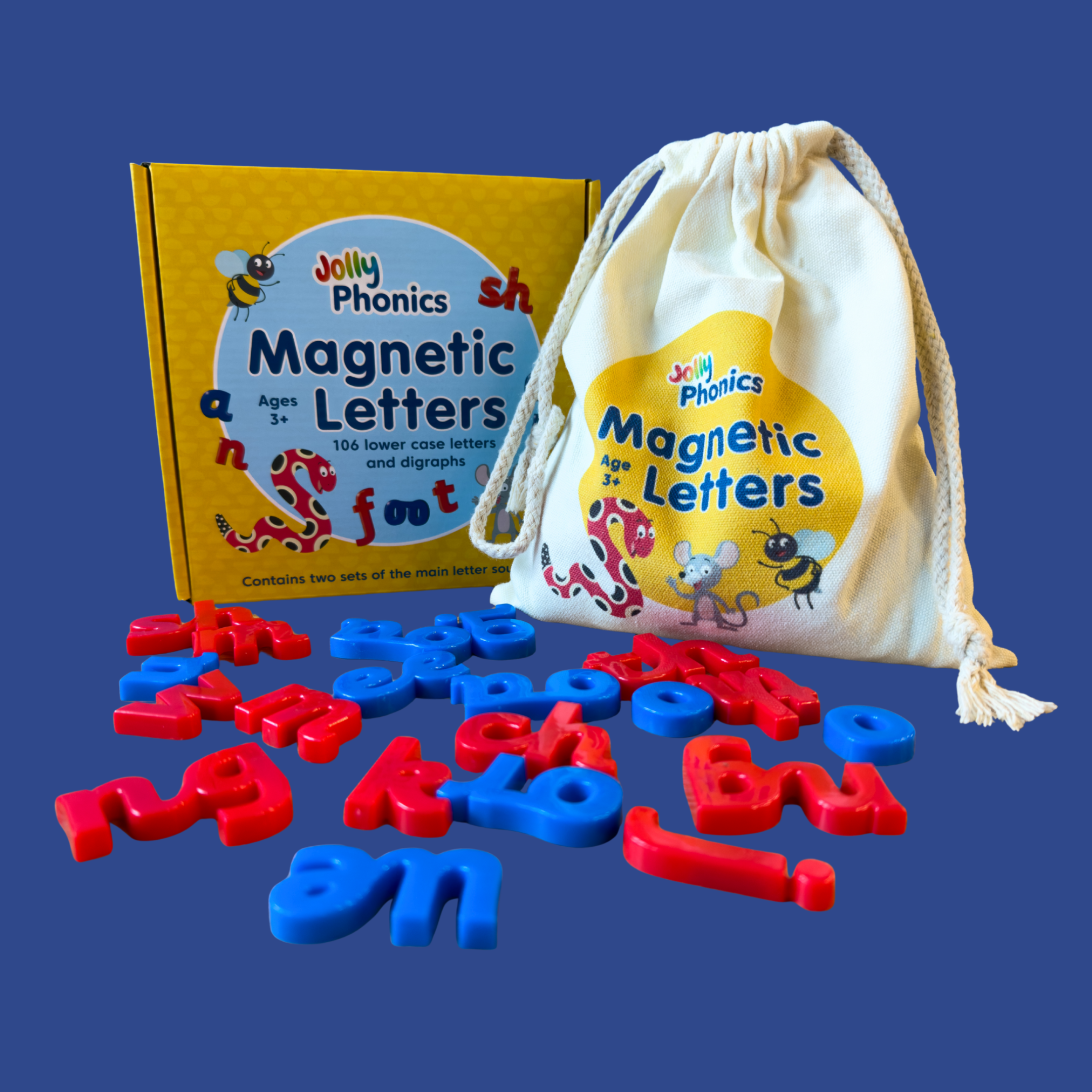
Build words with magnetic letters!
A hands-on resource with lower-case letters in red (consonants) and blue (vowels). Children build and break apart words, strengthening blending and segmenting skills while linking phonics knowledge directly to spelling and reading activities.
PRACTICE THE SOUND
Step 6
Independent Practice
Teacher guidance:
Use the ‹c k› page from Pupil Book 1 or free resources. Encourage a good pencil hold and ensure the children start at the correct point every time. Check the formation and starting points while the children write the letters.
What to do:
- Write over the dotted letters ‹c› and ‹k›, then write a row of each, independently on the lines.
- Say the four words: cat, crab, kangaroo, penguin. Pupils listen and write over the dotted letter for the first sound in each word.
- Use sound dots to blend and read: kit, cap, pick, sack. Pupils tap each dot, then swipe to read.
Step 7
Dictation
Teacher guidance:
Keep it brisk: Revise the two letters for the /ck/ sound, then one or two CVC words using only taught letter sounds. ##### What to do:
- “Listen – /k/. Write caterpillar /c/. Now write kicking /k/.”
- Dictate the words: it and at. Pupils write the words; class checks by sounding the words out together and then blending them.
FURTHER REINFORCEMENT
Step 8
Sing Song
What to do:
Sing the /ck/ song; snap “castanets” on the beat.
Step 9
Fun Activities
Ideas:
- Make paper-plate castanets
- Listen to Spanish music
- Have a /ck/ sound hunt.
Step 10
Home Sound Book
Teacher guidance:
Add ‹c› and ‹k›; encourage pupils to teach the action and sound to someone at home.
How to introduce the story & action
This video example shows how to introduce the letter ‹c›, ‹k› and ‹ck› through the story and action. Notice how the pace is kept lively to hold pupils’ attention. Concepts can be reinforced later in the day through other fun activities.
Watch How to introduce the story & action on YouTube
Teach ‹ck› with Jolly Classroom
Discover the ease of teaching with Jolly Classroom - fully planned, structured lessons that are fun and engaging!
Do you have everything ready?
-
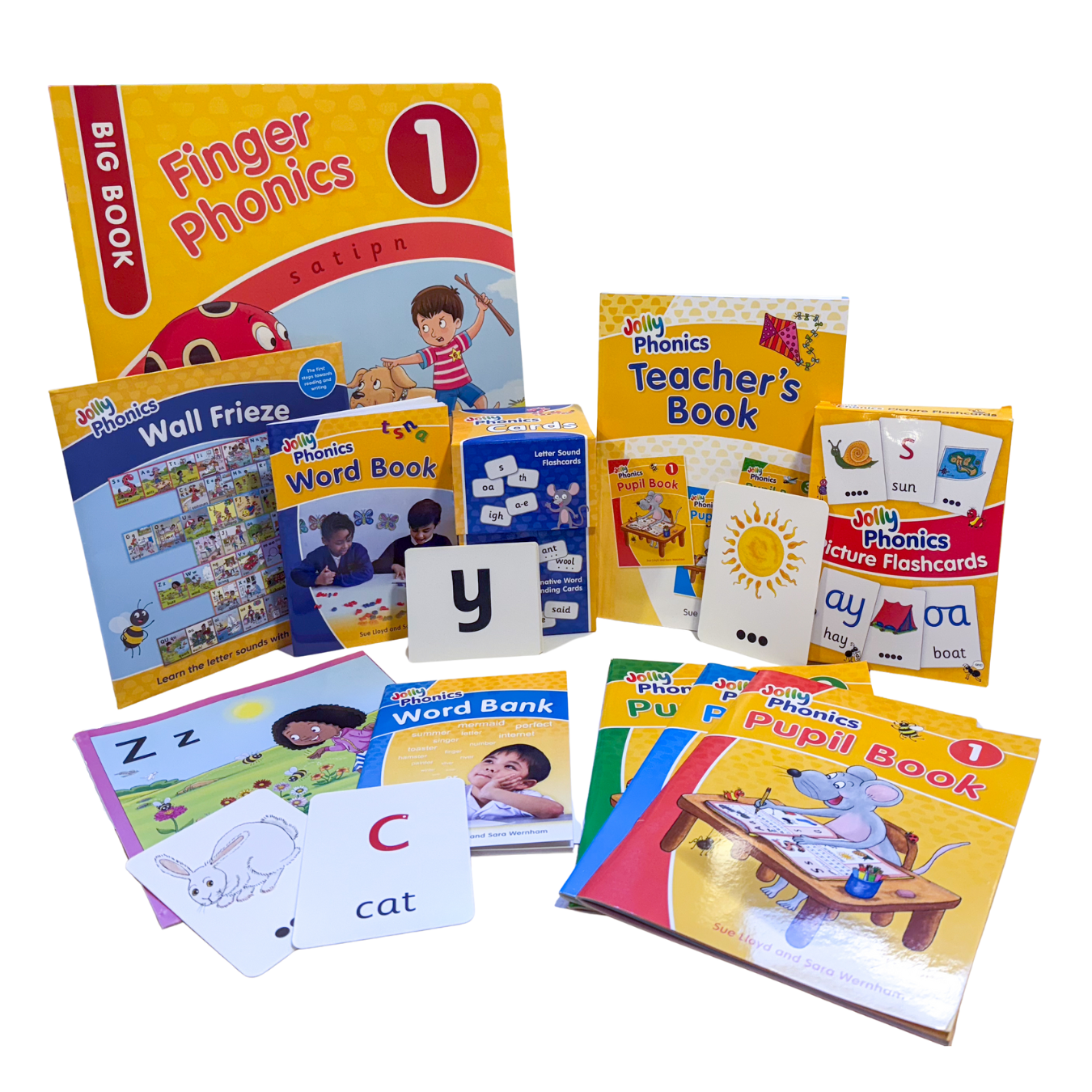
Finger Phonics Big Books 1 - 7
Finger Phonics Big Books 1 - 7 -
Jolly Phonics Cards
Jolly Phonics Cards -
Jolly Phonics Picture Flashcards
Jolly Phonics Picture Flashcards -
Wall Frieze
Wall Frieze -
Pupil & Teacher's Books
Pupil & Teacher's Books -
Jolly Phonics Word Bank Book
Jolly Phonics Word Bank Book -
Jolly Phonics Word Book
Jolly Phonics Word Book -
The Handbook
The Handbook