





Lesson
GROUP 1: LESSON ‹a›
Teach the a sound with Jolly Phonics lesson guidance, including story and action ideas, revision prompts and practice support for teachers.
GROUP 1: LESSON ‹a›
Lesson ‹a›:
GET READY TO TEACH
REVISION
Step 1
Revision
Teacher guidance:
Briefly review the previously taught letter sound. Show the flashcard ‹s› and recall the sound and action together. Practise writing ‹s› in the air and invite a few pupils to do it independently.
What to do:
- ‘Who remembers the letter sound we learned yesterday?’
- Show the ‹s› flashcard. Ask pupils to say the sound while doing the action for /s/.
- Write a letter ‹s› as you say the sound together.
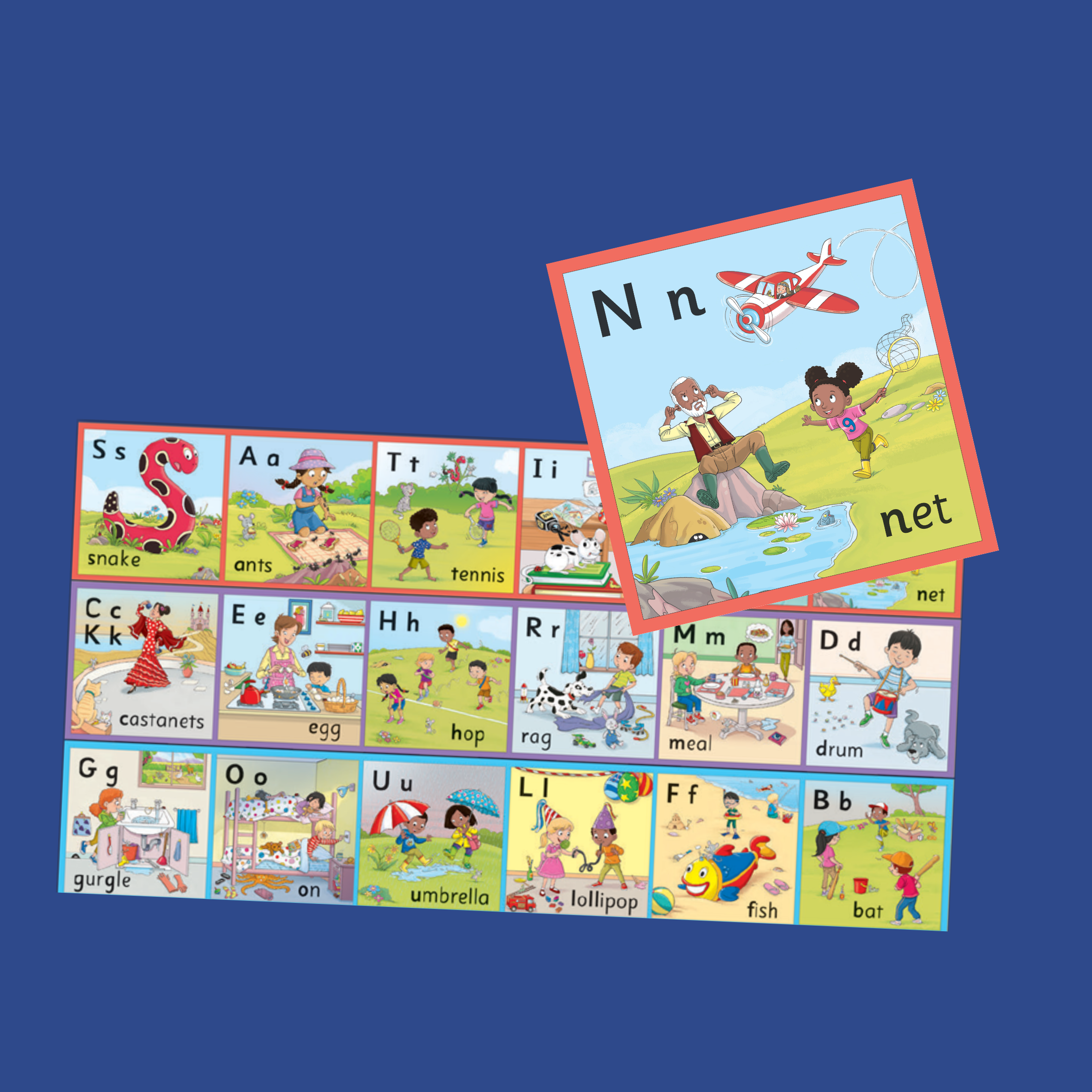
Valuable Resource
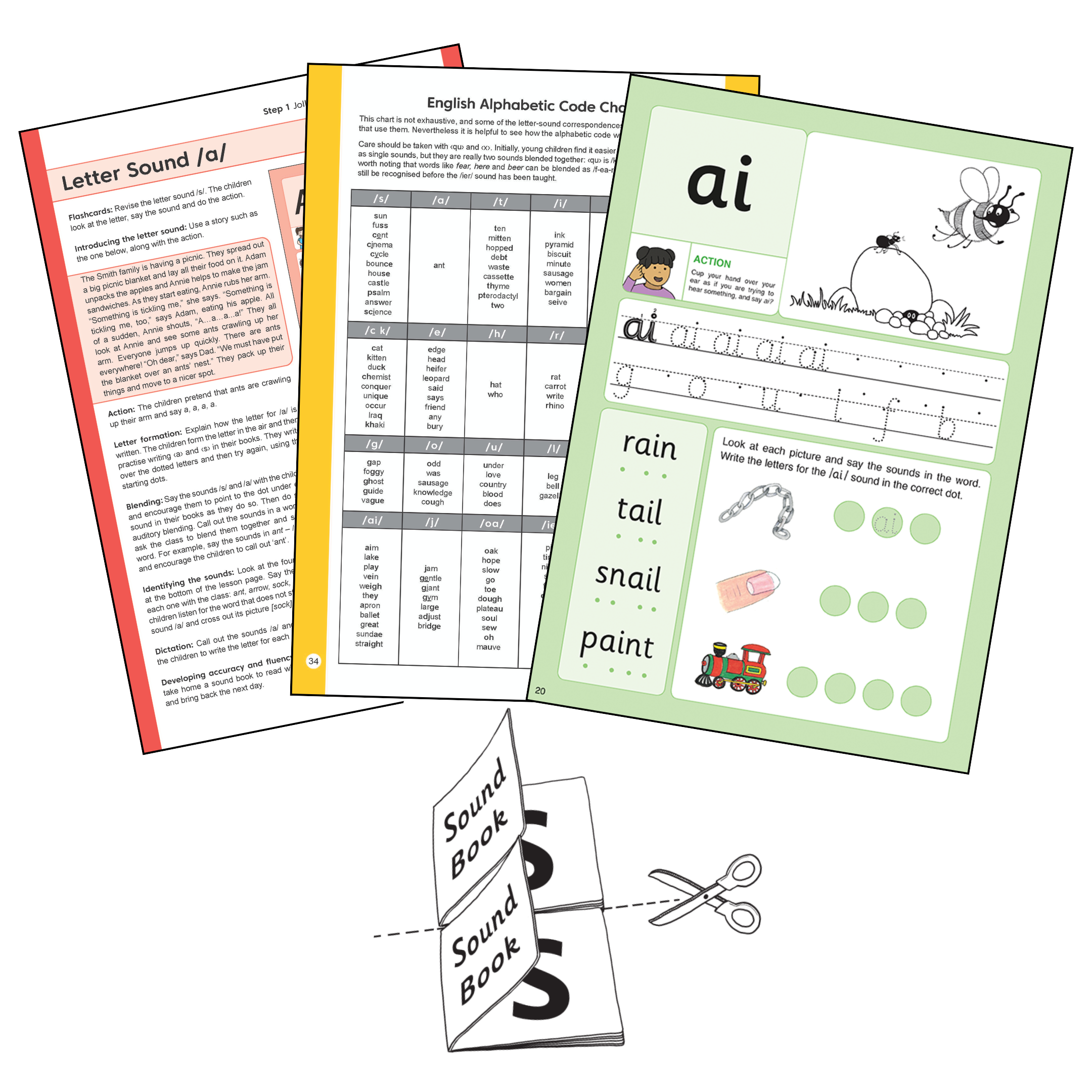
Displays all 42 sounds with matching illustrations, giving children a constant reference for reading and writing. Can be used as a strip, poster or cut into cards, supporting daily teaching, revision and sound–action recall.
LEARNING THE LETTER SOUND
Step 2
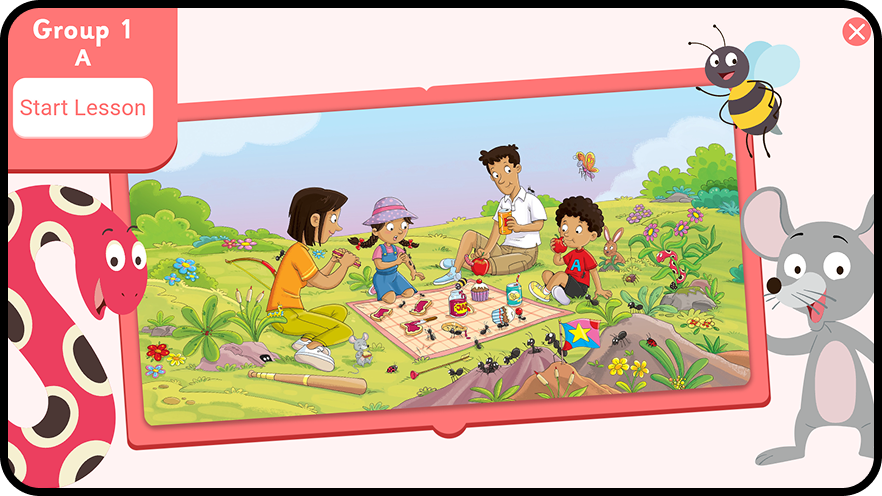
The /a/ story and action
Teacher guidance:
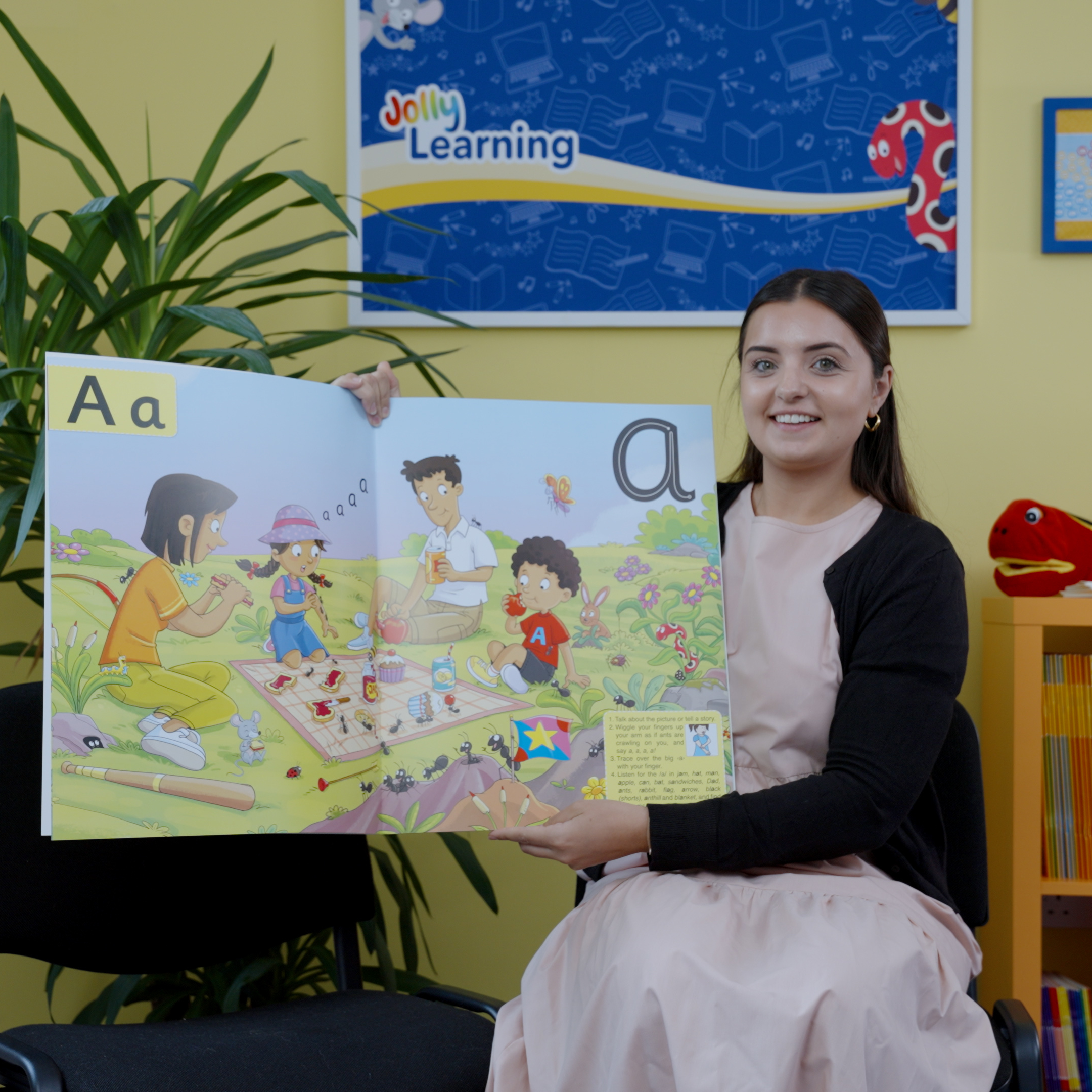
- Tell the story of a child who goes on a picnic and feels ants crawling up their arm. They cry /a-a-a/ and brush the ants off. Show the picture from Finger Phonics Book 1 ‹a› page.
- Introduce the action: wiggle fingers up your arm to show ants crawling.
- Show the ‹a› flashcard and put the ‹a› piece of the wall frieze next to the ‹s› piece.
- Invite pupils to copy you so they link the sound, story, and action all together.
What to do:
- Demonstrate the action for /a/ by wiggling your fingers up your arm, and saying /a-a-a/.
- Hold up the flashcard ‹a›, say the sound and ask the children to join in with the sound and action. Then invite a few pupils to do it independently.
- Encourage pupils to suggest other words they know that begin with an /a/ - ambulance, anchor, acrobat, avocado.
Used in every phonics lesson!
Big books that introduce each letter sound with the action, shows the letter formation and provides a colourful story illustration that contain pictures of words with the sound in. Fun activities and extension tasks help children develop correct handwriting, reading and spelling skills in an engaging way. Perfect for teachers to use during phonics lessons.
Step 3
Learning letter formation
Teacher guidance:
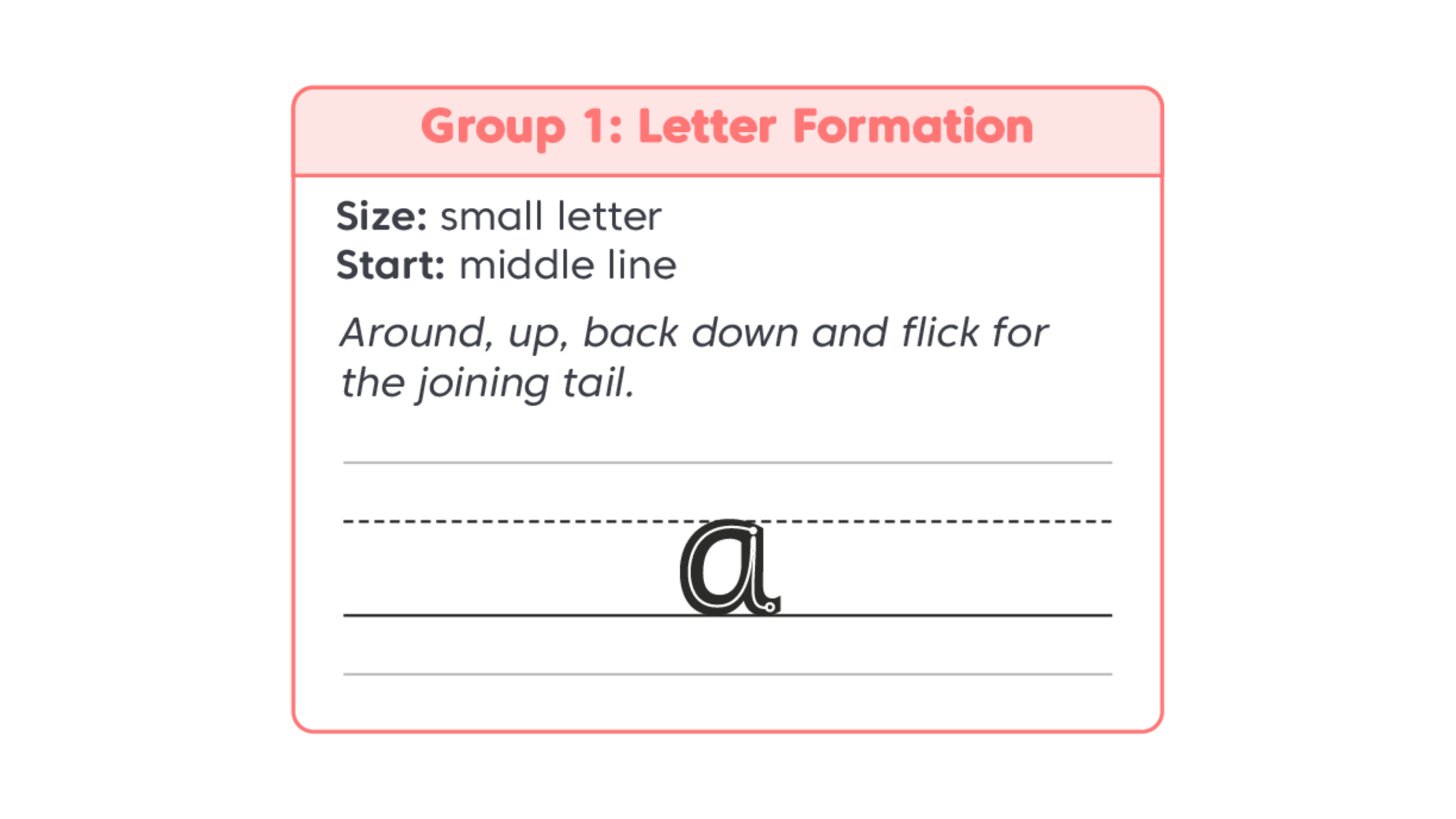
- Demonstrate correct formation of the letter ‹a› on the board. The children copy the formation using air writing.
What to do:
- ‘Let’s write an /a/ in the air together.’ Say: “Around, up, down and flick.”
- Encourage them to say /a/ as they write.
- Compare with ‹s› – ‘Can you remember how to write /s/?’
Step 4
Auditory Blending
Teacher guidance:
Say the sounds in a word slowly, eg /a-n-t/, and then blend the sounds together to make the word, ‘ant’. Say the sounds for other words and ask the children to listen for the words.
What to do:
- Ask: “What word do you hear in /c-a-t/?”
- Say the sounds and blend them together. Encourage the children to listen for the word: /h-a-t/, /m-a-t/, /b-a-g/, /t-a-p/, /s-a-d/, /p-a-n/.
Step 5
Identifying sounds in words
Teacher guidance:
Encourage pupils to listen for the initial /a/ sound in spoken words.
What to do:
- Listen. Which of these words begins with an /a/ sound?
- ant or dog
- mum or apple
- picnic or arrow
- Adam or Jim
- Julie or Annie
PRACTICE THE SOUND
Step 6
Independent Practice
Teacher guidance:
Pupils complete the ‹a› worksheet from Pupil Book 1 or the free resources. Use this time to observe how they’re doing. Support pupils as needed, or gather a small group who need extra help to work with you directly.
What to do:
- Write over the dotted ‹a› and ‹s› letters. Begin on the starting dot.
- Look at the four pictures at the bottom of the page (ant, arrow, sock, apple). Say each word out loud. Pupils listen for the one that does not start with the sound /a/ and cross out its picture (sock).
- Encourage pupils to point to the dot under each letter in their books while saying the letter sound.
Step 7
Dictation
Teacher guidance:
Dictation strengthens the sound–letter link. Say a sound (e.g. /a/ or /s/) and pupils write the corresponding letter in the air, on a whiteboard or on paper. If short on time, pupils can do air writing, but it’s best to provide opportunities to practice writing on paper.
What to do:
- “Listen – /a/. Write an /a/.”
- “Now /s/ – write a /s/.”

FURTHER REINFORCEMENT
Step 8
Sing Song
What to do:
Sing the Jolly Phonics song for /a/, acting out ants crawling up your arm.
Step 9
Home Sound Book
Teacher guidance:
Send home the Home Sound Book with the new letter ‹a› in for pupils to share with parents.
Value of this routine:
- Reinforces letter-sound knowledge.
- Creates positive home engagement with phonics.
- Establishes early reading habits and a daily practice routine.
- Supports long-term retention through regular revision.
Bumper Book of Phonics Fun!
-
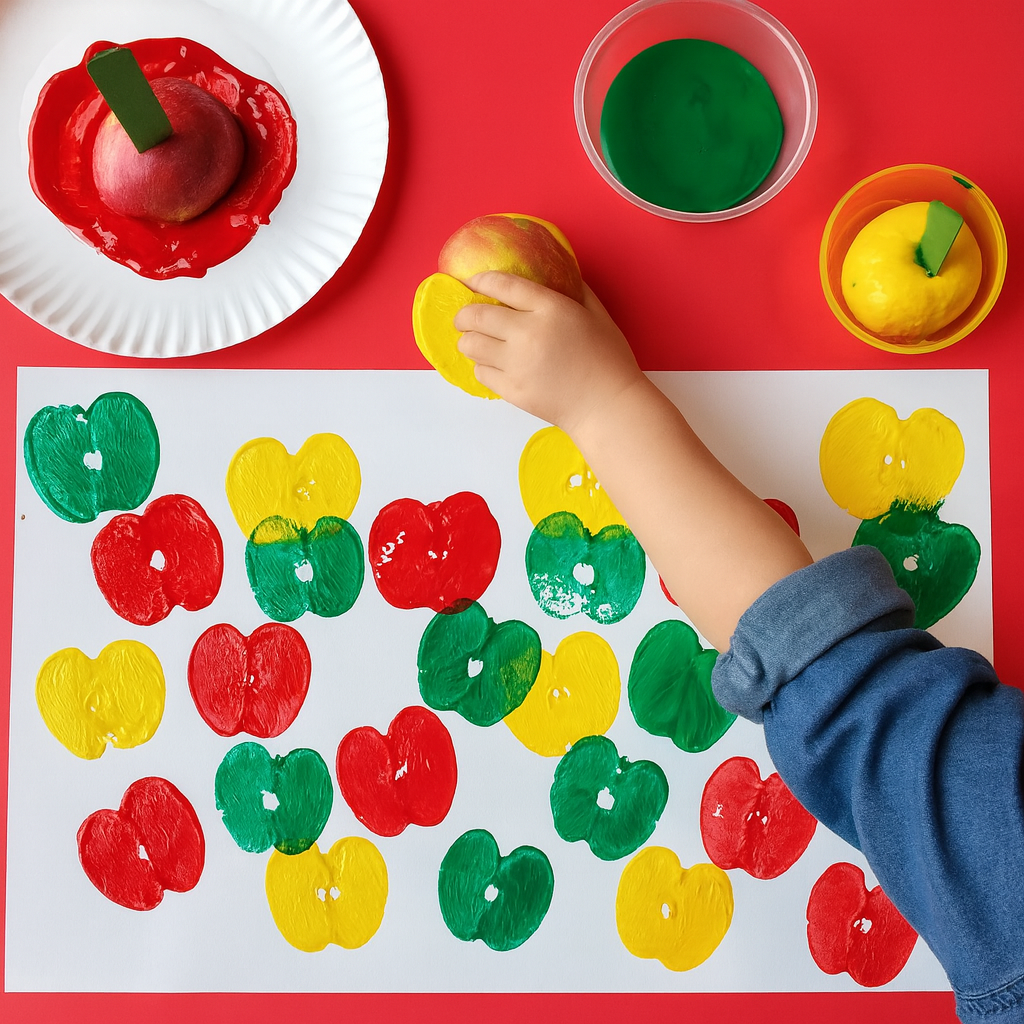
Apple Printing
Apple PrintingCut apples in half and stamp shapes with paint. You can encourage pupils to make the letter ‹a› shape with their stamps for a challenge.
-

Sound Hunt
Sound HuntSearch the room or pictures in a book for objects starting with /a/.
-
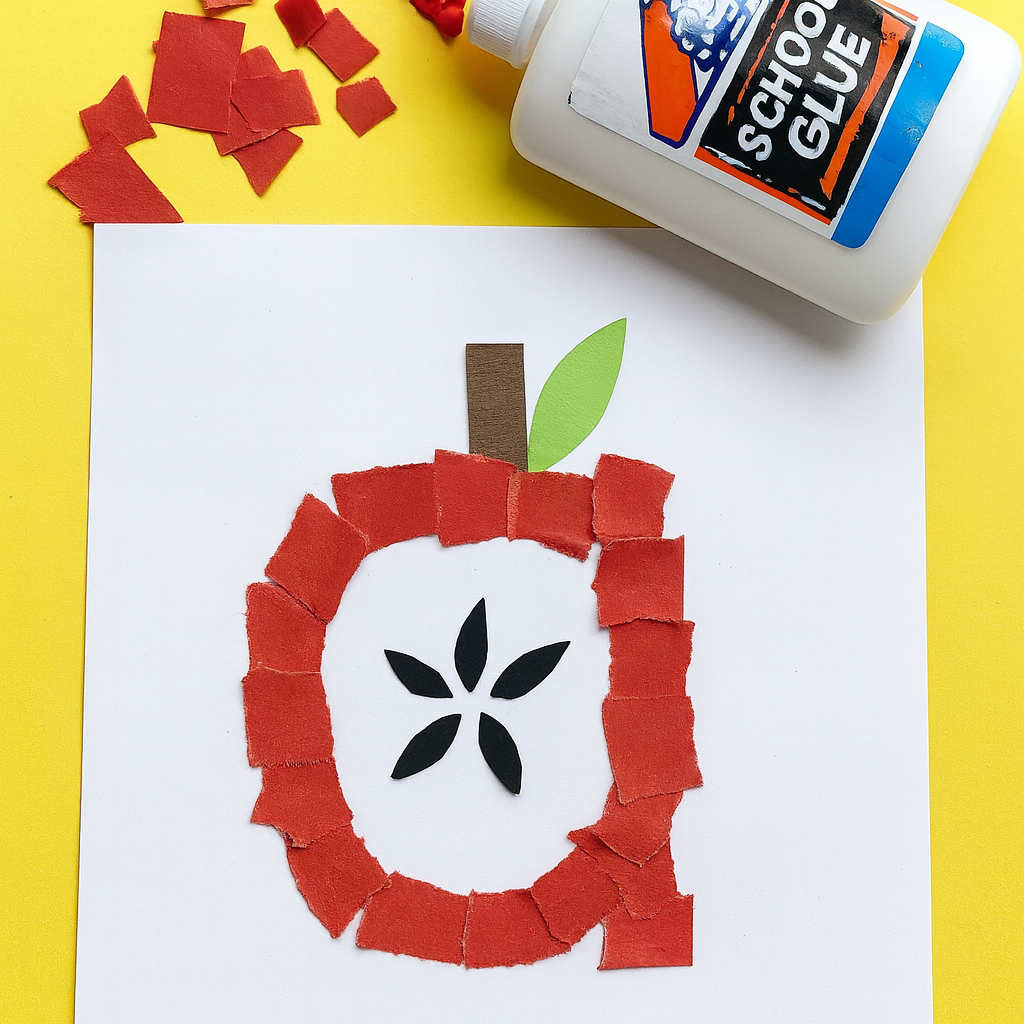
Decorate the letter ‹a›
Decorate the letter ‹a›Paint or decorate with paper large ‹a› letters. You can encourage pupils to make the letter ‹a› to look like an apple by adding seeds and a leaf.
One resource. Countless ways to boost learning.
How to introduce the story & action
This video example shows how to introduce the letter ‹a› through the story and action. Notice how the pace is kept lively to hold pupils’ attention. Concepts can be reinforced later in the day through other fun activities.
Watch How to introduce the story & action on YouTube
Teach ‹a› with Jolly Classroom
Discover the ease of teaching with Jolly Classroom - fully planned, structured lessons that are fun and engaging!
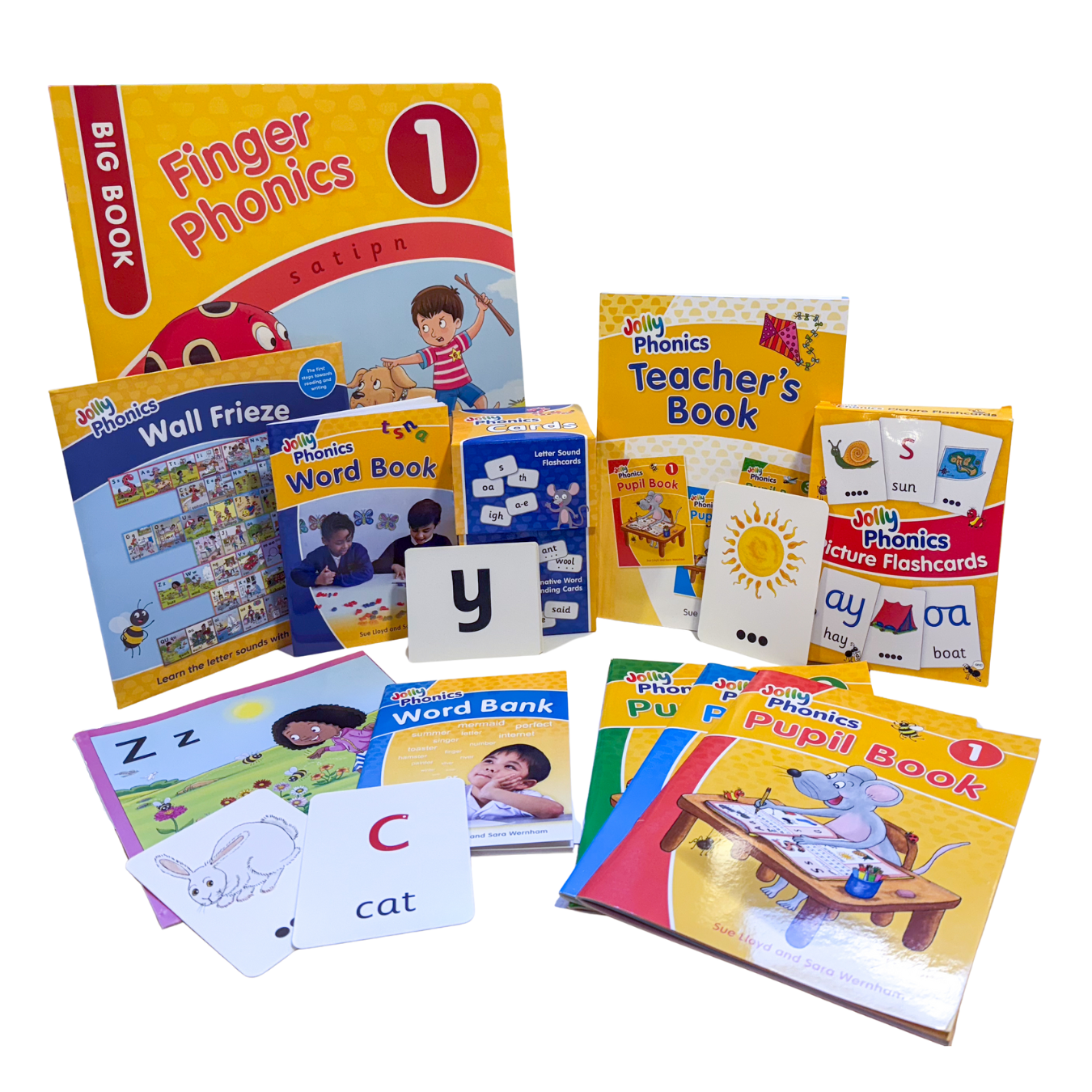
Do you have everything ready?
-
Finger Phonics Big Books 1-7
Finger Phonics Big Books 1-7 -
Jolly Phonics Cards
Jolly Phonics Cards -
Jolly Phonics Picture Flashcards
Jolly Phonics Picture Flashcards -
Wall Frieze
Wall Frieze -
Pupil & Teacher's Books
Pupil & Teacher's Books -
Jolly Phonics Word Bank
Jolly Phonics Word Bank -
Jolly Phonics Word Book
Jolly Phonics Word Book -
The Handbook
The Handbook