





Guide
Extra Support: Writing
Find writing support guidance for pupils who need extra Jolly Phonics practice with segmenting, letter formation and words.
Extra Support: Writing
Find targeted activities to support progress and boost confidence.
Writing Support
Spotting Struggles Early
Even with high-quality phonics instruction, some children will need additional support to keep up with their peers. Struggles may arise from missed learning, speech and language delays, or specific learning difficulties. Early assessment helps identify the root of the issue so targeted strategies can be put in place quickly and effectively.
The Importance of Assessment
- Pinpoint classwide weaknesses to guide whole-class review
- Identify specific gaps in knowledge for individual pupils
- Inform the focus of small group or 1:1 interventions
- Plan targeted activities for ‘Secure It’ sessions
- Track pupil progress and adapt support over time
Letter Recognition
Writes the Wrong Letter After Hearing the Sound When given a sound, the pupil does not know which letter to write or consistently chooses the wrong one.
Ideas to try:
When given a sound, the pupil does not know which letter to write or consistently chooses the wrong one.
-
Action + Air Write
Say the sound, perform the Jolly Phonics action, then trace the letter in the air. For example, say “/m/,” rub tummy like eating something tasty, then air-write ‘m’ while saying “mmmm.” This links auditory input, motor memory and visual form.
-
Sound-Letter Match Game
Provide a tray of magnetic letters or letter flashcards. Say a sound aloud and have the child point to or pick up the matching letter. Transition to writing it on whiteboards once recognition becomes more automatic.
-
“See it, Say it. Write it.”
Jolly Phonics uses the strategy “See it. Say it. Write it.” This strategy connects the visual representation of a letter with its sound and the physical act of writing it, thereby reinforcing the letter–sound relationship and supporting both reading and writing development.
Letter Formation
Hand Strength or Fine Motor Issues Struggles to form letters correctly; tires easily during writing tasks.
Ideas to try:
Struggles to form letters correctly; tires easily during writing tasks.
-
Exercises to strengthen hand muscles
Provide opportunities, during the day, for the child to build fine motor strength through activities such as tracing and colouring pictures, squeezing stress balls, Theraputty, or Play-Doh, pinching clothes pegs, or engaging with pegboards. Improved strength in the fingers helps to bring greater control, movement and accuracy in the pupils’ writing. It also reduces fatigue. Jolly Phonics Pupil Books provide dotted lines to guide the writing and a picture linked to the story to colour.
-
Alternative Letter Formation
Form letters in sand, shaving cream, or trace large letters on vertical surfaces like windows or chalkboards. These methods reduce fine motor strain and build letter shape familiarity through larger, gross motor movements.
-
Magnetic Letters and Letter Tiles
Build words using magnetic letters or tiles instead of writing. This allows focus on phonics and writing without the added challenge of handwriting, helping children participate fully while developing foundational skills.
-
Developing a good pencil grip
Provide triangular pencils or pencil grips to help pupils to develop a good pencil hold. They support correct finger placement and improving control.
-
Use Chunky Writing Tools
Provide triangular pencils, or pencil grips to promote a more stable grip. These tools support correct finger placement and reduce the effort needed to hold a writing tool, improving control.
-
Additional Dictation
Begin with dictating individual letter sounds, then move on to words and phrases. Repeatedly writing letters correctly from memory, instead of just tracing or copying, builds the muscle memory necessary for automatic and good letter formation. It provides an opportunity for checking for correct letter formation and a good pencil hold.
Unable to Correctly Form Letters Letters may be incorrectly formed, oversized, or poorly placed on the line; the pupil may be unsure of starting points or form letters in the wrong direction (e.g. ‘d’ drawn clockwise).
Ideas to try:
Letters may be incorrectly formed, oversized, or poorly placed on the line; the pupil may be unsure of starting points or form letters in the wrong direction (e.g. ‘d’ drawn clockwise).
-
Practise patterns
Use pre-writing shapes (zigzags, circles, waves) to build muscle memory and control.
-
Use multisensory tools
Try writing in sand, salt trays, shaving foam, or with chalk outside.
-
Model slowly & use letter formation rhymes
Show exactly where to start and how to move. Use the free resource to guide you with how to explain how to write each letter correctly. These sheets can also be printed as A4 posters for display and daily reference.
-
Highlight starting points
Use dots or arrows to show where to begin. Ensure pupils start in the right place. Colour coding the dots is also helpful (a green dot where to start and a red dot where to stop).
-
Use guided paper
Lined paper and dotted letters provide scaffolding. The lines give the children something to aim for and help to keep the letters the right size.
-
Use Pupil Books
Structured letter practice with guide lines to match each lesson.
-
Use Handwriting Books
Provides more structured practice for those who need it, either at home or in-class support.
Letter Reversals Regularly reverses letters.
Ideas to try:
Regularly reverses letters.
-
Left/Right Discrimination Games
Play games that help with left/right awareness, which can be helpful in understanding letter orientation.
-
Mnemonics and Associations
Use associations like “b starts with a bat and bounce over for the ball, and for d start with a caterpillar c”. Use the action for each sound to stimulate the memory.
-
Directionality Cueing
Teach the correct starting point and direction for writing each letter. Use arrows, coloured pencils, or highlighters to guide them.
-
Multi-sensory Approach
Have the pupil trace letters in sand, shaving cream, or make with playdough, while saying the letter's sound aloud.
-
Games
Incorporate games that involve visual memory, such as memory games with letters, or letter and picture matching.
-
Model slowly & use letter formation rhymes
Show exactly where to start and how to move. Say a phrase that matches the movement: For ‹a›: Start with a caterpillar c, around, up, back down and flick for the joining tail. Use the Letter Formation Guide under the free resources section.
Segmenting
Segmenting CVC Words to Spell Can say the word but has trouble identifying and writing all the sounds.
Ideas to try:
Can say the word but has trouble identifying and writing all the sounds.
-
Segmenting practice
Call out a simple word and say the sounds, holding up a finger as each sound is spoken. Continue with a few different words. This models the skill of segmenting words. Repeat the words again but this time ask the pupil(s) to say the sounds, holding up a finger for each sound. Provide help if needed. The most effective way is to do a few words in each session. It should be a quick activity. Stretching the pronunciation of the word can be helpful. For example, the adult says /ssuunn/ rather than sun.
-
Segmenting with pictures - Target Initial Sounds
Provide a sheet with pictures beginning with the target sounds. The pupil says the word and then writes the correct letter under the picture. Start with initial sounds but the pupils need to progress as quickly as possible to hearing all the sounds in words. If the pupil is having difficulty hearing the initial or final sound, say the word stressing that sound, using slightly exaggerated mouth movements.
-
Segmenting with Pictures
Using picture cards, say the word hat and then say it again but this time stressing the initial sound, hat, which helps the pupil to identify the initial sound. Ask the pupil(s) to then say the word and segment it themselves. They can use letter cards or magnetic letters if letter formation is challenging. If the word is printed on the back of the card the pupil can turn it over and check whether they are correct.
-
Word building
Word building is a powerful and effective activity. Segmenting words is easier for children when they are familiar with the letter sounds that are used in the words chosen for the activity. Lay a group of known letter sounds on the desk and call out a regular word for the pupil(s) to segment and build. After the word has been built, the pupils can sometimes blend and check whether they have correctly made the word. It reinforces the link between writing and reading. Using letter cards or plastic letters allows the focus to be on segmenting without the added challenge of handwriting, helping children concentrate on this skill.
-
Stretch the Word Together
Slowly say the word: “/c-a-t/.” Encourage the pupil to repeat while stretching the sounds. Write each sound to form the word.
-
Use Counters
Push one counter for each sound heard. This helps develop sound awareness and sequencing.
-
Altering words
Instead of using magnetic letters or letter tiles, ask the pupil to write the letters on a whiteboard. The whiteboard allows the pupils to quickly erase one letter sound and replace it with another letter sound. Call out a word, such as hat for the pupil(s) to write. Check their work and ask them to change the word to pat. Then continue with words like pet, pen, ten and even tent. It is another useful word building activity.
-
Pupil Book or Handwriting Book Pages
Many pages offer structured space to segment and write words after building confidence with the sounds.
Segmenting Words with Blends (e.g. frog, trap) Omits one sound in the blend (e.g., writes “fog” for frog).
Ideas to try:
Omits one sound in the blend (e.g., writes “fog” for frog).
-
Stretch It Out Slowly
Emphasise and stretch the blend: “/f-r-o-g/.” Model slow pronunciation and encourage pupils to join in. Use robot arms or Elkonin boxes to support.
-
Tap + Build
Tap out each sound and then build the word using magnetic letters. Highlight where the blend occurs.
-
Dictation with Prep
Before giving the word to write, review the target blend. “Let’s practise /tr/. Now listen to this word: /t-r-a-p/.” Then practice multiple words with the same blend. Use the Jolly Phonics Word Bank for finding lists of words with the same starting blend for targeted practice.
Blending Known Words for Writing Can say the word aloud but omits or jumbles sounds when writing.
Ideas to try:
Can say the word aloud but omits or jumbles sounds when writing.
-
Say – Segment – Write
Say the word together (e.g. “cat”). Then segment the word into individual letter sounds, holding up a finger for each one. This supports sound – symbol mapping and pacing in writing. Use the Jolly Phonics Word Bank, cards or word blending boxes to find and practice suitable words.
-
Write-as-You-Hear Lines
Draw lines for each letter sound in a word. Use longer lines to indicate digraphs. Say the word slowly, one sound at a time and the pupil writes the corresponding letter(s) on each line. This builds structure into the writing process and prevents sounds from being skipped.
-
Action and Write
Do the action for a letter sound. The pupil(s) write the letter sound on their whiteboard or paper.
Tricky Words
Writing Tricky Words Misspells common words despite repeated exposure
Ideas to try:
Misspells common words despite repeated exposure
-
Break into Tricky + Regular Parts
Help pupils understand tricky words by identifying which parts follow regular phonics rules and which do not. For example, in said, the s and d are regular, but the ai is tricky – it sounds like /e/. Mark one dot per sound underneath the word to reinforce sound-to-letter mapping.
-
Use the Tricky Word Routine
Teach “look, say, cover, write, check” as a regular part of tricky word review. Show a tricky word being revised to the pupils and say the word. Identify the tricky bit and then hide it. The pupils write it. Then they check to see if they have written it correctly. Repeat if mistakes are made.
-
Classroom Tricky Word Wall
Create a visible tricky word display that pupils can easily refer to during writing – such as our colourful Tricky Word Wall Flowers. If pupils find the full display overwhelming, guide them by directing their attention to a specific section, like the colour of the flower the word is on. This helps them focus and builds confidence when searching for tricky words.
-
Use Mnemonics
Turn tricky words into stories or rhymes: “o u lucky duck” for would, could, should.
-
Pupil Book Practice
Jolly Phonics Pupil Books introduce tricky words in manageable steps with built-in review.
-
Dictation
Choose 5 target tricky words and have pupils write them from memory on mini whiteboards or in their notebooks. Dictation of known tricky words is an excellent way of finding out if the pupils know how to spell them correctly.
Other Issues
Low Writing Confidence Pupil says “I can’t,” gives up quickly, or avoids writing tasks entirely.
Ideas to try:
Pupil says “I can’t,” gives up quickly, or avoids writing tasks entirely.
-
Reduce the Load
Instead of full sentences, focus on just one word or sound at a time. Build success in small steps to lower anxiety and build confidence.
-
Praise the Process
Celebrate effort and attempts, not just correct answers. Say things like, “You tried sounding it out – that’s great!” to shift focus away from fear of failure.
-
Use Word Banks and Sentence Starters
Offer sentence frames or tricky word mats. These remove the pressure of idea generation so pupils can focus on the writing itself.
Overwhelmed from Open-Ended Tasks Pupil freezes, hesitates, or asks for help repeatedly when faced with a blank page.
Ideas to try:
Pupil freezes, hesitates, or asks for help repeatedly when faced with a blank page.
-
Model Then Imitate
Write a sentence together first, then invite the pupil to write one like it. Seeing the structure reduces uncertainty and gives a clear example to follow.
-
Draw or Talk Before Writing
Let pupils sketch or verbally explain their idea before writing it down. This supports planning and lowers cognitive demand.
-
Graphic Organizers
Graphic organizers assist children in planning their ideas. Invite children to use them and model how they are created.
-
Visual Tools for Structure
Use Tricky Word Wall Flowers, desk strips, or topic word posters to give concrete visual support during writing.
Slow Writing Pace or Task Avoidance Pupil writes very slowly, produces little during writing time, or avoids getting started.
Ideas to try:
Pupil writes very slowly, produces little during writing time, or avoids getting started.
-
Build First, Then Write
Use Jolly Phonics Magnetic Letters to build the word before writing. This reduces memory load and helps pupils visualise success before committing to paper.
-
Timed Writing Bursts
Use visual timers for short “writing sprints” (e.g. 2 minutes). This encourages focus, reduces procrastination and makes writing feel more achievable.
-
Repeat and Build
Start with writing just one sound, then a word, then a sentence. Use consistent routines to show progress over time.
-
Writing Prompts - Sentence Starters
Some children have difficulty getting started on their writing. Offering a writing prompt can often start the process. Brainstorm ideas that interest a child and begin with a sentence starter. (e.g. Child likes cats…a sentence starter could be “Cats are ….”
Looking for practical ideas to support pupils?
Helping pupils who need more time to secure key skills.
Popular Resources for Extra Support
-
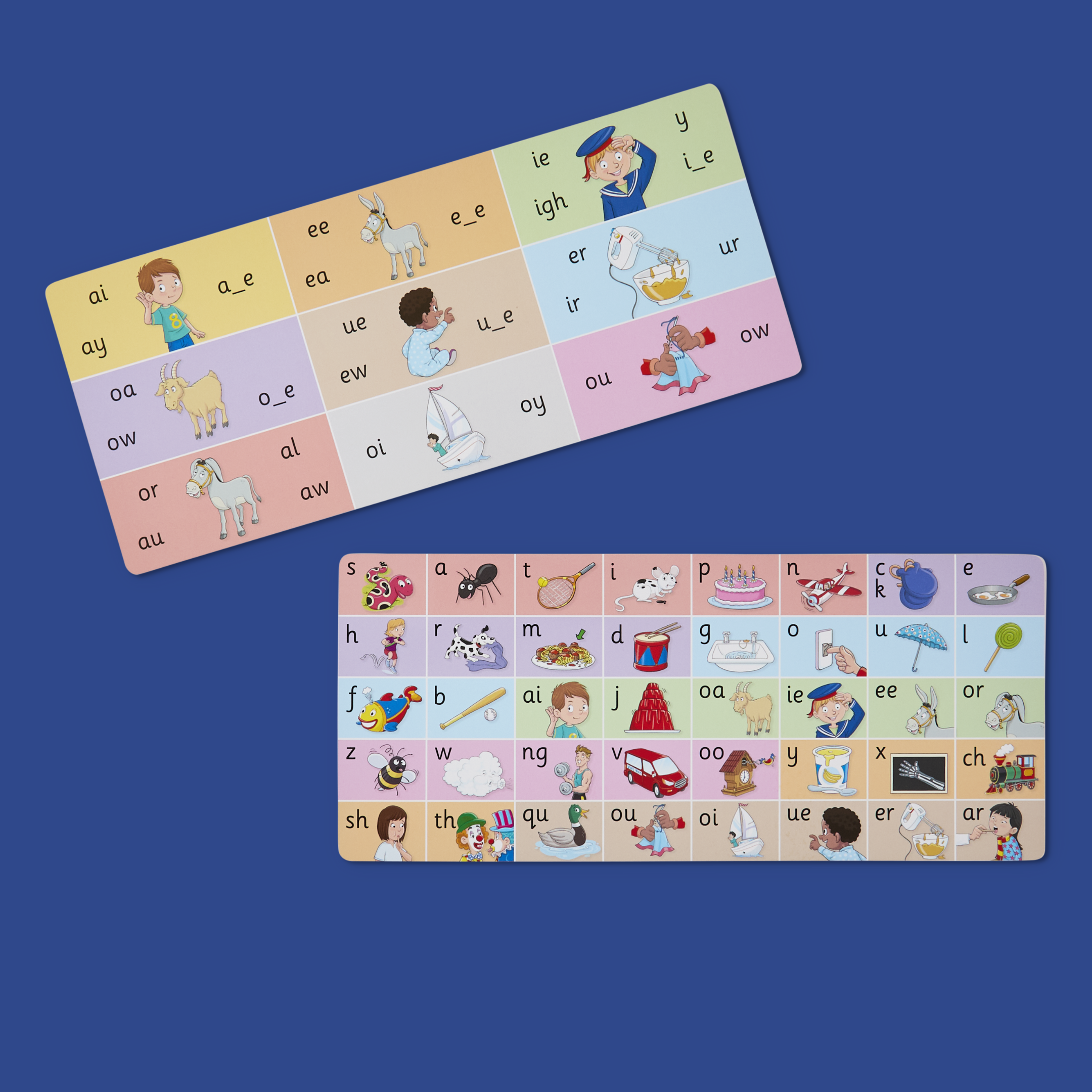
Jolly Phonics Letter Sound Strips
Jolly Phonics Letter Sound StripsA pack of 30 pupil reference strips showing all 42 sounds with illustrations. Compact and durable, they sit on desks or in small-group work, reinforcing classroom learning and boosting children’s independence and confidence in reading and writing.
-
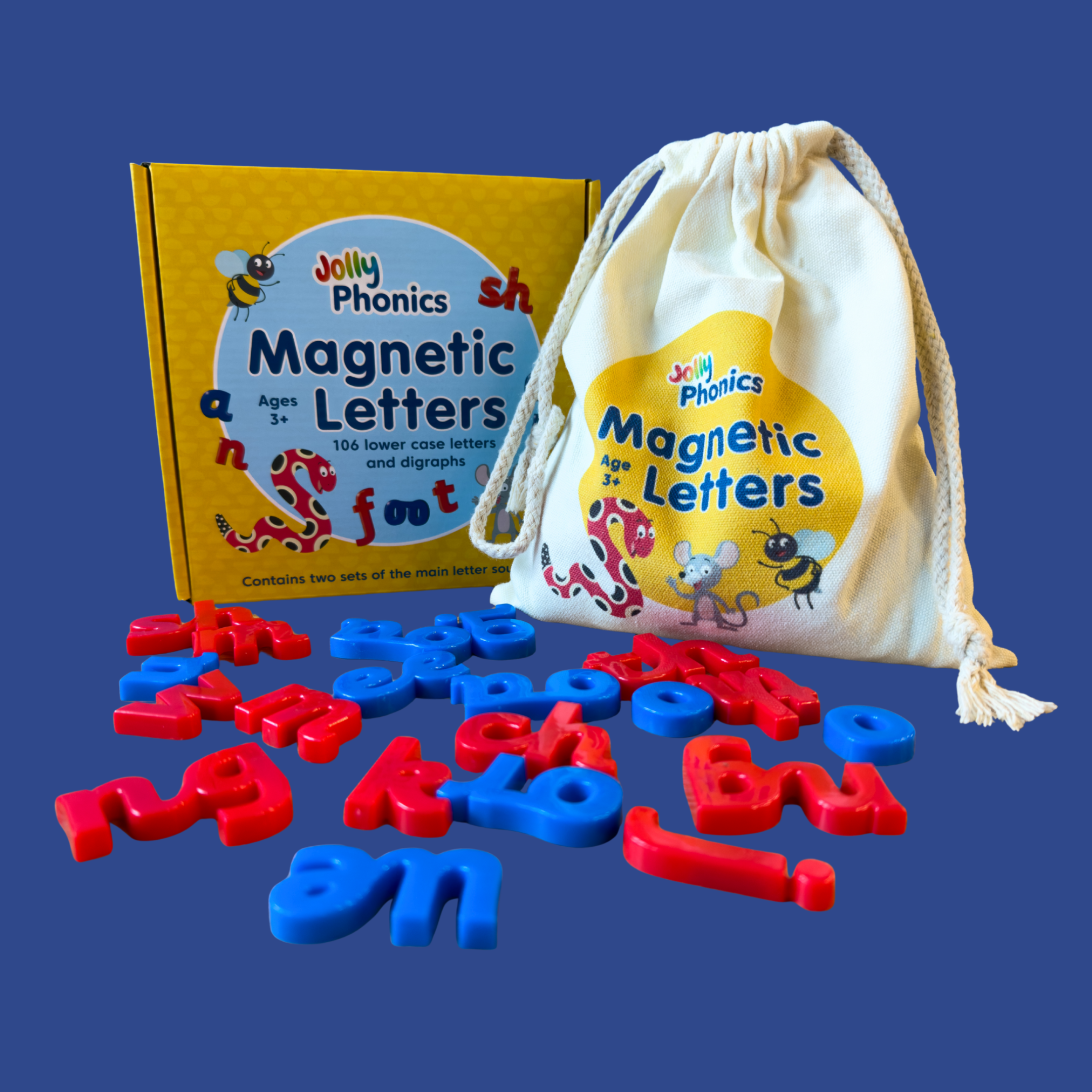
Jolly Phonics Magnetic Letters
Jolly Phonics Magnetic LettersA hands-on resource with lower-case letters in red (consonants) and blue (vowels). Children build and break apart words, strengthening blending and segmenting skills while linking phonics knowledge directly to spelling and reading activities.
-
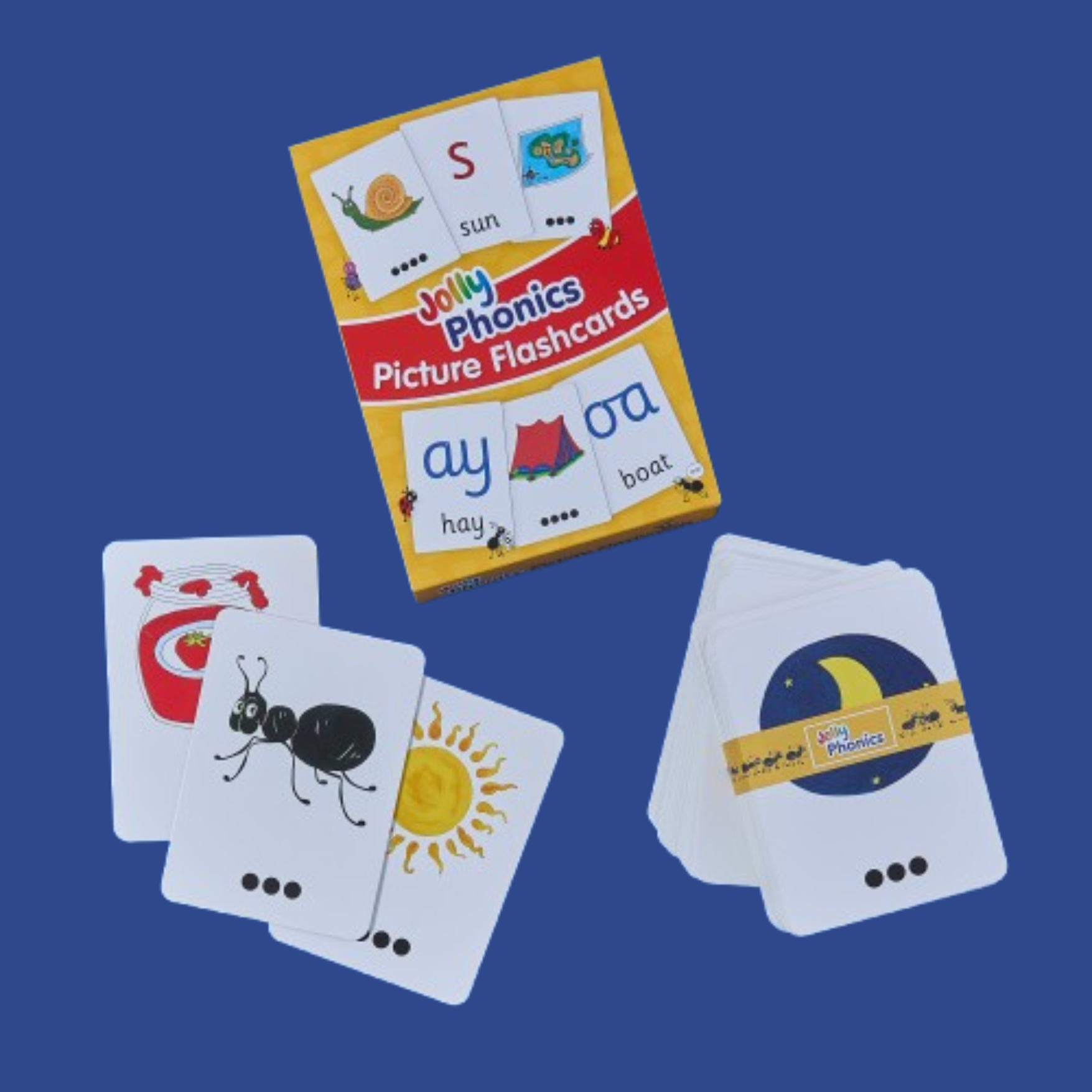
Jolly Phonics Picture Flashcards
Jolly Phonics Picture FlashcardsSixty cards showing pictures with sound dots on one side and matching letters and words on the reverse. Great for introducing sounds, playing recognition games and extending vocabulary in a fun interactive way.
Essentials for every teacher's toolkit!