





Guide
Extra Support: Reading
Find reading support guidance for pupils who need extra Jolly Phonics practice with blending, tricky words and letter sounds.
Extra Support: Reading
Find targeted activities to support progress and boost confidence.
Reading and Writing Support
Spotting Struggles Early
Even with high-quality phonics instruction, some children will need additional reading and/or writing support to keep up with their peers. Struggles may arise from missed learning, speech and language delays, or specific learning difficulties. Early assessment helps identify the root of the issue so targeted strategies in Letter Sound Recognition, Letter Formation, Blending, Segmenting and Tricky Words can be implemented quickly and effectively.
Importance of Assessment
- Pinpoint class-wide weaknesses to guide whole-class review
- Identify specific gaps in knowledge for individual pupils
- Inform the focus of small group or 1:1 interventions
- Plan targeted activities for ‘Secure It’ (Tier 2) sessions
- Make phonics part of daily life by pointing out sounds in books, signs and conversations.
- Track pupil progress and adapt support over time
Letter Sound Recognition
Poor Auditory Discrimination of Letter Sounds in Isolation and in Words Some students struggle with spoken letter-sound awareness. They are poor at discriminating between certain letter sounds. (For example, if they hear an /r/ and a /t/, they cannot tell the difference between them.) Medical hearing issues must be ruled out.
Ideas to try:
Some students struggle with spoken letter-sound awareness. They are poor at discriminating between certain letter sounds. (For example, if they hear an /r/ and a /t/, they cannot tell the difference between them.) Medical hearing issues must be ruled out.
-
Letter-Sound Card Activity: Show and Tell
Using assessment data for each child, sort out the letter-sound cards that the pupil knows. These cards can be placed in an individual letter-sound box exclusive to that pupil. The intention is for the pupils to regularly go through the box at school and at home saying the sounds of the letters. This extra practice helps to secure the letter sounds in long-term memory, so they are never forgotten. In the support group the aim is help the pupils catch up and keep up with learning of the letter sounds that have already been taught in Tier 1 whole-class teaching. After sufficient revision add as quickly as possible more letter sounds to their letter-sound boxes.
This personal Letter Sound Box can be taken home to practice. Encourage the parent/s to listen to their child saying the letter sounds every day. Resources available on the free resource page.
-
Letter-Sound Race
Choose letter-sound cards that need to be revised and hold them up one at a time, so the pupils can ‘race’ to see who can say the letter sound first. Whoever says it first gets the card; if two pupils say the sound at the same time, it goes back in the pile. The pupil with the most cards at the end of the game is the winner. This adds a sense of fun. It also encourages greater fluency and works well with evenly matched pupils.
-
Find the Sound
Lay out a few letter-sound cards on the table. Call out the letter sounds one at a time and ask a different child to touch the correct card each time.
-
Find the Sound Race
Lay out a few letter-sound cards on the table. Call out each sound and see who is the first to touch the correct card. The child who touches it keeps it and another card replaces it. The winner is the child with the most cards. This fun activity is often noisy. Ideally it should be played in an area where it will not disturb the other children.
-
The Pairs Game
This is useful for developing memory and reasoning, as well as for learning the letter sounds. To play, the letters are placed face down. Each player takes it in turns to turn over two cards, saying the sound on each card. If the sounds are the same, the player keeps the cards and has another turn. If not, the cards are turned over and the next player has a turn. The player to get the most pairs is the winner.
-
Action + Write
Say the letter sound, and the pupil does the Jolly Phonics action and then, using a finger, forms it on the table. This links auditory input, motor memory and visual form.
Struggles to Remember Letter Sounds Consistently The pupil hesitates or guesses when asked to find the letter that matches a spoken sound.
Ideas to try:
The pupil hesitates or guesses when asked to find the letter that matches a spoken sound.
-
Listening to the Letter Sounds
Using the letter sound videos found under free resources or on the Jolly Learning Youtube channel, practice each problem letter sound with the pupil. Initially using headphones to isolate and hear the letter sounds can often make them easier for the pupil to hear more clearly. It helps to pay attention to the mouth position when the pupil is saying the sound.
-
Letter-Sound Dictation
Call out letter-sound correspondences that have recently been revised, one at a time, and ask the pupil(s) to write them. Check for a good pencil hold and accurate letter formation.
Slow or Insecure Recall of Letter Sounds The pupil has learned some letter sounds but forgets them easily or cannot recall them fluently when reading.
Ideas to try:
The pupil has learned some letter sounds but forgets them easily or cannot recall them fluently when reading.
-
Letter-Sound Card Activity: Show and Tell
Using assessment data for each child, sort out the letter-sound cards that the pupil knows. These cards can be placed in an individual letter-sound box exclusive to that pupil. The intention is for the pupils to regularly go through the box at school and at home saying the sounds of the letters. This extra practice helps to secure the letter sounds in long-term memory, so they are never forgotten. In the support group the aim is help the pupils catch up and keep up with learning of the letter sounds that have already been taught in Tier 1 whole-class teaching. After sufficient revision add as quickly as possible more letter sounds to their letter-sound boxes. This personal Letter Sound Box can be taken home to practice. Encourage the parent/s to listen to their child saying the letter sounds every day. Resources available on the free resource page.
-
Letter-Sound Race
Choose letter-sound cards that need to be revised and hold them up one at a time, so the pupils can ‘race’ to see who can say the letter sound first. Whoever says it first gets the card; if two pupils say the sound at the same time, it goes back in the pile. The pupil with the most cards at the end of the game is the winner. This adds a sense of fun. It also encourages greater fluency and works well with evenly matched pupils.
Blending
Challenges with Blending Sounds out individual letters and then says a different word
Ideas to try:
Sounds out individual letters and then says a different word
-
Word Blending Boxes
Word blending boxes help the children achieve greater fluency at decoding words before they are given decodable books to read for themselves. They provide teachers with a set of words for each letter sound that is taught. These words use the new letter sound that has been introduced and those that have previously been taught. It is important in the first few months that pupils are not asked to read words that have letter-sound correspondences that have not been taught, or in the case of struggling pupils have not been learnt. Find these sheets in the 'free resources' section.
-
Reading Words
Arrange the letter sound cards to make simple regular words like ant or tin. The child blends the sounds together to read the word.
-
Tap the Sound Dots
Use flashcards with words and sound dots on them. The sound dots indicate the number of sounds and whether it is a single letter sound or a digraph. Ask a pupil to touch the dots as they say the sounds and blend the word. Sometimes, if successful, ask the pupil to read the word again without blending. This reminds them that blending is only needed if the word is not known. Any pupils watching can try and work out the word for themselves silently in their heads.
Difficulty with Auditory Blending Cannot hear the word when sounds are said.
Ideas to try:
Cannot hear the word when sounds are said.
-
Say the initial sound
Have some picture cards. The pupil says the word and then the initial letter sound. If they can’t hear the initial sound say the word for them stressing the initial sound.
-
Auditory blending pictures
The simplest and easiest auditory-blending activity is to put two pictures down in front of the pupil. Ask the pupil to say the word for the objects on the pictures, for example a hat and a bus. Then ask ‘which one is the /b-u-s/. Usually this brings success. Continue with a few other pictures, two at a time. As soon as regularly successful with choosing between two pictures, increase it to 3, 4 or 5 pictures.
-
"I hear, with my little ear”
This auditory blending activity is to say, for example, I hear, with my little ear, a word. What is it? /f-o-x/. The children respond, giving the answer fox. Repeat with a few different words.
-
What do I have in my hand?
This activity involves holding a picture card so that it cannot be seen and saying, for example, “In my hand is a /m-oo-n/”. What do I have in my hand? Whoever says “moon” gets the picture. This can be varied by putting several real objects in a bag, such as a book, fork and comb, and sounding out the object your hand is on in the bag. It is better to stick to short words. “I say it. You say it” “I say it” - The adult taps their arm to model auditory blending of CVC words: on the shoulder for the first sound, then on the elbow, and then on the wrist. Then as they blend the sounds together and say the word, they run their hand down their arm. “You say it” - The pupils do it independently. As the child becomes proficient with CVC words, begin adding words with consonant blends.
Reading is Accurate but Very Slow Pupils have been asked to read books but read very slowly without fluency.
Ideas to try:
Pupils have been asked to read books but read very slowly without fluency.
-
Blend individual words and phrases.
Build confidence in blending individual words and phrases before moving on to books. Practice with individual words and phrases until the pupil secures accuracy and fluency.
-
Find an Appropriate Reader
Decodable readers should not be started until Letter-Sound Groups 1-7 have been taught. Problems will also occur, particularly with strugglers, if non-decodable readers are used.
Tricky Words
Difficulty reading tricky words Tries to sound out tricky words or cannot remember how to read them.
Ideas to try:
Tries to sound out tricky words or cannot remember how to read them.
-
Revision at home
At this stage the Letter-Sound Boxes should be going home. Parents are asked to listen to their child saying the sounds linked to the letters. The aim is not for the parents to teach the letter sounds but to encourage enough repetition to help secure the letter sounds into long-term memory. It should be a quick session. Similarly tricky words could be gradually included in the Letter-Sound Boxes or their own boxes. Care should be taken to only add the tricky words when pupils are fairly confident at knowing the tricky words at school.
-
Pairs
Print two sets of tricky words on thin card. Lay the tricky word cards that are being concentrated on face down. Pupils take it in turn to turn over two of the cards, say the tricky words and keep them if they are the same and correct. If not, they should be turned over and the next pupil has a turn. At the end, the winner can be declared.
-
Tricky word flashcards
Regularly hold up appropriate tricky-word flashcards. The pupils take it in turn to say the tricky word. If it is correct the pupil keeps it. Otherwise it goes back with the other flashcards.
-
Find the Tricky Part
It can be played with a partner. Using the tricky word flashcards, each player takes a turn placing a card on the table, sharing what the word is and what makes it tricky. For example, the word you. The <ou> normally has an /ou/ sound but it is an /oo/ sound in you. This is the tricky bit that pupils need to remember for reading and writing.
-
Blend it First
In Jolly Phonics tricky words are not introduced until the end of Group 6. By then most pupils are good at blending words with the letter sounds they have been already taught. They are encouraged to blend the tricky word, which gives the wrong pronunciation. Then the tricky bit is identified. For example, with the word he the <e> on the end normally has an /e/ sound but in this word it is an /ee/ sound. Identifying the ‘tricky’ bit helps the pupils remember how to read and write them correctly.
Other Issues
Slow or Laboured Reading Pupil reads accurately but very slowly; struggles to build fluency; often loses track or becomes fatigued.
Ideas to try:
Pupil reads accurately but very slowly; struggles to build fluency; often loses track or becomes fatigued.
-
Repeat (Echo) Reading
Once the pupil has read a short sentence, the adult reads it aloud and then the pupil rereads it. This models fluency and allows for immediate practice in a low-pressure way.
-
Familiar Book Rereads
Re-read favourite decodable books to build confidence, pace and automaticity. Choose slightly less challenging texts to shift focus onto flow. However, try not to reread too many times in too close a time span as this can put pupils off reading books.
-
Read It Three Ways
Choose a short text (or one page) and reread it three times across the week – once for decoding, once for fluency, once for expression.
-
Use a Tracking Card
A tracking card, often an index card or ruler, is placed below the line of text being read, helping readers focus on one line at a time and avoid skipping lines. This aids in reading fluency, focus, print tracking, and transitioning between lines.
Tracking and Visual Scanning Difficulties Skips words or lines, loses place on the page, or re-reads the same line.
Ideas to try:
Skips words or lines, loses place on the page, or re-reads the same line.
-
Use a Reading Window or line guide
Help pupils focus by using a card with a cut-out window or a solid strip of paper to cover lines below. This creates a clear visual boundary, reduces distractions and supports accurate tracking of the current line.
-
Point as You Read
Encourage pupils to use their finger or a pointer to track each word. This reinforces left-to-right directionality and supports eye movement control.
-
Visual cueing using colours
Place a green line down the left side of a page to show the child where they start reading.
Poor Reading Comprehension Can read the words but doesn’t understand what has been read; struggles to answer basic questions or retell the story.
Ideas to try:
Can read the words but doesn’t understand what has been read; struggles to answer basic questions or retell the story.
-
Retell with Props or Pictures
Use puppets, toys, or illustrations (story board) to help the child act out or retell what they’ve read. This supports understanding through storytelling and visual memory.
-
Stop-and-Talk Reading
Pause at key points in the text to ask, “What just happened?” or “What do you think will happen next?” This builds habit and expectation of understanding.
-
Sentence Cloze Tasks
Read part of a sentence and ask the pupil to complete it. For example: “The cat sat on the…” This builds predictive language and reinforces meaning making while reading.
-
Sequencing cards
Create cards that sequence the story and ask pupils to place them in order as they retell the story.
Looking for practical ideas to support pupils?
Helping pupils who need more time to secure key skills.
Popular Resources for Extra Support
-
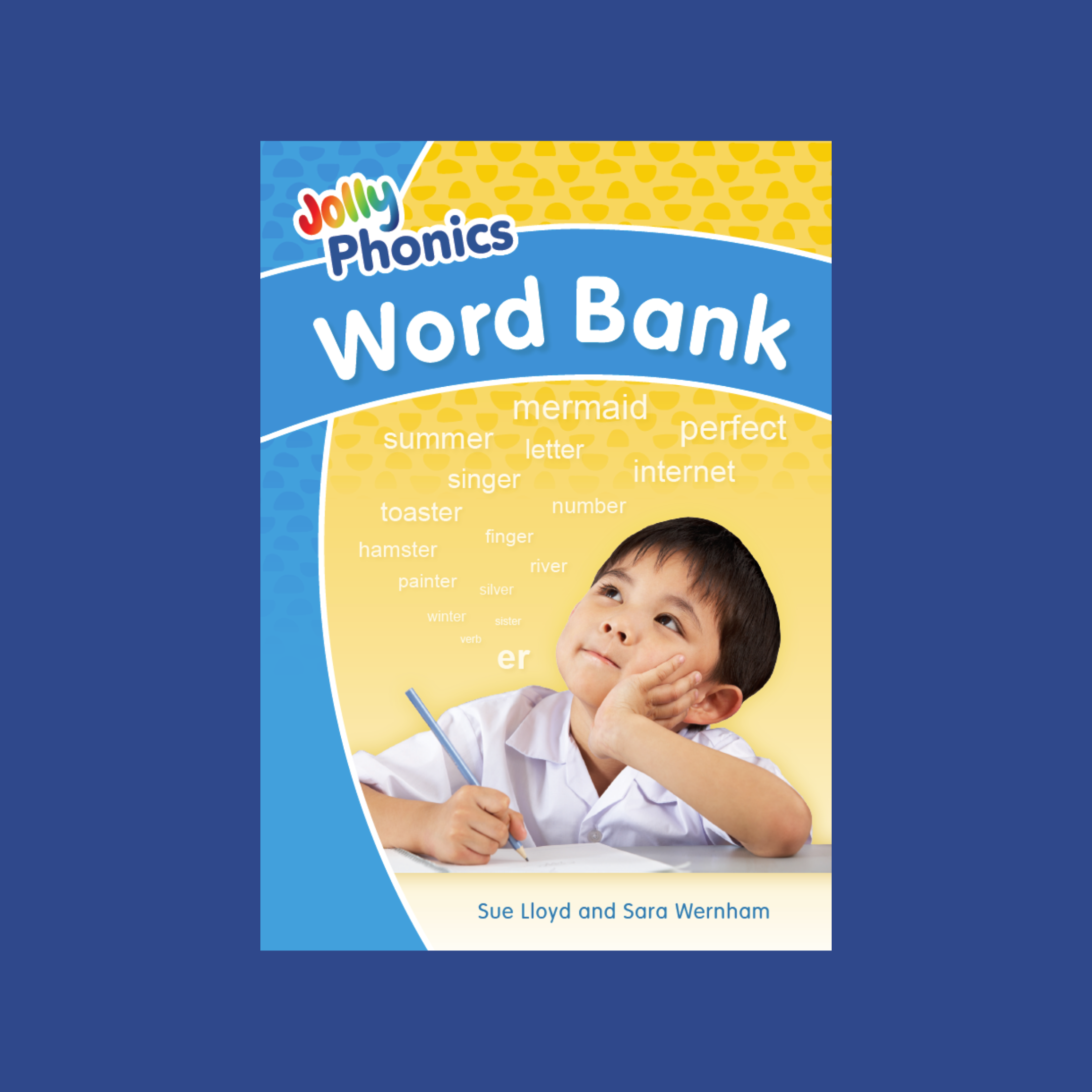
Jolly Phonics Word Bank
Jolly Phonics Word BankA bank of words, phrases and sentences organised by taught sounds. Provides instant ready-made material for class, small-group or one-to-one practice. It saves teachers planning time and ensuring pupils only encounter words that match their phonics knowledge.
-
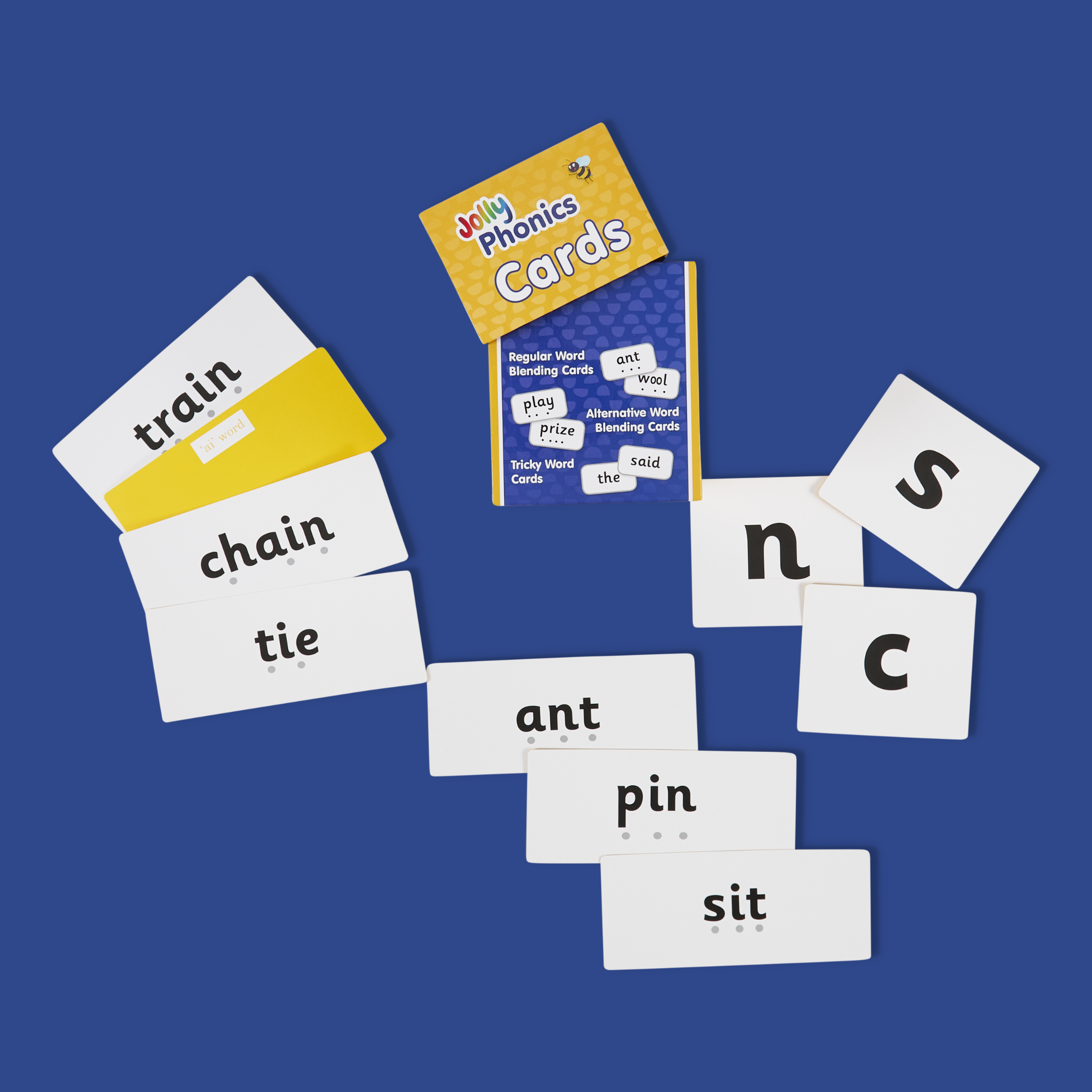
Jolly Phonics Cards
Jolly Phonics CardsFour flashcard sets for daily teaching, revision and games. Covering letter sounds, regular and alternative word blending (with sound dots for support) and tricky words in teaching order. A practical resource for reinforcing phonics skills at every stage.
-
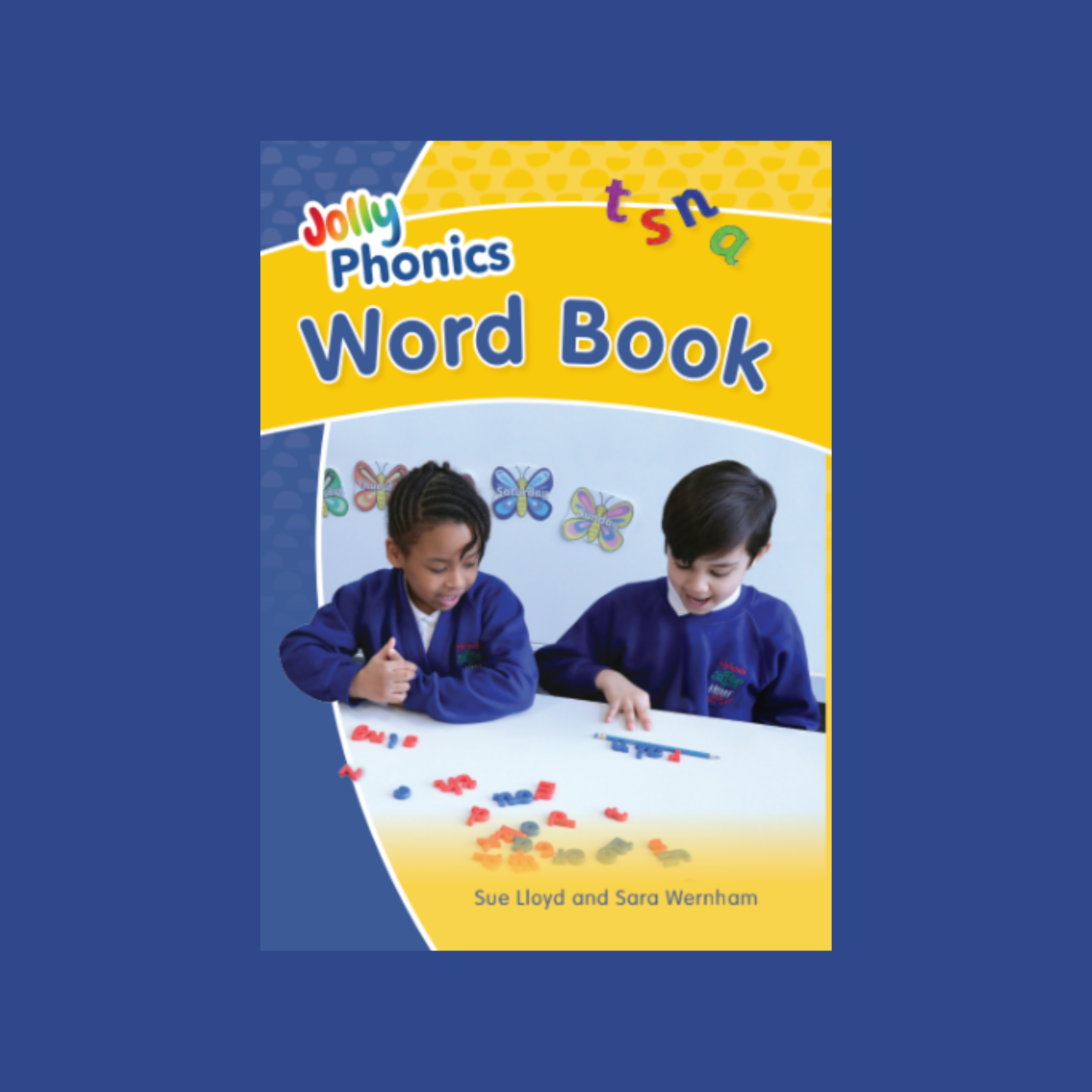
Jolly Phonics Word Book
Jolly Phonics Word BookA book that provides words that use the basic letter sounds and also blends, alternative spellings, and tricky words. However the words are not organised in the teaching order. It’s a helpful reference for dictation, writing practice, and expanding vocabulary as children progress through the programme.
Essentials for every teacher's toolkit!